The U.S. Department of Energy’s Advanced Research Projects Agency-Energy (ARPA-E) has awarded a combined $8.17 million to the Thomas Jefferson National Accelerator Facility (Jefferson Lab).
The money backs two projects meant to improve accelerator-driven systems that could reduce the radioactivity of used nuclear fuel while also generating additional electricity.
One detail jumps out because it feels oddly familiar. Jefferson Lab says one project will lean on the magnetron, a workhorse of microwave ovens, but redesigned to power particle accelerators at industrial scale.
If the engineering pans out, ARPA-E argues that recycling and transmuting key waste components could reduce the effective long-term hazard window from about 100,000 years to roughly 300 years.
The NEWTON push
The work sits inside ARPA-E’s NEWTON program (Nuclear Energy Waste Transmutation Optimized Now).
In its own description, ARPA-E says unprocessed used nuclear fuel reaches the radiotoxicity of natural uranium ore after about 100,000 years, while partitioning and recycling uranium, plutonium, and minor actinides could cut that to around 300 years. Jefferson Lab says its grants are meant to help make that kind of recycling economically realistic.
ARPA-E is also clear about what “realistic” means in practice. NEWTON’s targets include high facility availability, fewer accelerator interruptions, and costs comparable to deep geological disposal, which is why the lab pulled in Oak Ridge National Laboratory plus firms like Stellant Systems, General Atomics, and RadiaBeam, and why principal investigator Rongli Geng says the challenge is to “translate the accelerator science” for this application.
Why the clock is so long
Used nuclear fuel does not stay equally dangerous forever. Many short-lived fission products fade over the first few centuries, but other isotopes linger for tens of thousands of years or longer, keeping storage and policy debates alive.
ARPA-E’s own NEWTON materials show just how long that tail can be. Plutonium-239 has a half-life of about 24,100 years, technetium-99 is around 211,000 years, and iodine-129 runs to roughly 16 million years. Conventional reactors are not designed to efficiently destroy all of those long-lived leftovers, especially transuranic elements that can complicate chain-reaction behavior.
A subcritical approach
The concept behind many transmutation proposals is an accelerator-driven system built around a subcritical reactor. Unlike a traditional reactor that depends on a self-sustaining chain reaction, a subcritical core needs a steady outside “spark” and shuts down when that external source stops. That control feature is part of what makes the approach attractive on paper.
Jefferson Lab describes the “spark” as a beam of high-energy protons striking a heavy target such as liquid mercury, which releases neutrons through a process called spallation. Those neutrons can then interact with long-lived isotopes in spent fuel, converting them into different isotopes that decay faster, while the process also produces heat that can be used to generate electricity.
Cheaper superconducting cavities
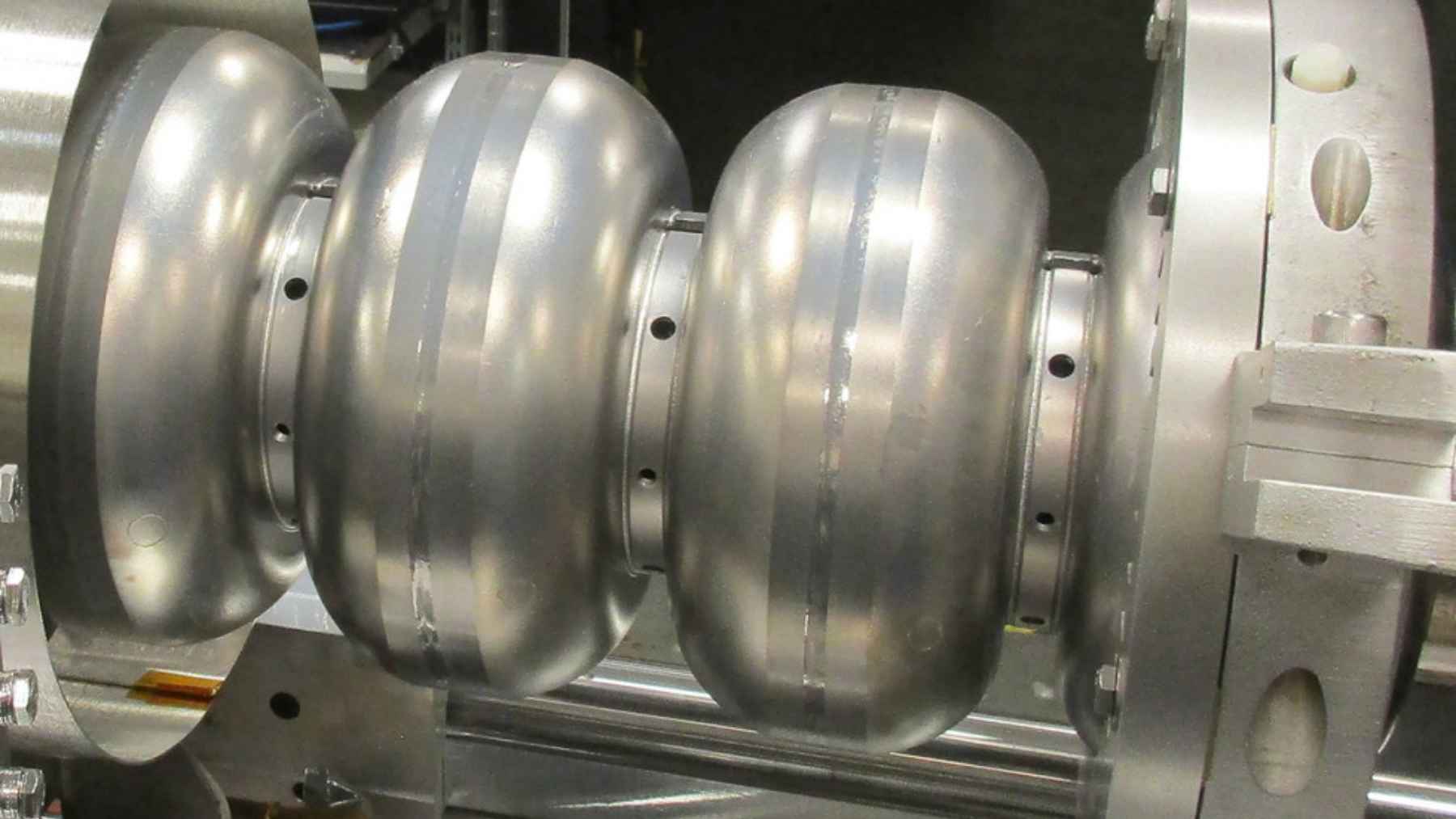
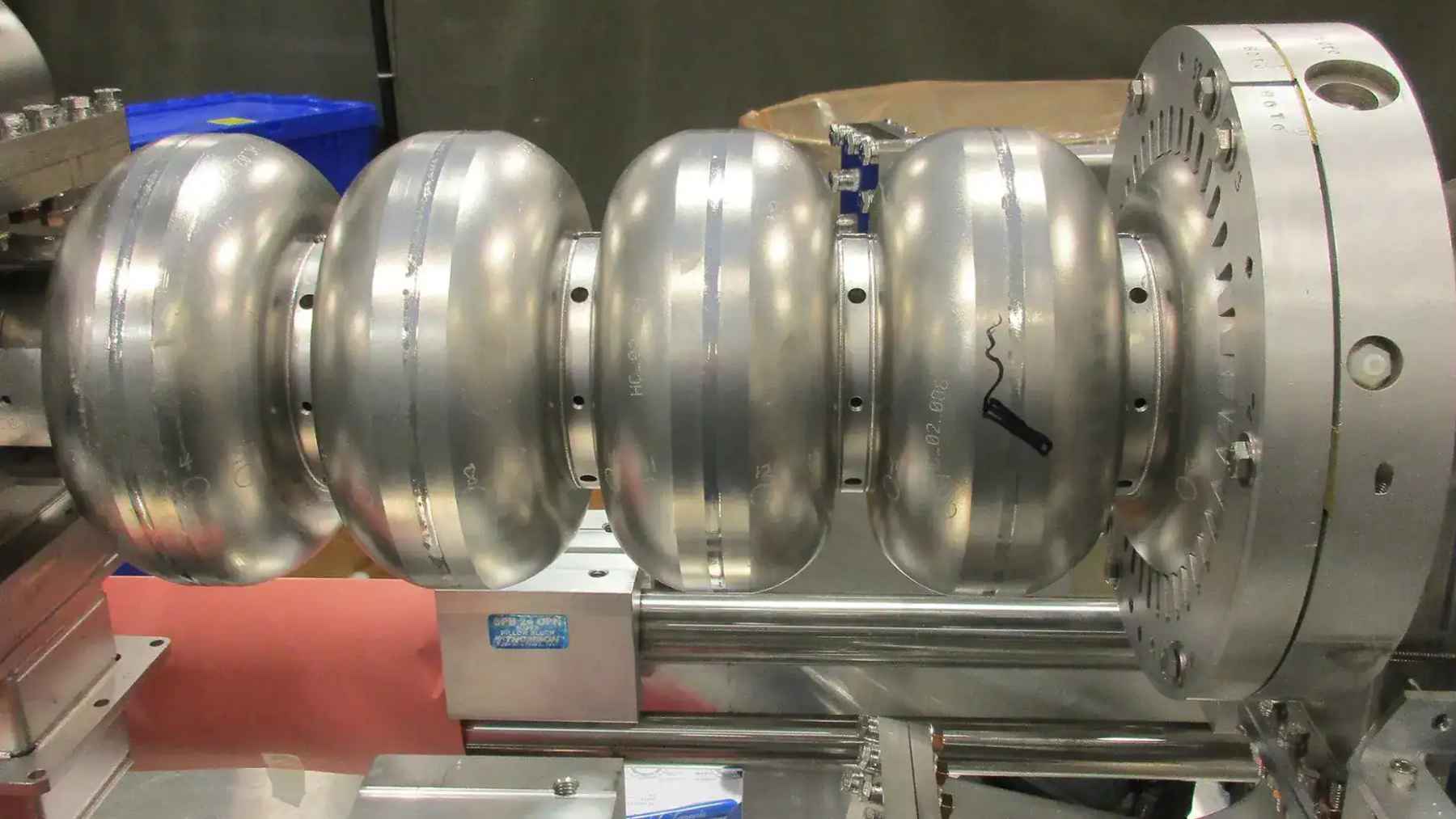
The accelerator hardware is where the economics often break down. Many high-performance machines rely on superconducting radiofrequency (SRF) cavities made from pure niobium, and niobium only superconducts at extremely low temperatures, which can require costly cryogenic systems.
Jefferson Lab’s first award, $4,217,721, aims to push SRF efficiency higher by coating niobium cavities with tin to create a superconducting niobium-tin surface.
The lab says that could allow higher-temperature operation with standard commercial cooling units, and it plans to test proton-accelerating cavity designs with collaborators at Oak Ridge and RadiaBeam, while also developing more advanced “spoke cavities” for additional efficiency gains.
Magnetrons go big
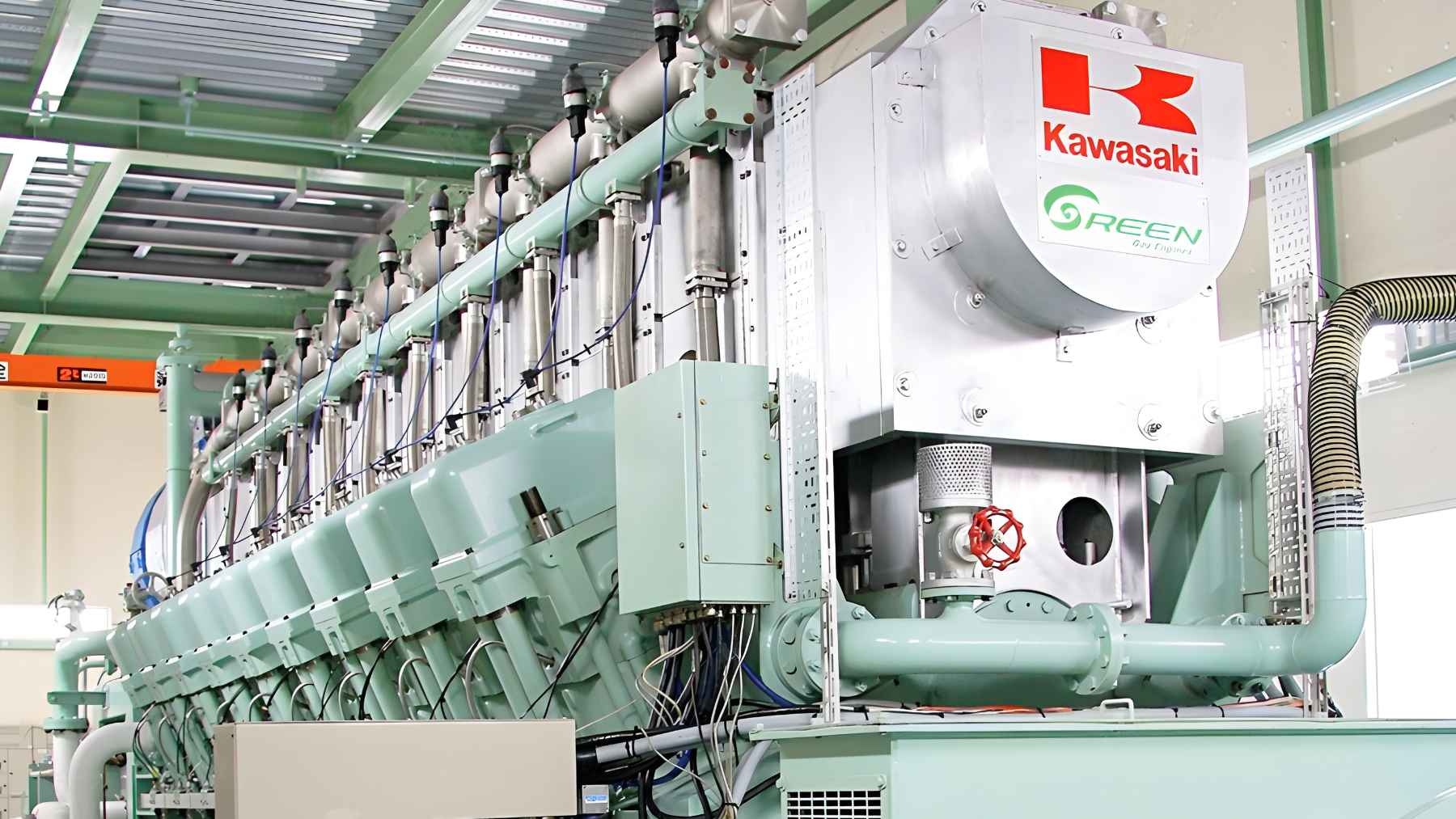
The second award, $3,957,203, focuses on powering those cavities, and that is where magnetrons enter the picture. Jefferson Lab says magnetrons must match the accelerator cavity frequency of 805 megahertz, and the system needs on the order of 10 megawatts of power, which is why efficiency matters as much as raw output.
ARPA-E’s project descriptions note that magnetrons have not been widely used in accelerator applications because stability can be tricky, including startup variability and noisy spectra.
Jefferson Lab and its partners say they plan to prototype advanced units with Stellant Systems and run power-combining tests with General Atomics and Oak Ridge, a step meant to move the technology toward commercialization rather than leaving it as a lab curiosity.
What to watch
If accelerator-driven transmutation ever becomes practical, it would not eliminate the need for careful stewardship. But a credible path from “100,000 years” down to “300 years” could change how utilities, regulators, and communities think about long-term risk, and it could reshape the business case around the back end of the nuclear fuel cycle.
For now, the near-term test is more down-to-earth than it sounds. Can these accelerators run reliably enough, cheaply enough, and long enough to compete with disposal options while meeting NEWTON’s performance targets for availability and reduced interruptions?
What happens next will likely show up first in prototypes and test results, not in anyone’s kitchen or on next month’s electric bill.
The press release was published on Jefferson Lab.