Dutch regulators have given Tesla a first European approval for Tesla’s “Full Self-Driving (Supervised)” driver assistance system.
On April 10, 2026, the Netherlands Vehicle Authority (RDW) issued a type approval with provisional validity, allowing the feature to be used in the Netherlands under human supervision.
It is a win for Tesla and a stress test for Europe’s rulebook. RDW has told the European Commission it will seek EU-wide authorization, with the Netherlands expected to present the case to a technical committee in May and needing majority support from member states for a bloc-wide rollout.
What the Dutch approval really allows
RDW’s message is blunt that a vehicle with FSD Supervised “is not self-driving.” In legal terms, it is an advanced driver assistance system, and the driver “remains responsible and must always remain in control.”
So yes, the car can handle steering, braking, and acceleration in many situations, but you cannot mentally check out. RDW says sensors monitor whether the driver’s eyes are on the road and whether their hands are available to take over immediately, and it notes it is “not permitted or possible” to read a newspaper while driving.
That matters for the boring parts of life like rush hour, where stop-and-go traffic tempts people to multitask. It may reduce workload, but it does not shift responsibility away from the person in the seat.
How EU-wide approval could happen next
RDW has positioned the decision as the product of an unusually long safety review, saying the system was examined and tested for more than one and a half years on a test track and on public roads. It also notes it issues about 50,000 type approvals each year for vehicles or components, and it treats driver assistance software as part of that safety-critical ecosystem.
The roadmap to expansion is clear, even if the politics are not. RDW says it must submit the application to the European Commission and member states then vote, while Reuters reports the Commission expects the Netherlands to present the case in May and that an EU-wide authorization would require majority support in the relevant committee.
Europe could still end up with a patchwork in the meantime, with individual countries choosing to allow the system nationally using the Dutch approval as a reference. That might sound messy, but it is also how new vehicle tech often spreads across the EU before a common position locks in.
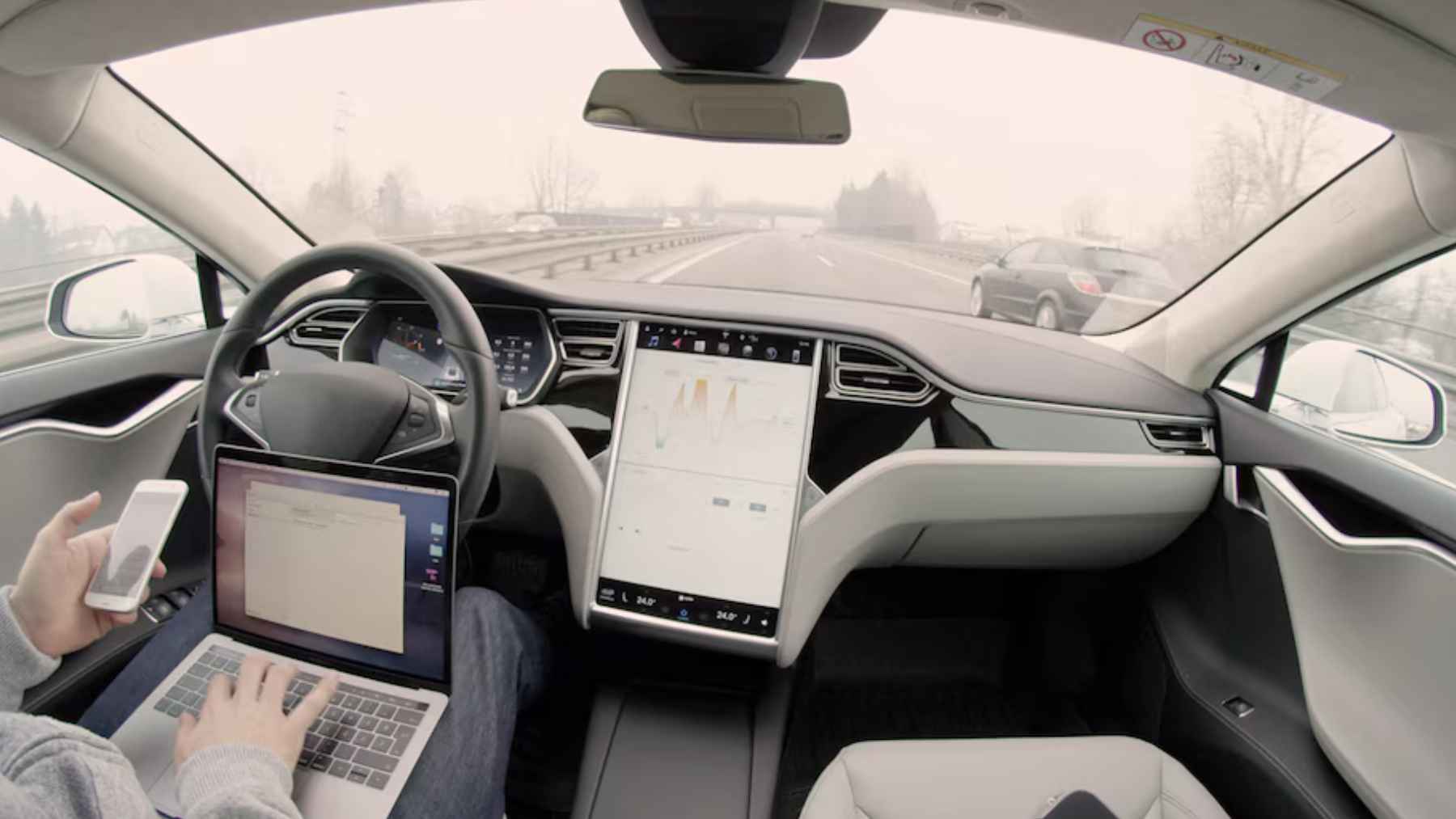
A Tesla Model Y runs with Full Self-Driving (Supervised) on a European road following its first regulatory approval in the Netherlands.
Road safety numbers keep the pressure on
Why are regulators being so methodical about software that is marketed as convenience? The EU is still losing far too many people on the road, even in a “good” year.
On March 24, 2026, the European Commission reported preliminary 2025 figures of around 19,400 road deaths across the EU, a 3% drop from 2024, and said most member states are not on track to hit the bloc’s 2030 target of halving road deaths and serious injuries.
RDW argues supervised assistance can help, saying “proper use” of a driver assistance system can make “a positive contribution to road safety,” and it highlights strict monitoring of the driver as a safety advantage. The hard part will be proving those gains in real traffic, not just in controlled tests or carefully selected routes.
Safety advocates also point to a human factor problem that never really goes away. The European Transport Safety Council warns that as assistance features become more capable, drivers can become less attentive, a dynamic it calls the “automation paradox,” even though the driver remains legally responsible.
Why this matters to Tesla’s business
Tesla has been clear that autonomy is tied to its broader shift toward software and services. In its 2025 annual report, the company says it is focused on bringing AI “into the real world” through products like FSD (Supervised) and Robotaxi, and it links subscriptions to what it calls a “service-driven” model based on software and fleet profits.
The Netherlands is also a practical beachhead where the math can work quickly. Reuters reported that roughly 100,000 Model 3 and Model Y vehicles in the country could be eligible for the feature, and it described a local subscription price of about $115 per month for at least one customer.
Competitors will be watching because it signals what regulators might accept next. RDW points out that BMW and Ford already have hands-free approvals in defined highway contexts, and it frames Tesla’s approval as the latest entry in a fast-growing category of assistance systems.
Europe is treating software like a safety-critical part
A quieter but important part of RDW’s explanation is the comparison with the United States. RDW says EU vehicles are admitted through an approval issued in advance by vehicle authorities, while in the U.S. admission often happens through manufacturer self-certification with oversight in the in-use phase.
That difference changes how fast Tesla can iterate. Reuters reported that the European version includes stricter monitoring of driver attention and that significant software updates need to be checked with RDW ahead of time, a process that could make over-the-air upgrades feel less like smartphone updates and more like regulated changes to a safety system.
What drivers and policymakers should watch now
The next question is not whether the system looks impressive in a demo. It is whether it stays predictable on complicated streets, like Amsterdam’s narrow mix of cars, bikes, and delivery traffic that Dutch regulators cited as part of their confidence in local safety.
For drivers, the biggest risk is treating “hands-free” as “mind-free.” RDW’s rules and warnings are designed to stop that slide, but the common-sense takeaway is simple. Keep your eyes up, keep your hands ready, and assume you are still the one who has to answer for what the car does.
EU-wide approval is not guaranteed, but the Netherlands has already made Europe’s next autonomy debate a lot more concrete.
The official statement was published on RDW.