For many homes and factories, the energy transition sounds like a policy slogan until the electric bill jumps or the lights flicker on a sticky summer night. Japan is now putting a very concrete piece of hardware on the table, a large gas engine system designed to generate electricity using a fuel blend that includes hydrogen.
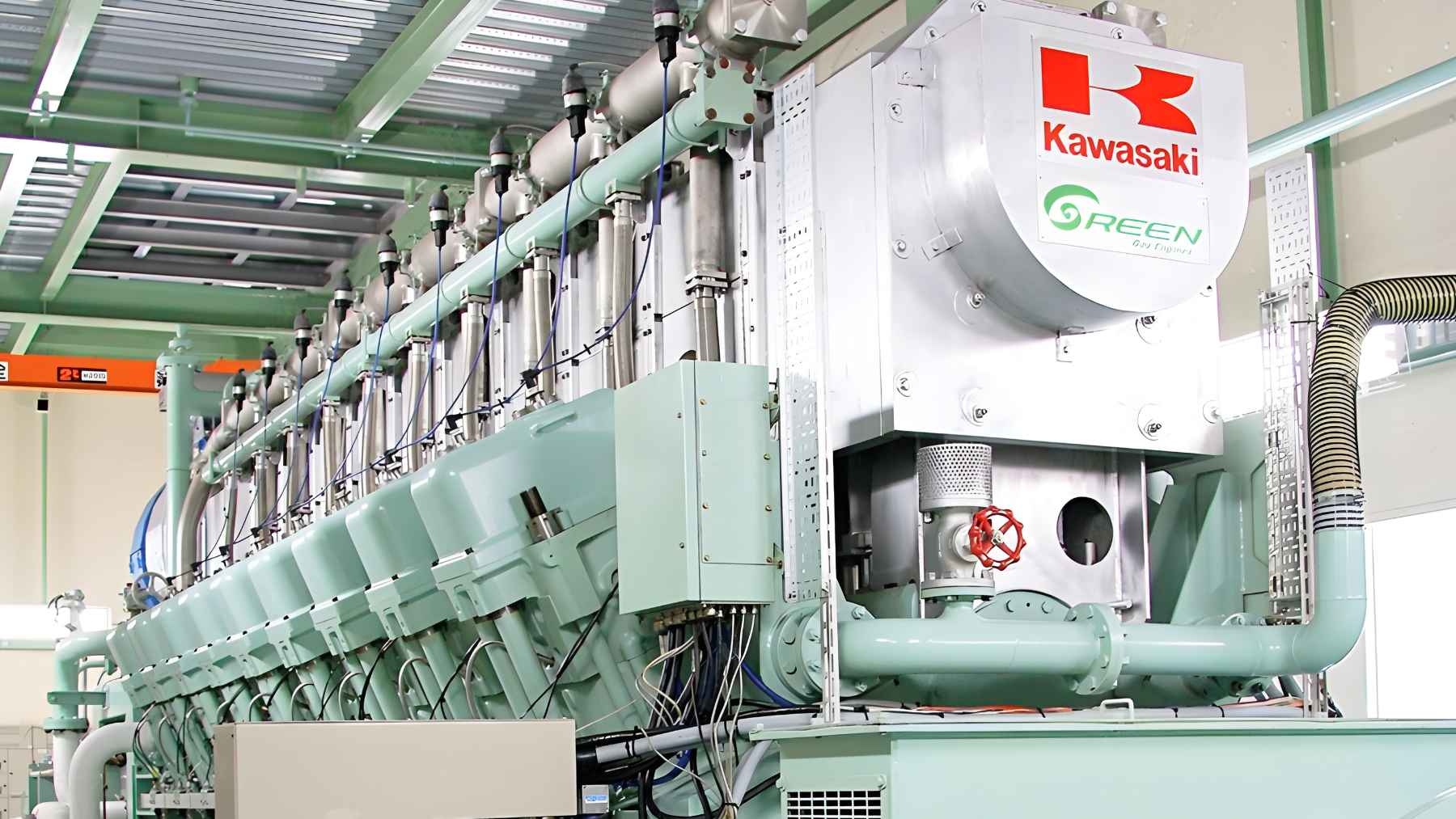
Kawasaki Heavy Industries says it has started selling a large class gas engine system that can co-fire natural gas or city gas with up to 30% hydrogen by volume.
It is a classic bridge technology move, and it could cut emissions for some operators, but the bigger question is whether affordable low carbon hydrogen will arrive fast enough to matter.
A commercial engine built for a hydrogen blend
Kawasaki says sales began on September 30, 2025, after an operational verification campaign at its Kobe Works that ran from October 2024 through September 2025. The company describes the test as an 8 megawatt class system, roughly 10,700 horsepower, with work focused on practical issues like hydrogen supply and maintainability.
The product builds on the “Kawasaki Green Gas Engine” line, a 5 to 8 megawatt class family that has received more than 240 orders since its first order in 2011. Kawasaki also says existing engines can be retrofitted to hydrogen co-firing, a signal that it wants customers to upgrade assets instead of scrapping them.
The company frames the new model as a transition distributed power source that can raise the hydrogen utilization ratio while leveraging existing facilities and infrastructure.
Why a 30% mix matters
So what does a 30% hydrogen blend actually buy you? The limit is measured by volume, not by energy content, which is why the headline number can be misleading if you treat it like a simple emissions slider.
Even so, blending hydrogen can lower direct carbon dioxide emissions per unit of electricity compared with pure natural gas, because hydrogen contains no carbon. The real world impact depends heavily on how the hydrogen is produced and how often operators can actually secure it, which is where today’s market still looks thin.
Safety is the quiet part of the story
Hydrogen is harder to contain than methane, and it ignites across a wider range of fuel and air mixtures, so safety engineering is not optional. Kawasaki says the system includes hydrogen leak detectors and nitrogen purge systems, and it highlights months of operational verification work aimed at day to day operability.
That focus matters beyond the plant fence. In places where industry and housing sit close together, the public will judge hydrogen projects not only on emissions claims, but also on whether operators can prove they have a handle on leaks, purging, and abnormal shutdowns.
Shipping is testing the same concept
Japan is also pushing hydrogen capable engines into maritime applications, where emissions are concentrated around busy ports.
In October 2025, a consortium that includes Kawasaki, Yanmar Power Solutions, and Japan Engine Corporation announced what it called the world’s first land based operation of marine hydrogen engines at Japan Engine’s factory, enabled by a newly installed liquid hydrogen fuel supply system.
The consortium said Kawasaki and Yanmar demonstrated stable operation at rated output in medium speed four stroke engines, while Japan Engine is developing a low speed two stroke hydrogen engine scheduled to begin operation in spring 2026. All three designs keep a dual fuel setup that can switch between hydrogen and diesel when hydrogen is not available.
Public money is underwriting early risk
Japan’s Ministry of Economy, Trade and Industry says it established a Green Innovation Fund at the level of 2 trillion yen to support projects from research through demonstration and social implementation, with NEDO operating the fund as part of the country’s 2050 carbon neutrality effort.
METI says the support can run for up to 10 years, which is one way to keep early stage technologies alive long enough to prove they work.
At the Federal Reserve’s reference rate of about 152 yen per U.S. dollar on October 28, 2025, 2 trillion yen is roughly $13.1 billion. The marine engine consortium also points to additional allocations of 300 billion yen and 456.4 billion yen, about $2.0 billion and $3.0 billion at that same rate, which helps explain how costly safety and durability work gets funded.
Infrastructure is still the bottleneck
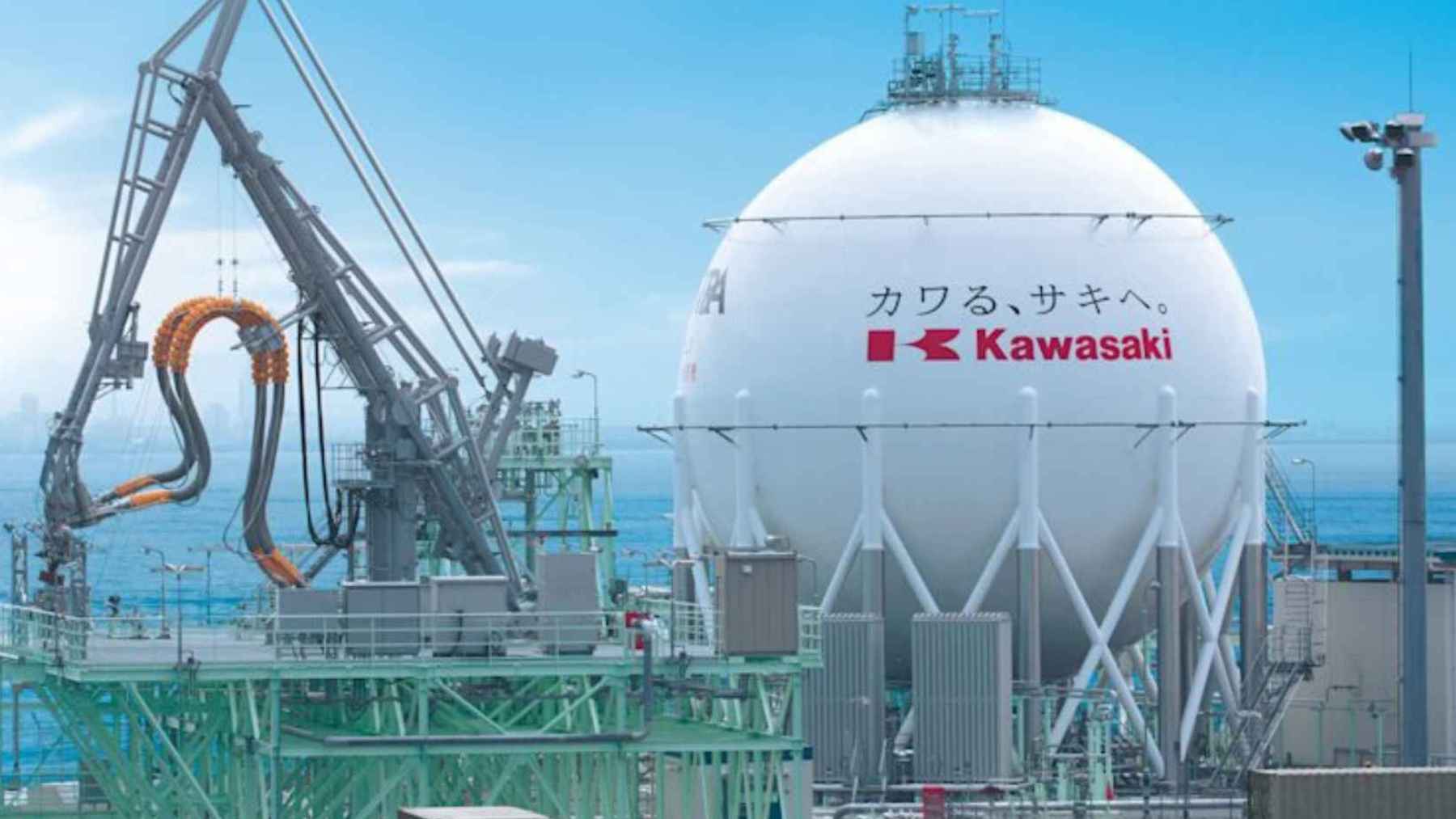
Engines can be sold faster than hydrogen can be shipped, stored, and distributed at scale. A joint statement from Japan Suiso Energy and Kawasaki describes the planned Kawasaki LH2 Terminal in Ogishima as a commercial scale liquefied hydrogen facility centered on a storage tank of about 13.2 million gallons, which is 50,000 cubic meters, plus maritime handling and dispatch capability.
The same document says the project aims to start operating the terminal and a newly constructed liquefied hydrogen carrier by fiscal year 2030, with the goal of importing liquefied hydrogen from 2030 onward for domestic supply.
Reuters has also reported that Kawasaki signed a contract with Japan Suiso Energy to build a liquefied hydrogen carrier with a capacity of 40,000 cubic meters, about 10.6 million gallons, and it noted the earlier Suiso Frontier ship at about 330,000 gallons, or 1,250 cubic meters.
This timeline mismatch is why many early buyers may still run mostly on natural gas and blend hydrogen only when they can get it at a reasonable price. The upside is that “hydrogen ready” hardware can keep assets from turning into stranded equipment when cleaner fuel becomes easier to source.
What operators should watch
The next set of decisions will be made in spreadsheets and permitting offices, not on engine test stands. Operators will need clear rules on hydrogen sourcing and certification, plus practical guidance on measuring blends and reporting emissions reductions in a way that holds up to scrutiny.
Japan’s bet is that flexibility buys time, and sometimes time is the most valuable commodity in an energy transition. But bridges only work if both ends get built.
The press release was published on Kawasaki Heavy Industries.