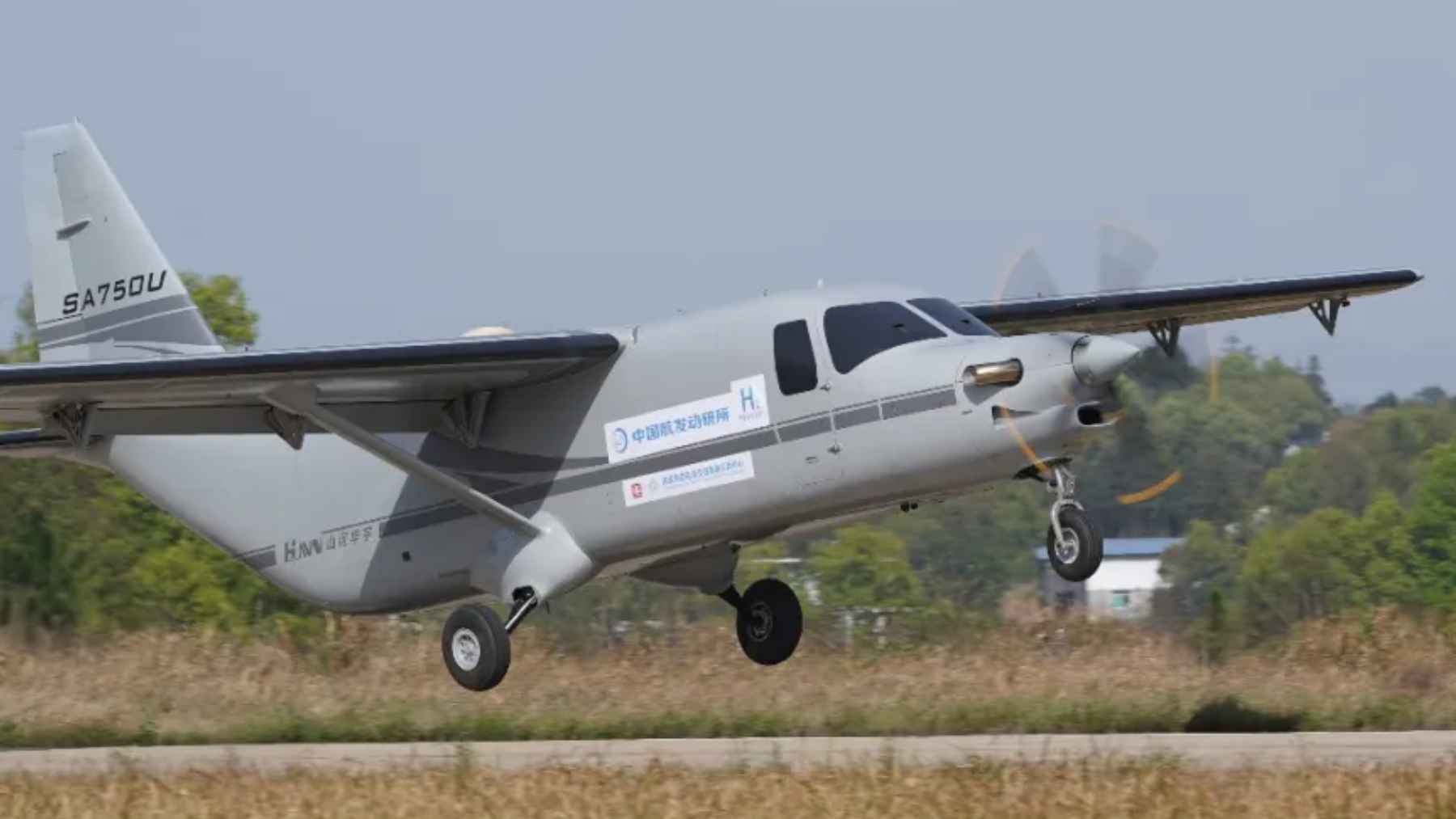
On April 4, 2026, a roughly 16,500 pound (7.5 metric ton) unmanned cargo aircraft flew for 16 minutes from Zhuzhou in China’s Hunan province, covering about 22 miles (36 kilometers) at speeds up to about 137 mph (220 km/h) and cruising near 1,000 feet (300 meters). The test sequence finished with a safe landing.
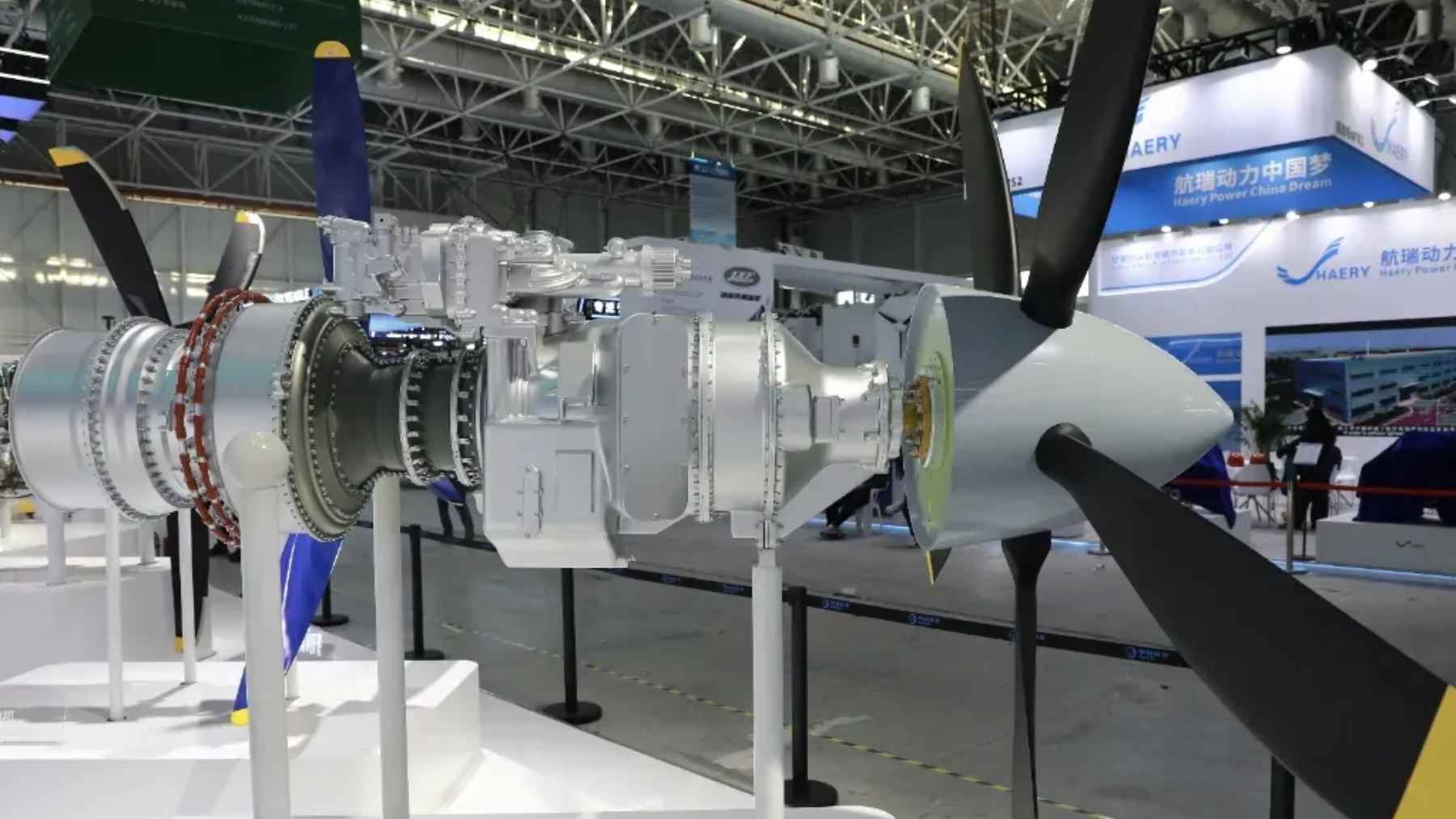
So why should anyone outside an engine lab care? The engine behind the flight was the AEP100, described by its developer, the Aero Engine Corporation of China (AECC), as a “megawatt-class” hydrogen-powered turboprop, and the company says it was the world’s first test flight of its kind.
AECC, a state-owned aerospace manufacturer, is also pointing to a near-term market that looks a lot like the air version of delivery vans, low-altitude cargo routes and island logistics.
A short flight with a big message
AECC said the engine “worked normally” and stayed in good condition throughout the test. That sounds routine, but routine is exactly what aviation engineers chase, especially when a new fuel is involved.
The company also framed the flight as proof of a complete technology chain, from core components to full engine integration. That language matters because hydrogen aviation is as much about systems and procedures as it is about raw power.
Why a turboprop is a pragmatic choice
A turboprop lives in the world of regional aviation and short-hop logistics, not intercontinental travel. It is efficient at lower altitudes and lower speeds, which makes it a natural fit for routes that can be repeated without building a massive new airport network.
That is also why an unmanned cargo aircraft is such a telling testbed. Compared with passenger aviation, cargo drones can iterate faster, accept tighter route constraints, and build “one site at a time” fueling infrastructure. If hydrogen is going to be awkward at first, better to work through it while moving boxes, not people.
Hydrogen aviation is not one technology
When people hear “hydrogen plane,” they often picture a single solution. In reality, there are two main approaches: burning hydrogen in a turbine-type engine, or using hydrogen in fuel cells to produce electricity for motors.
That difference shapes how you read “world’s first” headlines. A megawatt-class hydrogen-electric powertrain has already flown, including Universal Hydrogen’s Dash 8 testbed, which flew in Washington state in March 2023 using a megawatt-scale, fuel-cell-electric propulsion system on one side.
So AECC’s claim is best treated as narrower, focusing on a megawatt-class hydrogen-fueled turboprop engine and a large unmanned cargo platform, rather than megawatt-class hydrogen propulsion overall.
The details matter because the supply chains, safety systems, and maintenance realities are different depending on whether hydrogen is burned or turned into electricity first.
The fuel is where business pressure shows up
AECC itself pointed to economics, arguing that hydrogen aviation becomes more attractive as “green hydrogen” production costs fall. It also said the technology could drive upgrades across upstream hydrogen production, midstream storage and refueling infrastructure, and downstream equipment and materials.
In the United States, the Department of Energy’s Hydrogen Shot set a public target to bring clean hydrogen down to $1 per kilogram (about $0.45 per pound) within a decade.
The International Energy Agency, meanwhile, has flagged a near term cost premium for low-emissions hydrogen, including a figure around $1.5 per kilogram (about $0.68 per pound) in its recent reporting, which helps explain why pilots turn into paying routes slowly.
Then there is the hardware reality that is easy to underestimate. Airbus has already powered on a 1.2 megawatt hydrogen fuel cell system as part of its ZEROe roadmap, but scaling megawatt-class hydrogen systems into everyday operations is where timelines and budgets get tested.
Why defense and logistics teams will read this closely
AECC and Xinhua both pointed to “low-altitude economy” uses like unmanned air freight and island logistics as the early beachhead. That is not a poetic vision of the future, it is a business plan, because short routes reduce fuel storage headaches and allow refueling sites to be built in a few controlled locations.
There is also a military and defense angle that is easy to see. Cargo drones are inherently dual-use, and any propulsion breakthrough that makes regional logistics cheaper or more resilient tends to attract attention from civil operators and security planners alike.
Even if hydrogen does not displace jet fuel soon, the infrastructure built for one sector often ends up serving others.
If you have ever watched supply chains seize up and felt it in delayed deliveries or higher prices, you already get why logistics is where new propulsion ideas get their first serious test. Quietly, the “air version of the delivery van” is becoming one of the most important aircraft categories in tech investment.
What comes next for the AEP100
The immediate question is endurance and repeatability. A 16-minute flight shows integration, but commercial usefulness depends on longer cycles, predictable maintenance, and refueling that does not feel like a special event every time.
The next question is clarity. Hydrogen aviation has a habit of confusing the public, and companies will keep competing over what counts as “first” or “commercial ready,” so readers should watch the definitions, the certification path, and where the first paying routes actually appear.
For now, AECC’s flight is a clear signal that China is treating hydrogen aviation as an industrial project, not just a climate talking point.
The official statement was published by Aero Engine Corporation of China (AECC).