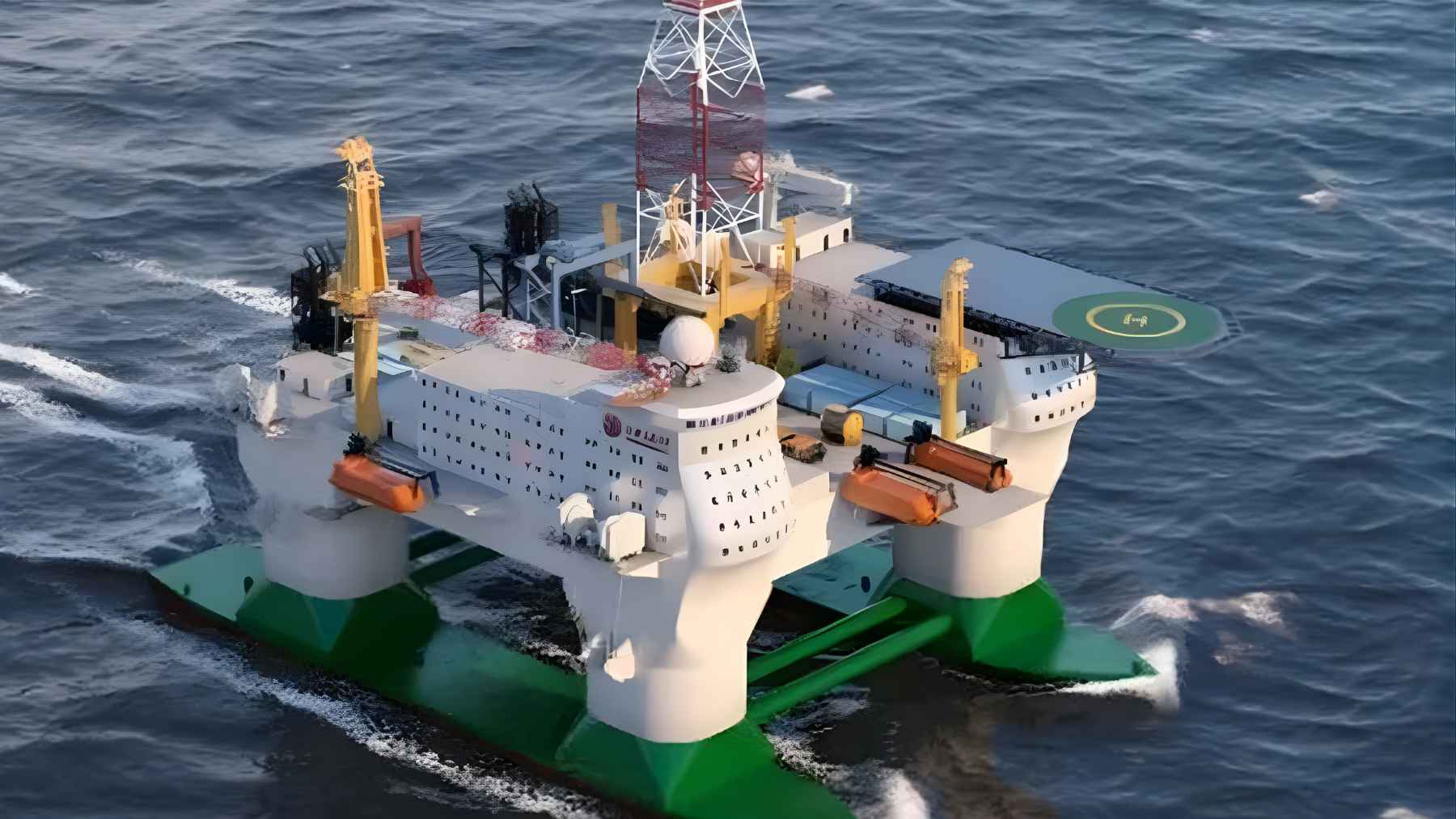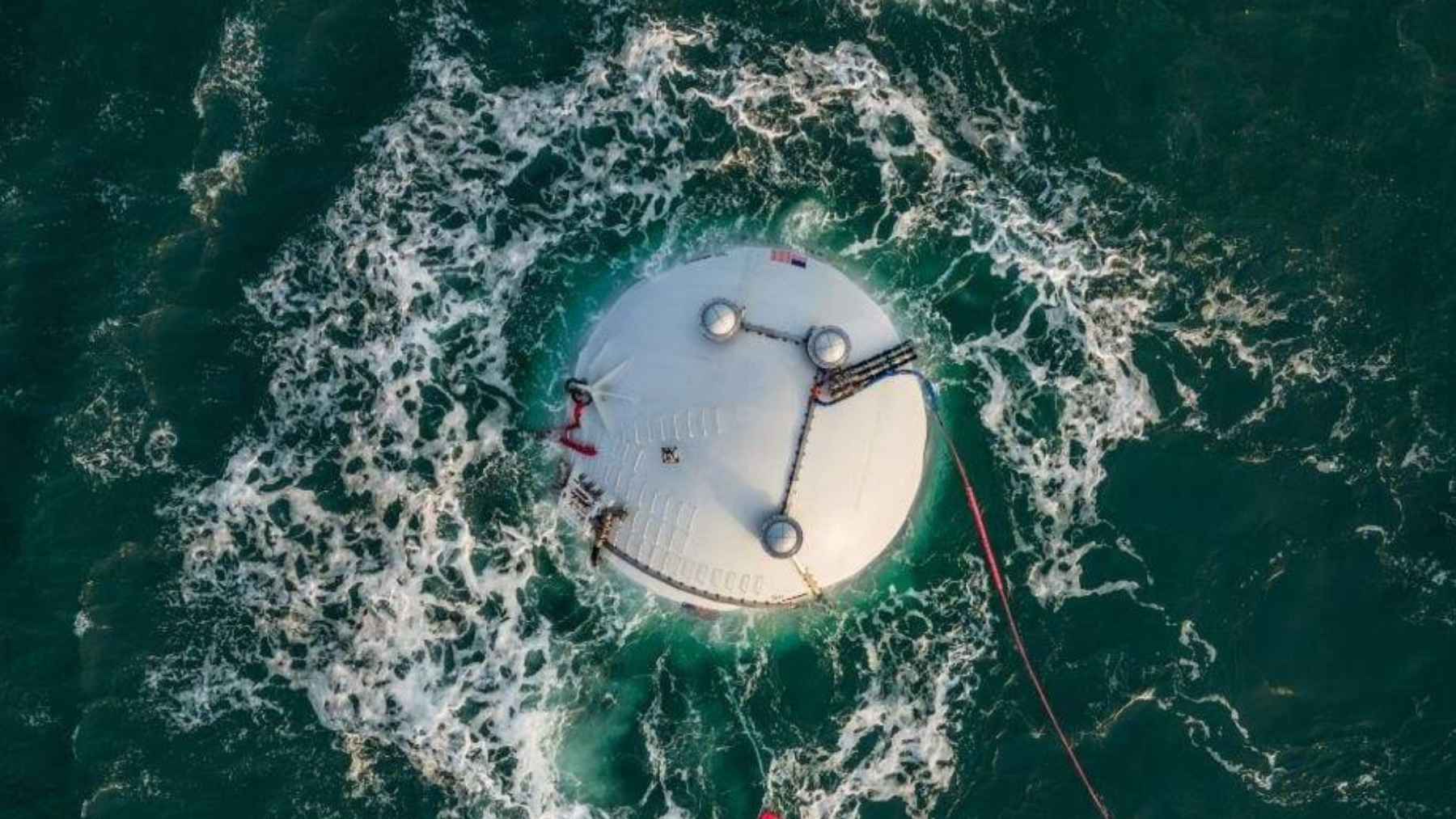
In the cold waters of Puget Sound, Washington, a floating object that looked strange enough to spark “UFO” chatter turned out to be something far more practical.
It was Ocean-2, an experimental wave-energy device built by the U.S. startup Panthalassa, and it is designed to do one thing well, namely turn the ocean’s constant motion into usable power.
What makes this test worth watching is not just the engineering novelty. It is the timing. As the U.S. scrambles to expand electricity supply for AI-driven demand from data centers, industry, and electrification, wave power is reappearing as a potential “always-on” complement to solar and wind, even if it is still stuck in the prototype stage.
A buoy that sparked UFO rumors
Ocean-2 does not look like a typical power plant. During recent testing in Puget Sound, locals reported an unidentified floating object before it was linked to Panthalassa’s work, according to reporting by the Daily Herald.
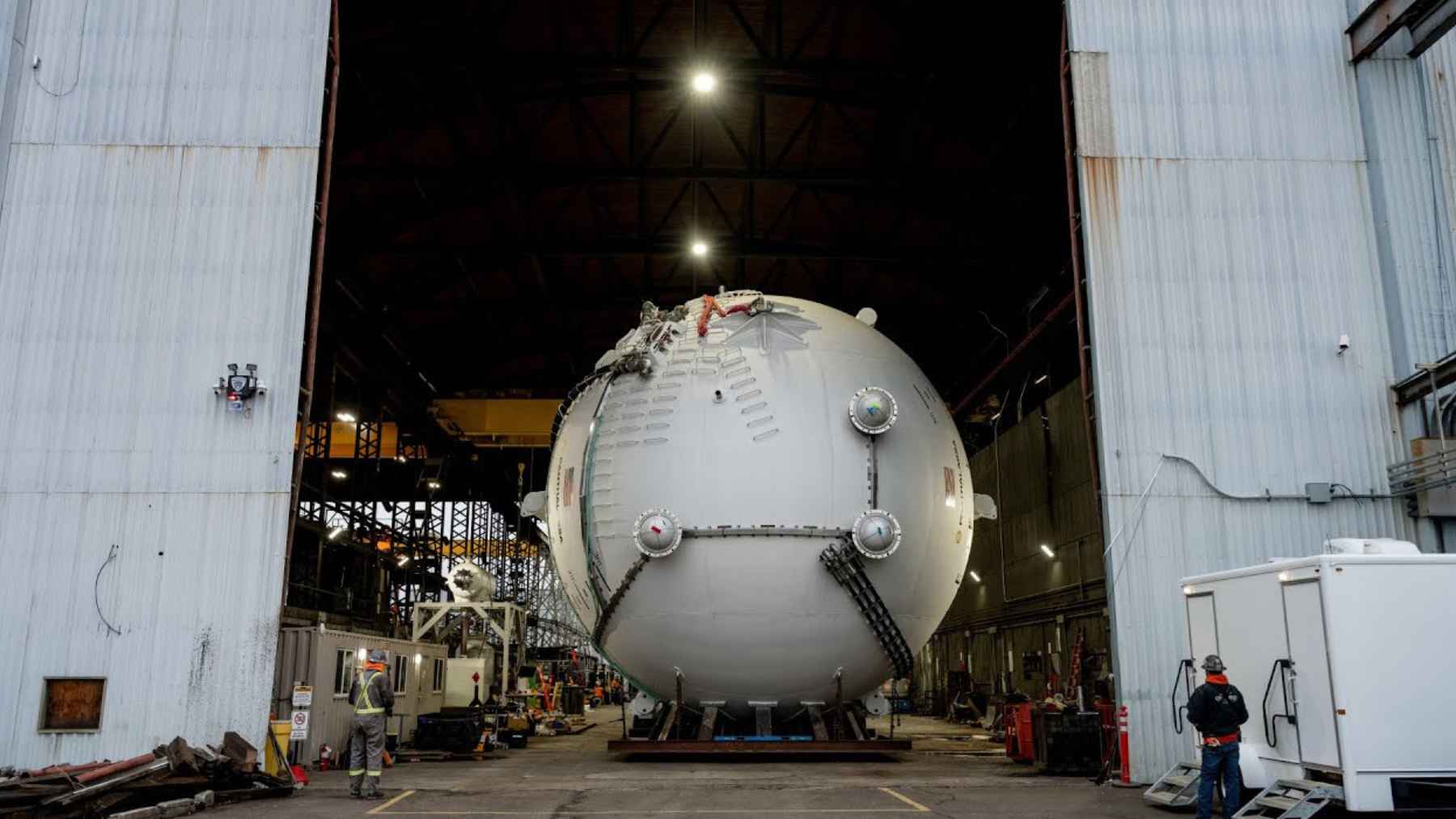
The device’s “node” is a sphere roughly 30 feet across, attached to a submerged tubular hull about 200 feet long. That basic shape matters because it is built to move with waves instead of fighting them, which is a big shift from older designs that often failed by trying to outmuscle the ocean.
Turning waves into electricity
Panthalassa describes Ocean-2 as an “overtopping” approach that uses wave motion to push water up through an internal pipe, then sends it back down through turbines to generate electricity. A technical overview of Ocean-2 is also documented in the PRIMRE database, which tracks marine energy projects and devices.
The company says the prototype reached peak output around 50 kilowatts during solid wave conditions. That is roughly in the ballpark of the average instantaneous demand of about 40 U.S. homes, depending on usage patterns and time of day, but it is a snapshot, not proof of steady supply.
Why the timing suddenly matters
Wave energy has always had a strong sales pitch. Unlike sunshine or wind, waves keep showing up, and the U.S. Department of Energy points out that marine energy can draw from the natural movement of water, including waves and tides.
But today’s pressure is different. Electricity demand is rising, and households feel it in the monthly bill, which is one reason grid planners are hunting for more firm power and flexibility.
Recent national billing and consumption benchmarks are tracked by the U.S. Energy Information Administration, which is often where utilities and regulators start when arguing about what “normal” looks like.
The ocean is unforgiving
The reason wave power keeps “almost” arriving is simple. Salt, corrosion, storms, and marine growth are relentless, and offshore maintenance is expensive enough to sink projects even when the technology works on paper.
Panthalassa’s pitch is that Ocean-2 reduces failure points by limiting moving parts, with the core mechanical work happening inside a sealed structure. The company also says its design avoids nets or snag hazards and operates quietly with slow movements, and its environmental lead told KOMO that the goal is to “live in harmony with the ocean.”
Hydrogen, data centers, and defense loads
Ocean-2 is not being framed mainly as a device to power suburban neighborhoods. Panthalassa has talked about offshore applications like producing “green hydrogen” for transport back to shore and supplying electricity to ocean-based compute, which is a very 2026 kind of energy plan.
This is where wave energy starts to intersect with other parts of the transition. Hydrogen blending for power generation is already moving from theory to hardware in some markets, as seen in projects like Japan’s push toward hydrogen-capable engines.
The funding surge and the proof still needed
Even with better engineering, wave power still needs scale, and scale needs money. Ocean Energy Europe has reported a pipeline of 165 megawatts of publicly funded planned ocean-energy deployments through 2030, along with 106 gigawatt-hours of cumulative electricity production in Europe by 2024.
In the U.S., the Department of Energy’s Water Power Technologies Office has been ramping support for marine energy, including a five-year funding push aimed at advancing wave energy through open-water testing.
The DOE also points to infrastructure like PacWave, a grid-connected test site off Oregon meant to help devices prove performance and survivability in real ocean conditions, not just in a lab.
At the end of the day, the question is not whether Ocean-2 can light up a few server racks on a calm afternoon. It is whether it can keep working through rough seasons, maintenance cycles, and hard economics, while the grid leans more heavily on storage and flexibility tools like battery storage and even niche ideas like thermal storage.
The official statement was published on the U.S. Department of Energy.