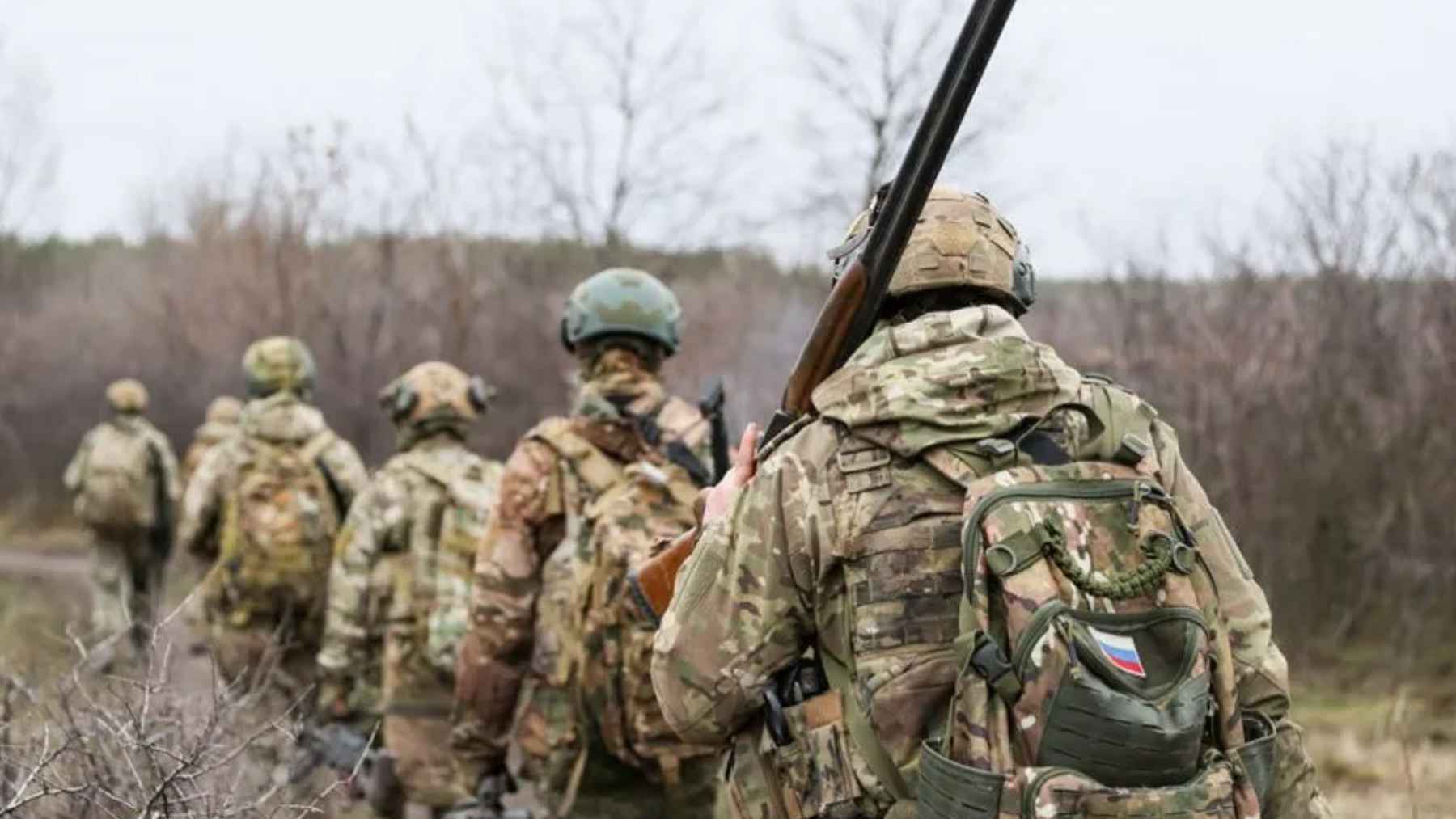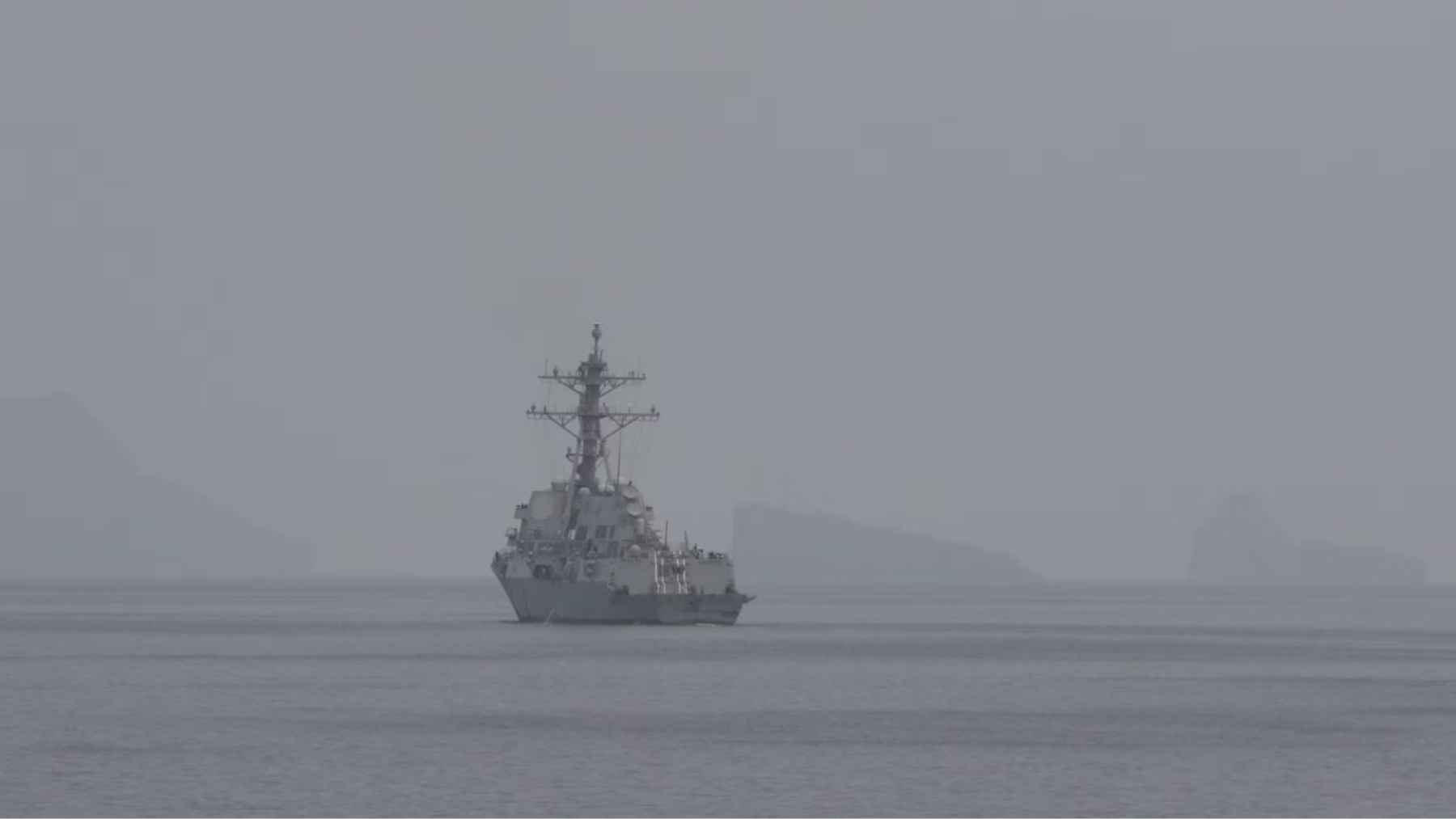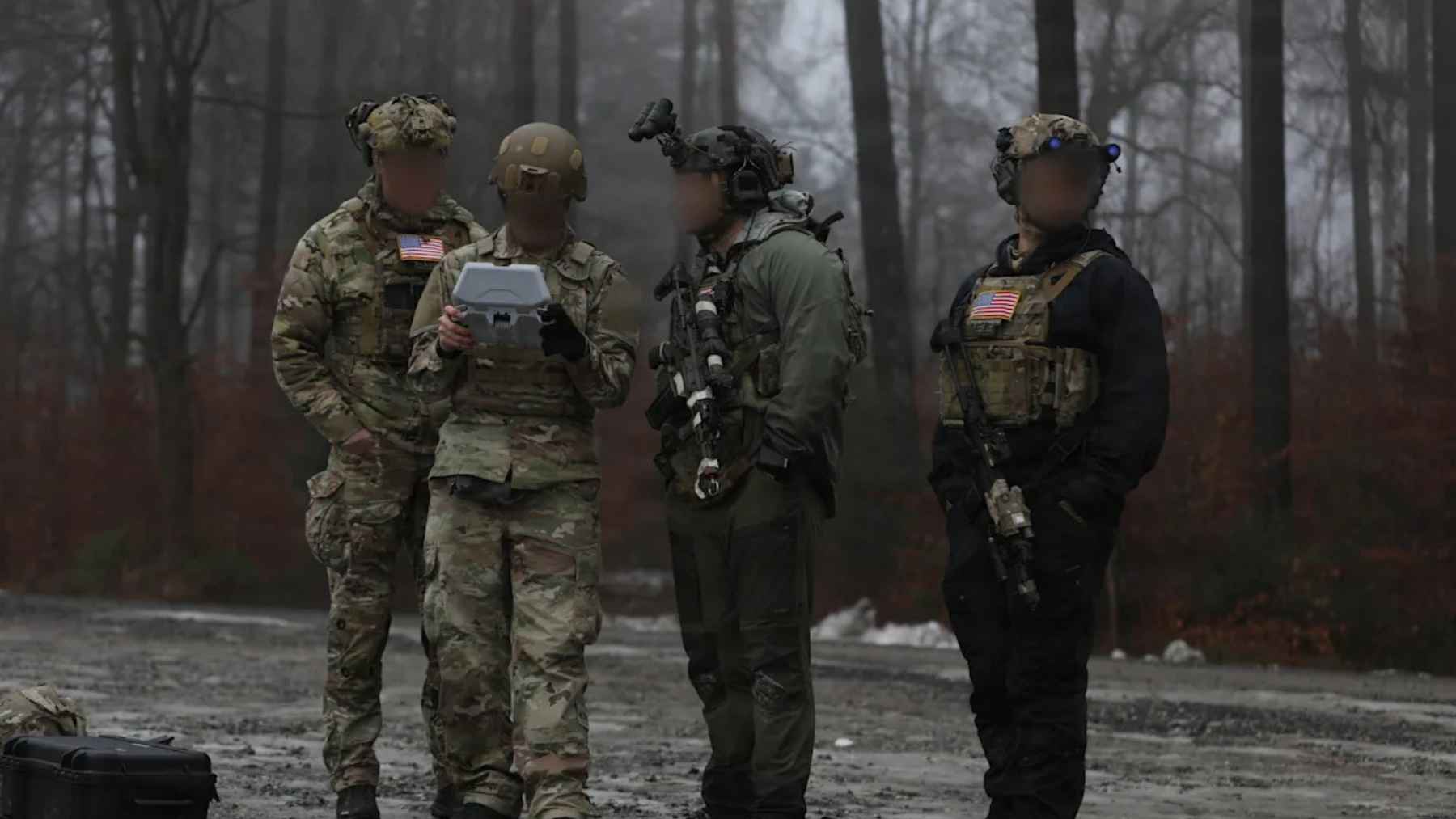
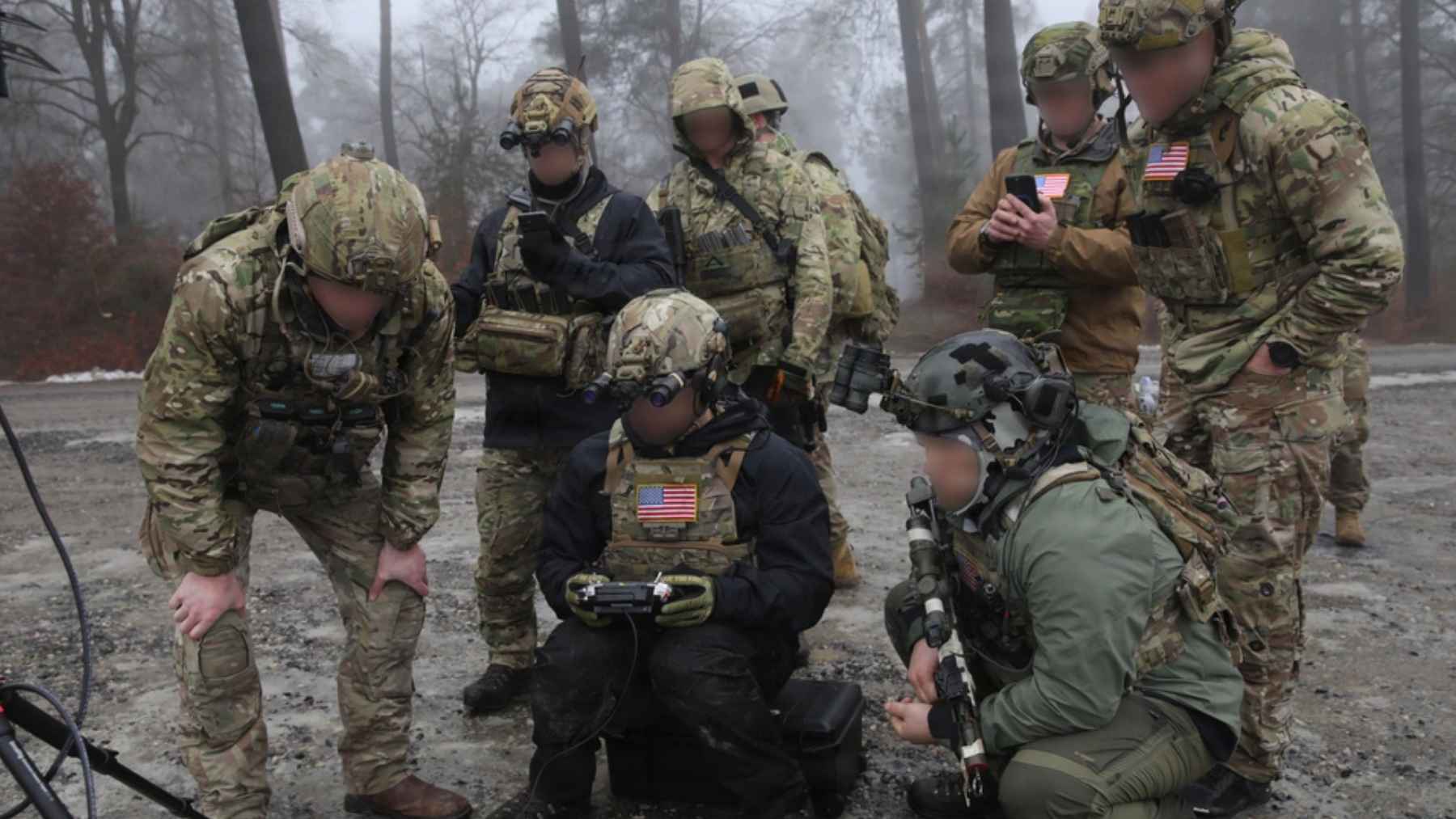
Green Berets from 2nd Battalion, 10th Special Forces Group (Airborne) ran Exercise Deep Strike at the Joint Multinational Readiness Center near Hohenfels, Germany, with one goal above all others.
A team moved roughly 93 miles (150 kilometers) through simulated hostile terrain without being detected, then used a strike drone carrying live munitions against a mock high-value target before helicopter extraction ended the lane.
The headline sounds like classic commando training, but the real lesson is quieter. In a battlefield shaped by drones, thermal cameras, and electronic warfare, concealment is now a technical skill, not just a fieldcraft one. How do you stay invisible when the sky can watch and the sensors can “see” heat?
Deep Strike basics
U.S. Special Operations Command Europe described Deep Strike as a new scenario for small teams of eight or more operators who have to infiltrate, avoid drone detection, and use drones for strike and resupply while operating in harsh winter conditions. A planner in the release said the point was to replicate “real-world battlefield conditions,” including a “complex electronic warfare environment.”
The teams relied only on mission-specific gear and excluded weapons, then restricted movement to nighttime hours to maximize stealth. That forces a different kind of discipline, where navigation, noise, and light control matter as much as raw speed.
It was also a reminder that war rarely happens on empty maps. The release notes teams had to avoid detection not just from opposing forces and drones, but also from civilian farmers, hikers, hunters, and local law enforcement. “This is no simple walk in the woods,” a team sergeant said.
Hiding from drones
The Ukraine war has pushed a blunt message into Western training plans, and it is that being seen can be fatal. Reporting has highlighted small drones equipped with thermal sensors that can pick up heat signatures even when normal camouflage works in daylight. On a cold night, that makes the human body its own beacon.
Deep Strike’s answer was to treat detection as a constant, not an exception. Night movement reduces visual exposure, but it does not automatically solve thermal detection, and it can complicate everything from route selection to casualty care.
Then there is the invisible fight in the airwaves. The official description points to “contested electronic warfare spaces,” which implies teams should expect jamming, spoofing, and degraded communications while still needing to control drones and coordinate a strike.
Thermal camouflage becomes contract language
This same threat picture is showing up in acquisition paperwork. A Marine Corps Systems Command request for information describes a “Multispectral Camouflage Overgarment” meant to reduce detection across visible and infrared bands and suppress thermal signatures in mid-wave and long-wave infrared.
The document translates “hard to spot” into distances. It lists threshold detection ranges such as about 0.37 miles (600 meters) for daytime visual detection from a ground sensor and about 0.62 miles (1,000 meters) from an aerial sensor. For aerial mid-wave infrared sensors, the threshold is about 3.1 miles (5,000 meters), which is a long way to hide a warm human silhouette.
It also hints at where the business is headed. The Marine Corps targets an initial 13,000 overgarments by fiscal 2027 and 61,222 by fiscal 2030, and the government estimates a production lead time of about five months. Signature management is starting to look less like niche gear and more like a repeatable supply chain.
Drones as supply
Deep Strike is not only about avoiding drones. It is also about using them, because the same systems that scout can deliver. The official release says teams used drones to deliver supplies to Green Berets in the field, with support from SOCEUR’s Theater Edge Innovation Lab and drone designers assisting during the exercise.
That matters because long-distance infiltration is a logistics problem as much as a tactical one. If a team is moving for days through winter terrain, every extra pound changes speed and fatigue, and resupply options shrink fast. A small drone drop can keep a team moving without forcing a risky rendezvous.
The exercise also doubles as a tech trial. SOCEUR’s description emphasizes a feedback loop where emerging unmanned systems are validated in realistic conditions and refined for fielding. That approach borrows from the product mindset of rapid iteration, only the testing ground is a battlefield simulation.
What comes next
The release frames Deep Strike as the first iteration of a “deep strike lane” concept, with future versions expected to incorporate NATO special operations forces. In Europe, that is not a box-checking exercise, because the same partners would likely need to share drone tactics, electronic warfare expectations, and procedures in any real crisis.
But the cat-and-mouse will not stop. Better camouflage and smarter movement tend to produce better sensors and sharper counter-drone tactics, and the edge can swing quickly. Even thermal cloaks can backfire if they are poorly designed, with some reporting noting garments that made wearers stand out as unnatural “cold spots” against a warmer background.
For now, Deep Strike shows where modern special operations is heading – for the most part – toward endurance, restraint, and technical literacy. It is not flashy, and it is not meant to be.
The official statement was published on DVIDS.