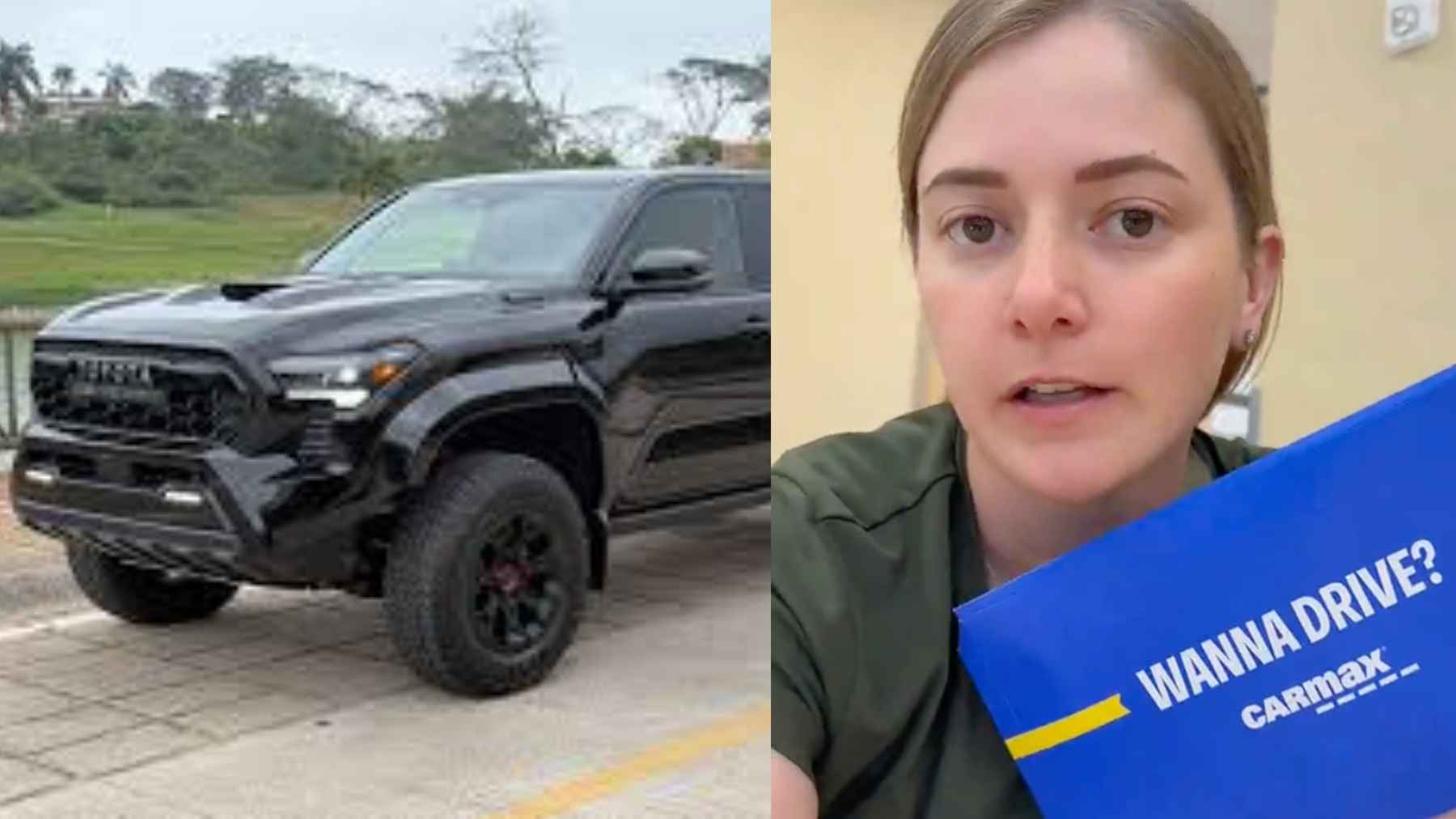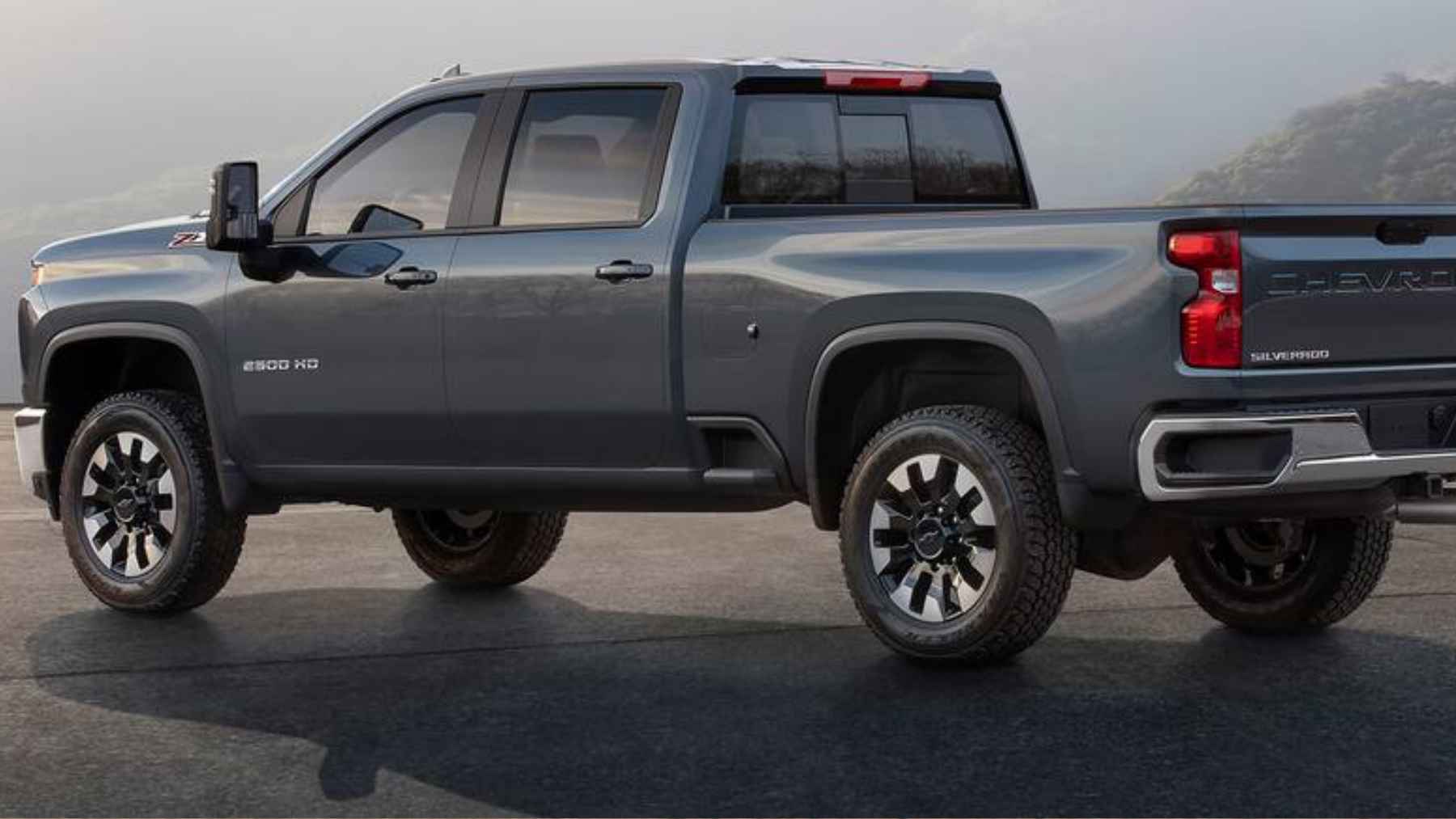
On April 1, a satirical “announcement” about a 2028 Chevrolet Silverado Super Heavy Ultra Duty (nicknamed the Silverado “SHUD”) made the rounds online, complete with a giant grille badge, a massive V8, and an almost proud lack of forward visibility. Then came the punchline. The story itself spelled it out with a simple line: “Yup, that’s right … April Fools!”
But jokes do not go viral unless they feel plausible. And this one landed at a moment when the U.S. truck business is pulling in two directions at once: bigger and bolder styling on one hand, and growing pressure on safety and manufacturing strategy on the other. The “SHUD” is fictional, yet the market forces it mocks are very real.
The “SHUD” prank worked because it felt close to reality
The April Fools writeup leaned hard into exaggeration, but it did so using familiar ingredients. The fake truck featured a “largest 3D-printed metal component” bowtie emblem, a naturally aspirated 10.4-liter (632 cubic inch) V8, and a design quote that supposedly “maximizes road presence while minimizing forward visibility.”
It also joked about lighting that sounds like something you have felt on a dark road. The piece claimed 12 LED high beams “within a three-mile radius,” which is the kind of line that makes drivers laugh because they have been there, squinting in the rearview mirror, wondering why a vehicle needs stadium-grade illumination for a grocery run. (gmauthority.com)
The key detail is that this was not a leaked internal plan. It was openly presented as satire, ending with that explicit April Fools reveal. Still, the humor is a signal in itself, because it points to public frustration about visibility, glare, and the arms race vibe of modern pickups.
The real news is GM’s Medium Duty wind-down
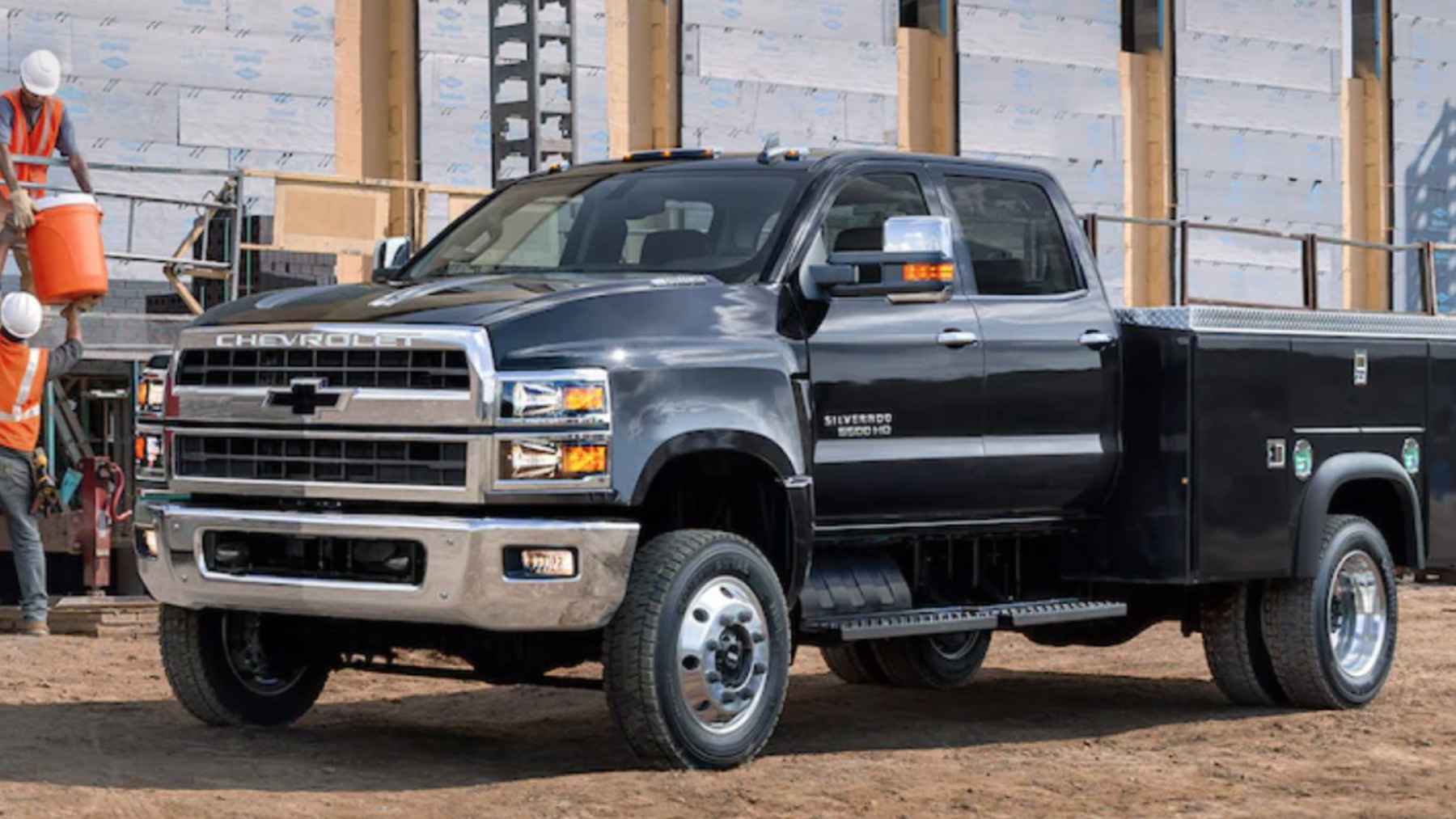
While the “SHUD” was imaginary, GM’s Medium Duty Silverado situation is not. GM Authority reported that General Motors will end production of the Chevrolet Silverado 4500 HD, 5500 HD, and 6500 HD chassis cabs “following the September 30” conclusion of its manufacturing agreement with International Motors.
That matters because Medium Duty trucks are not lifestyle props. They are work platforms for upfits such as utility bodies, dump beds, and service rigs, and they support fleets that need predictable replacement cycles. If you run a business, downtime costs more than a flashy grille ever will.
Chevrolet’s own commercial site still positions these chassis cabs as purpose-built tools, with a starting MSRP shown at $59,585, a max available gross vehicle weight rating of 23,500 pounds, and a Duramax 6.6-liter turbo diesel V8 paired with an Allison transmission, rated on the page at 350 horsepower and 750 pound-feet of torque.
When a supply chain ends, a defense buyer can step in
GM’s Medium Duty exit is tightly tied to manufacturing reality, not just sales charts. The Silverado MD trucks have been assembled through a partnership with International at its Springfield, Ohio facilities, and once that agreement ends, the physical production footprint has to go somewhere else or go away.
International itself has already sketched what comes next for the plant. On March 30, 2026, International announced an asset purchase agreement under which Roshel will acquire operating assets of the Springfield facilities, describing Roshel as a “leading defense and commercial vehicle manufacturer.”
In practical terms, that means the same industrial space that has supported commercial truck assembly is being repositioned as a U.S. hub for producing “commercial, special and armored vehicles.” That is a sharp reminder that factories are strategic assets, and in 2026, defense demand can be a powerful magnet for production capacity.
Bigger trucks bring bigger blind zones and higher stakes
Here is where the April Fools joke connects to the real world in an uncomfortable way. Consumer Reports found that due to height and long hoods, some full-size trucks have front blind spots 11 feet longer than those in some sedans and 7 feet longer than many popular SUVs. That is not a small difference. It is the distance between seeing a person in time and never seeing them at all.
The risk is not just theoretical. The Insurance Institute for Highway Safety analyzed nearly 18,000 pedestrian crashes and reported that pickups, SUVs, and vans with hood heights greater than 40 inches were about 45% more likely to cause fatalities in pedestrian crashes than lower vehicles with hood heights of 30 inches or less and sloped front ends.
This is why “forward visibility” keeps popping up in conversations about vehicle design. It is not only about driver comfort. It is about what happens at the crosswalk, the parking lot, and the school drop-off line when tall hoods and blunt fronts meet human bodies.
Washington is starting to write rules around the front end
Regulators are not ignoring the shift toward bigger pickups and SUVs. In September 2024, the National Highway Traffic Safety Administration proposed a pedestrian head protection standard that would set test procedures simulating head-to-hood impacts and performance requirements aimed at reducing head injury risk.
NHTSA estimated the standard would save 67 lives per year, and noted that pickups and large SUVs represented nearly a quarter of U.S. passenger vehicle sales in 2020.
At the same time, NHTSA has been reshaping how it signals “safety” to consumers. In a November 2024 final decision notice for NCAP, the agency announced it would add four new advanced driver assistance system technologies to the program, including blind spot warning, blind spot intervention, lane keeping assist, and pedestrian automatic emergency braking.
None of this guarantees that tomorrow’s trucks will shrink. But it does suggest that the next phase of the market will not be only about horsepower and road presence. It will also be about sensors, sightlines, and how the front of a vehicle behaves when the worst happens.
What buyers and fleets should watch next
For shoppers, especially families, the takeaway is not “never buy a truck.” It is to treat visibility and lighting as first-order features, not minor specs buried under tow ratings. If a vehicle’s front end feels like a wall from the driver’s seat, that is information, and it should weigh as heavily as a trim package.
For fleets, the Medium Duty shift is the more immediate business issue. If GM’s 4500 HD to 6500 HD chassis cabs are leaving the lineup after September 30, 2026, the replacement plan, the upfit ecosystem, and service support become the story. That is the sort of practical detail that shows up later in procurement meetings and earlier in delivery delays.
And for the industry, the Springfield handoff is a reminder that auto and defense manufacturing are colliding in surprising ways. One day it is a commercial assembly line. Next day it is pitched as a hub for armored vehicles. The joke truck may be fake, but the competition for industrial capacity is not.
The press release was published on International Newsroom.