Ever wonder why a conflict thousands of miles away can turn into a pricier flight? Iran’s decision to allow ships carrying humanitarian and essential goods through the Strait of Hormuz looked like a small pressure release valve for energy and shipping costs. But the relief has been fragile, and the U.S. military is now moving to blockade traffic entering or exiting Iranian ports.
Hormuz is only about 33 miles wide at its narrowest point, yet it carries energy flows that shape airline fuel bills and the price of moving goods. U.S. energy data show roughly 20 million barrels of oil per day flowed through the strait in 2024, about 20% of global petroleum liquids consumption, with most cargoes headed for Asia.
When that corridor tightens, the ripple can reach everything from freight invoices to the fare you pay for a last-minute flight.
What Iran approved
Iran “approved” passage for ships carrying humanitarian and essential goods, including livestock feed, based on a letter from the Agriculture Ministry’s trade development office that Iranian media reported and Anadolu Ajansi summarized.
The same report said the directive was backed by Iran’s government and armed forces and required designated protocols for vessels using the route.
Iranian Foreign Minister Seyed Abbas Araghchi later said safe passage through the strait would be possible for a period of two weeks through coordination with the Iranian armed forces, while noting technical limitations. For shipping lines and airlines, that short window is not a footnote. It is the difference between a one-time detour and a schedule you can plan around.
Why Hormuz moves prices everywhere
The U.S. Energy Information Administration calls Hormuz a critical oil chokepoint because there are few practical alternatives if traffic is disrupted. The EIA estimates oil flows through the strait averaged about 20 million barrels per day in 2024 and that 84% of crude and condensate moving through it went to Asian markets.
The same analysis shows China, India, Japan, and South Korea were the top destinations for crude and condensate that transited Hormuz.
Geography makes the margin for error small. The International Energy Agency notes inbound and outbound shipping lanes are about 2 miles wide each, plus a buffer zone, inside a strait that narrows to roughly 33 miles. The EIA estimates only about 2.6 million barrels per day of pipeline capacity could be available from Saudi and UAE routes to bypass Hormuz in a disruption.
Markets respond first, then consumers notice. After the U.S. announced a planned blockade of Iranian ports, U.S. crude rose to about $104 per barrel and Brent crude climbed above $102, the Associated Press reported. Those moves can translate into higher gasoline prices and higher jet fuel costs, and both tend to land on businesses and households quickly.
Air travel feels it first
Fuel is one of the airline industry’s biggest cost drivers. IATA estimated jet fuel accounted for 25.8% of total airline operating costs in 2025 when prices averaged $86 per barrel, which helps explain why sudden spikes trigger surcharges and schedule changes.
Reuters cited IATA data showing jet fuel prices jumping from about $85 to $90 per barrel in February to around $209 globally.
Airlines have already started adjusting, including in Asia. Reuters reported that AirAsia X cut flights and added fuel surcharges, Cathay Pacific raised its fuel surcharge and began reviewing it every two weeks, and Air India revised how it calculates fuel surcharges. That is the travel industry’s version of braking gently before a hard turn.
Passengers also see the squeeze in add-on fees. American Airlines and Alaska Air raised checked baggage fees as they tried to pass along higher fuel costs, Reuters reported. It is the kind of change you notice at the airport kiosk, right when you are trying to keep a trip on budget.
Security and tech are part of the story
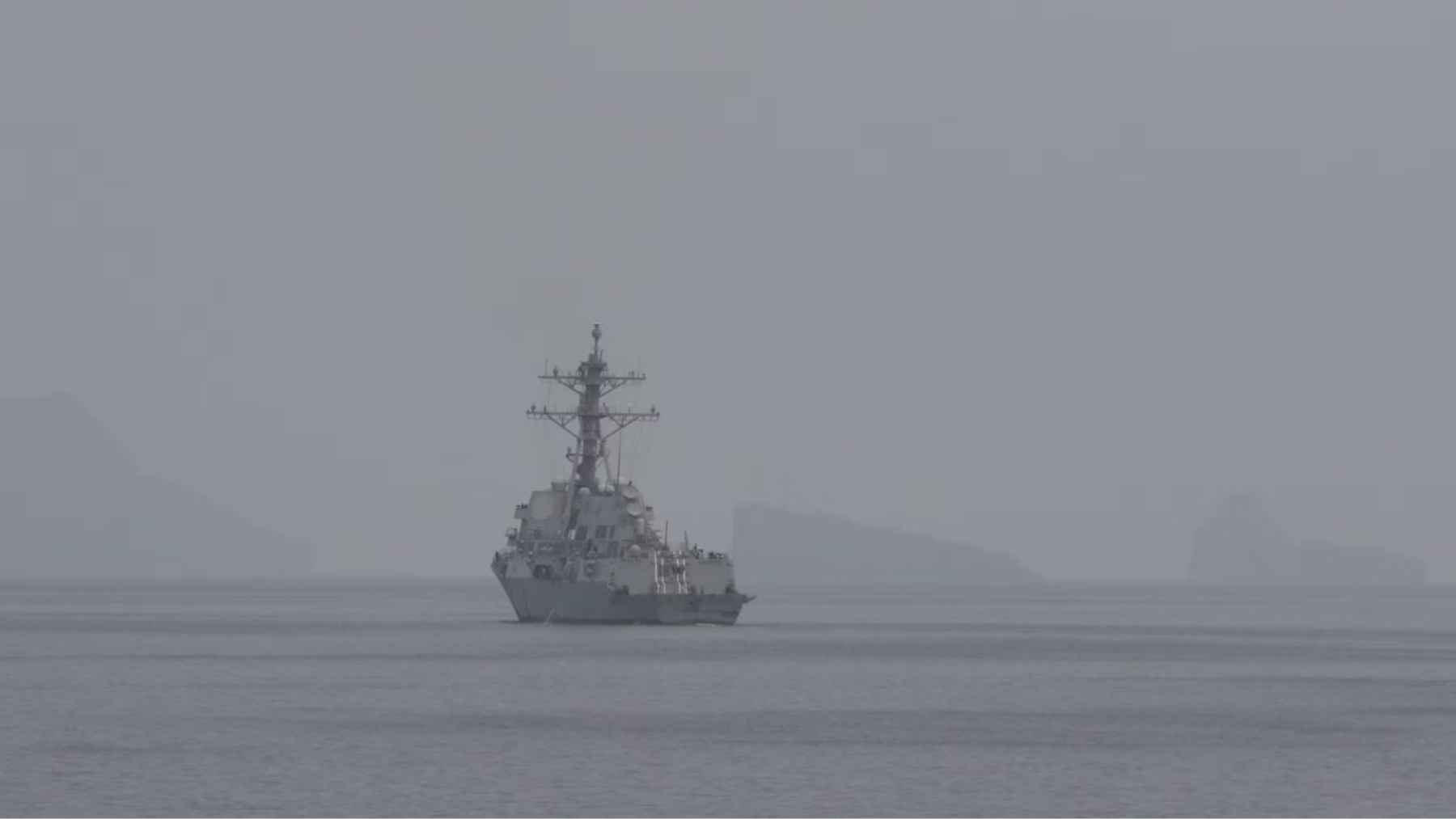
On the defense side, Hormuz is not only about permission but also about safety at sea. CENTCOM said on April 11 that U.S. forces began setting conditions to clear mines in the strait, and it said underwater drones would join the clearance effort. The same release quoted Adm. Brad Cooper saying a new passage was being established and would be shared with the maritime industry.
Then came the new escalation risk. In a press release dated April 12, CENTCOM said it would begin a blockade of all maritime traffic entering and exiting Iranian ports on April 13 at 10 a.m. Eastern Time, while not impeding vessels transiting to and from non-Iranian ports.
It also told commercial mariners to monitor Notice to Mariners broadcasts and contact U.S. naval forces on bridge-to-bridge channel 16 when operating near the strait approaches.
For now, businesses should treat “safe passage” as conditional and time-limited, not a return to normal. ASEAN foreign ministers urged the United States and Iran to keep negotiating and restore safe, unimpeded passage for vessels and aircraft, Reuters reported.
The press release was published by U.S. Central Command.