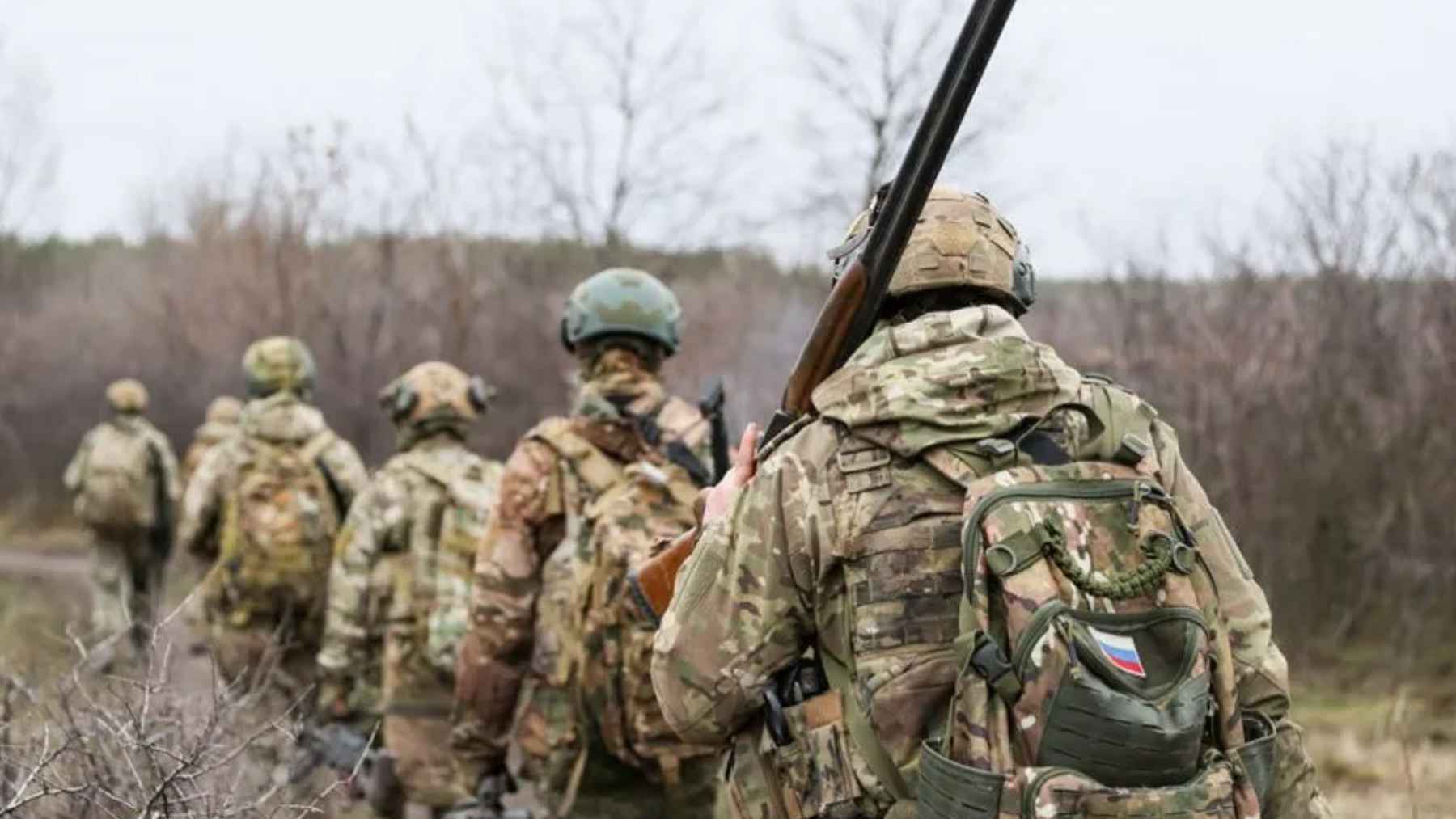
Russia’s war recruiting push is showing up in an unexpected place, the workplace. In the Ryazan region about 130 miles southeast of Moscow, Governor Pavel Malkov signed a decree telling employers with at least 150 workers to nominate staff as “candidates” for contract military service, with quotas that rise with company size.
The deadline is September 20, and the order applies to entities “regardless of their form of ownership,” meaning private and state-linked organizations alike.
On paper, this is not a draft notice. But by asking managers to hand over names, it shifts part of the state’s manpower challenge onto HR departments and factory directors, right as Russia faces a widely reported labor crunch and higher defense outlays.
If similar mandates spread, the business cost will not just be paperwork – it will be missing people on the schedule.
A quota for employers
Malkov’s March 20 decree (No. 17-pg) sets a simple requirement. Companies with 150 to 300 employees must submit two candidate names, those with 300 to 500 must submit three, and employers with more than 500 workers must submit five.
The order runs from March 20 through September 20, and it was published on Russia’s official legal portal on March 24.
What happens if a company refuses or drags its feet? The decree itself does not spell out penalties, according to multiple reports.
But regional rules in Ryazan can allow fines of up to 1 million rubles, roughly $12,200, for obstructing related “heightened readiness” measures tied to earlier presidential orders.
What “candidates” really means
Russian officials describe contract service as voluntary, and the Kremlin has publicly rejected the idea that a new general mobilization drive is imminent. Dmitry Medvedev, deputy chairman of Russia’s Security Council, said more than 400,000 people signed up for contracts last year and over 80,000 so far this year.
Still, putting employers in the middle changes the feel of the system, because a “candidate list” is not something most businesses compile for fun.
Conflict Intelligence Team, a group that tracks the war from open sources, said this appears to be the first publicly available document that clearly lays out recruitment quotas for companies.
Timofey Vaskin, a lawyer who represents conscripts, told The Moscow Times the order reads like an overly broad interpretation of presidential decrees and could be “legally unenforceable.”
Even if that view is right, informal pressure can still do a lot of work, especially when a firm worries about inspectors showing up.
Why business feels the squeeze
In practical terms, managers are being asked to do something that can quickly sour a workplace. Who gets picked, and on what basis, when the job description never mentioned “candidate for the army”? For a plant supervisor, losing a trained machinist is not an abstract number, it is the 3 AM call to cover a shift and keep the line moving.
This is also landing on companies in an economy where labor is already tight. Russia’s labor minister has warned the country could face a shortage of nearly 11 million workers by 2030, a figure echoed in subsequent reporting.
When the labor pool is shrinking, every extra demand on workers shows up somewhere, often in higher wages, longer hiring times, or corners cut on training.
Labor shortages meet defense budgets
Ryazan’s order matters partly because it fits the bigger fiscal picture. Russia’s draft budget documents showed national defense spending rising to 6.3% of GDP in 2025, roughly $145 billion, which Reuters noted would be the highest level since the Cold War.
Higher defense spending can keep factories busy, but it also pulls engineers, welders, and logistics staff toward military production and away from the civilian economy.
At the same time, the Kremlin has set an ambitious force size target. In a September 2024 decree, President Vladimir Putin ordered the armed forces to expand to 2.38 million personnel, including 1.5 million active servicemen.
That is a huge number of paychecks, equipment sets, and training slots, and someone has to fill them, even if the government insists it is all voluntary.
Tech recruitment moves to campuses
The recruiting push is not only about infantry. A Reuters report this month described Russian universities promoting contract service in drone units, offering incentives that look more like a corporate signing bonus than a traditional enlistment pitch.
One university document cited by Reuters promised a first-year salary of about $68,400 (around 5.5 million rubles), plus a one-time payment of about $31,100 (2.5 million rubles) after training, a monthly allowance near $3,000 (240,000 rubles), and a one-time university payment of about $2,500 (200,000 rubles).
Kremlin spokesman Dmitry Peskov told reporters that the offer to join these units is “completely open,” and he confirmed students were being encouraged to join Russia’s unmanned systems forces, a branch Putin backed late last year.
It is a telling mix of old and new, quotas aimed at regular employers alongside glossy pitches for high-skill tech roles. If you are trying to build a modern drone force while sustaining a grinding war, you need both bodies and brains.
Signals to watch before September
The next question is whether Ryazan is a one-off or a template. The decree’s September 20 deadline makes it an easy policy to copy, and other regions could quietly mirror it even if they do not publish the paperwork.
It will also matter whether local authorities actually enforce fines, or whether compliance is achieved through softer tools like “strong recommendations” and phone calls.
For businesses, the warning signs will be visible in ordinary places, hiring dashboards, overtime logs, and the list of open positions that never seems to shrink. For outside partners, it is worth watching for knock-on effects in output, delivery times, and the availability of specialized staff, especially in regions with big industrial employers.
A policy that starts as a recruitment form can end up reshaping the labor market in ways that show up in everyday life.
Now the question is whether other regions follow Ryazan’s lead.
The decree was published on the Official Internet Portal of Legal Information.