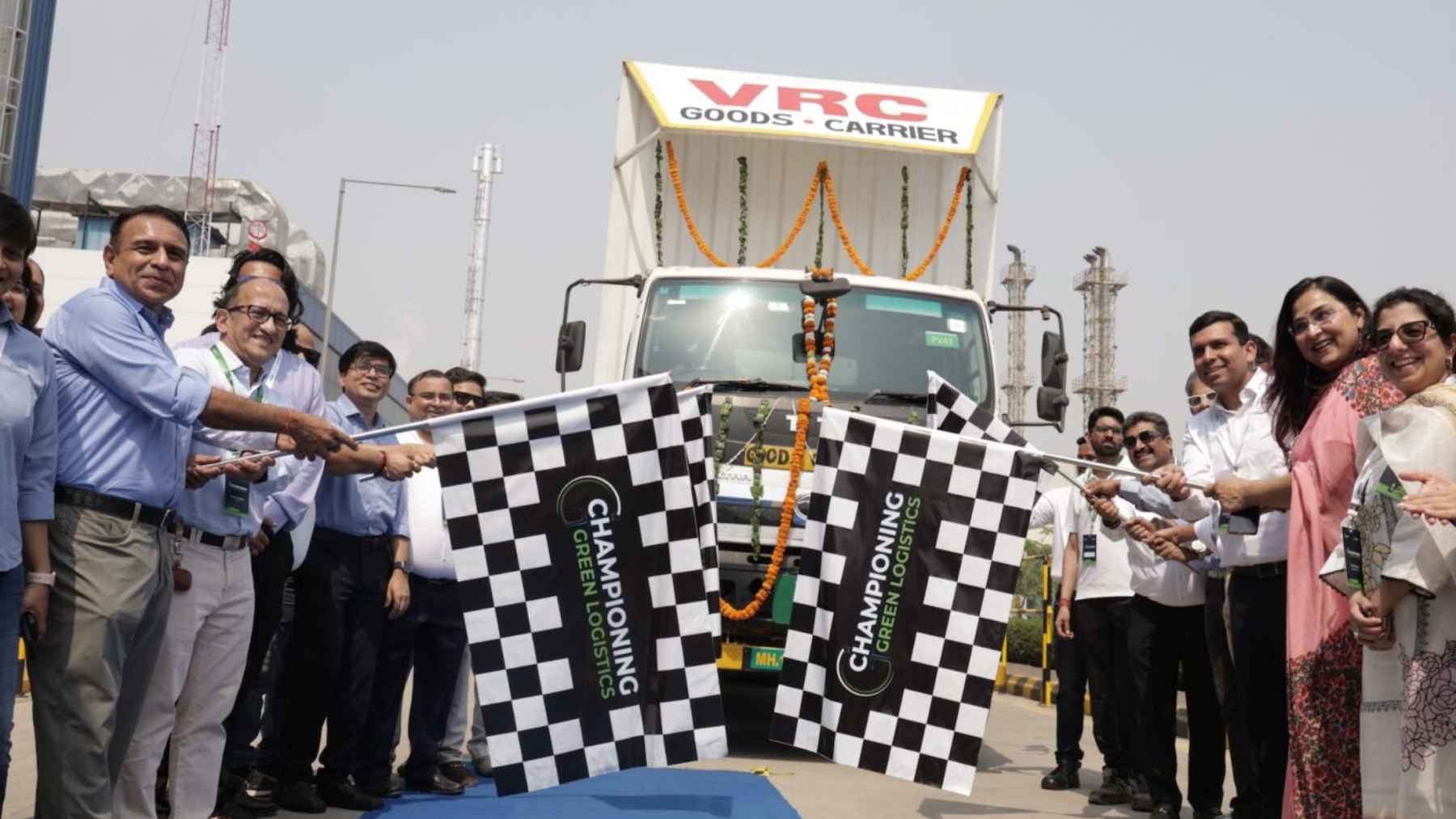
If you’ve ever been boxed in behind a slow truck, breathing exhaust while traffic crawls, you already know freight has a footprint. In March 2026, PepsiCo India began operating eight retrofitted electric container trucks on a fixed route between Kosi in Uttar Pradesh and Pataudi in Haryana, calling it an “EV Green Corridor.”
The fleet is small, but the playbook is worth watching. Instead of waiting for brand-new heavy electric trucks to become cheap and plentiful, PepsiCo and its partners are converting existing vehicles and building a corridor-style operating model around a predictable route. Can that combination become the fast lane for cleaner freight in markets that can’t afford to move slowly.
Eight trucks, one corridor
PepsiCo says the corridor is powered by eight 32-foot, single-axle electric container trucks running the Kosi to Pataudi route, a trip of about 71.5 miles (115 kilometers). The company expects the fleet to cover about 298,258 miles a year (480,000 kilometers), with room to scale as operations expand.
This is not strictly a one-destination experiment. PepsiCo’s supply chain leadership has also pointed to trips from Kosi to New Delhi, a slightly longer haul of about 78.3 miles (126 kilometers).
But the company has not published technical specifications like battery size or charging times, which makes it hard to judge how easily this model travels to longer routes or heavier loads.
Retrofitting instead of buying new
The trucks are not fresh off a factory line as purpose-built electric vehicles. According to reporting around the launch, Kalyani Powertrain (a Bharat Forge subsidiary) carried out the retrofitting, and the converted fleet includes repowered models from Tata Motors Commercial Vehicles and Eicher Trucks and Buses.
Why take the retrofit route at all. Globally, electric trucks are growing fast but remain a small slice of total sales, with the International Energy Agency reporting electric truck sales grew by nearly 80% in 2024 and reached close to 2% of total truck sales. That’s a reminder that many fleets still need “bridge strategies” that work with what’s already on the road.
Building the system around the truck
A fixed corridor makes electrification feel less like a gamble and more like operations. PepsiCo has described the Kosi to Pataudi corridor as a scalable model for electric linehaul freight, with route optimization, vehicle customization, and a supporting charging ecosystem designed into the setup.
PepsiCo India’s CEO has framed the corridor as part of building a supply chain that is “cleaner, more efficient, and future-ready,” and he has emphasized the practical work behind it, including partners planning charging and routing “from scratch.” In real life, that’s the difference between a good announcement and trucks that actually keep moving at the pace logistics demands.
What the climate math looks like
Freight is a climate problem partly because it is so easy to overlook, until you hear the engine outside your window. The IEA estimates road transport emissions were just over 6 gigatons of CO2 in 2024 (about 6.6 billion U.S. tons), with trucks responsible for roughly one-third of road emissions.
India’s stakes are especially high because road transport is already a major and growing source of emissions and urban air pollution. The IEA estimates road transport accounts for about 12% of India’s energy-related CO2 emissions, and it warns that energy use and CO2 from road transport could double by 2050 without major changes.
A bigger supply chain shift
PepsiCo’s corridor is just one part of a wider logistics shift in India. The company says it has converted more than 400 distributor-linked vehicles to electric three- and four-wheelers for last-mile delivery, and it has also deployed more than 80 compressed natural gas vehicles in the National Capital Region through logistics partners.
That broader mix matters because most corporate emissions are not just factory smokestacks. PepsiCo has a global goal to reach net-zero emissions by 2040, and its own disclosures around climate strategy highlight how much of the challenge sits in the value chain, where transport decisions add up quickly.
What to watch next
The real test now is whether PepsiCo can turn this corridor into a repeatable template, not a one-off success story. To get there, the market will want more detail on uptime, charging logistics, payload impacts, and total cost, especially since the company and its partners have not published full technical specifications for these trucks.
There are early signs the ecosystem is aiming bigger than eight vehicles. Electrive reports that Vayudoot Road Carriers plans to build a fleet of 50 electric trucks by the end of 2026 and is linking charging infrastructure to the rollout through its Vayugreen Transchargers venture.
If that kind of corridor-first thinking spreads, this project may end up being remembered less for the truck count and more for the blueprint.
Eight trucks won’t transform India’s freight market overnight, but the direction of travel is getting easier to see.
The official statement was published on LinkedIn.