When your cell phone battery drops into the red at a campsite or during a storm outage, it stops being a “nice to have” problem.
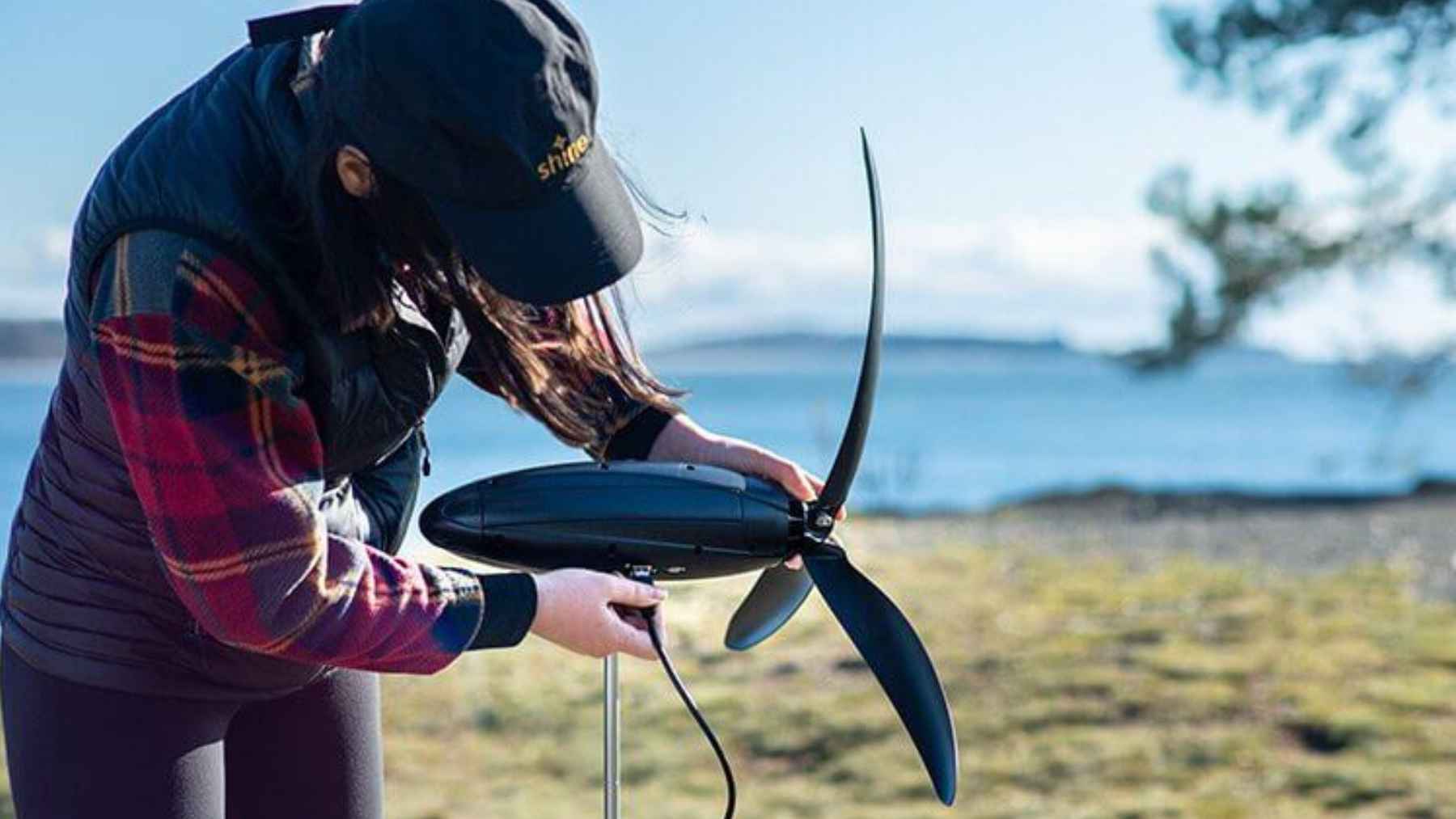
A Canadian company called Aurea Technologies is betting that Shine 2.0 can help, with a portable wind turbine designed to charge phones, laptops, and other small electronics when the sun is down and the weather is ugly.
The idea is catching on with early buyers, but the real story is less about replacing solar panels and more about realistic backup power. Wind can be a lifesaver in the right places, yet it can also be a letdown when you are sheltered by trees, parked behind a ridge, or stuck with “just barely” breezes.
What Shine 2.0 is offering
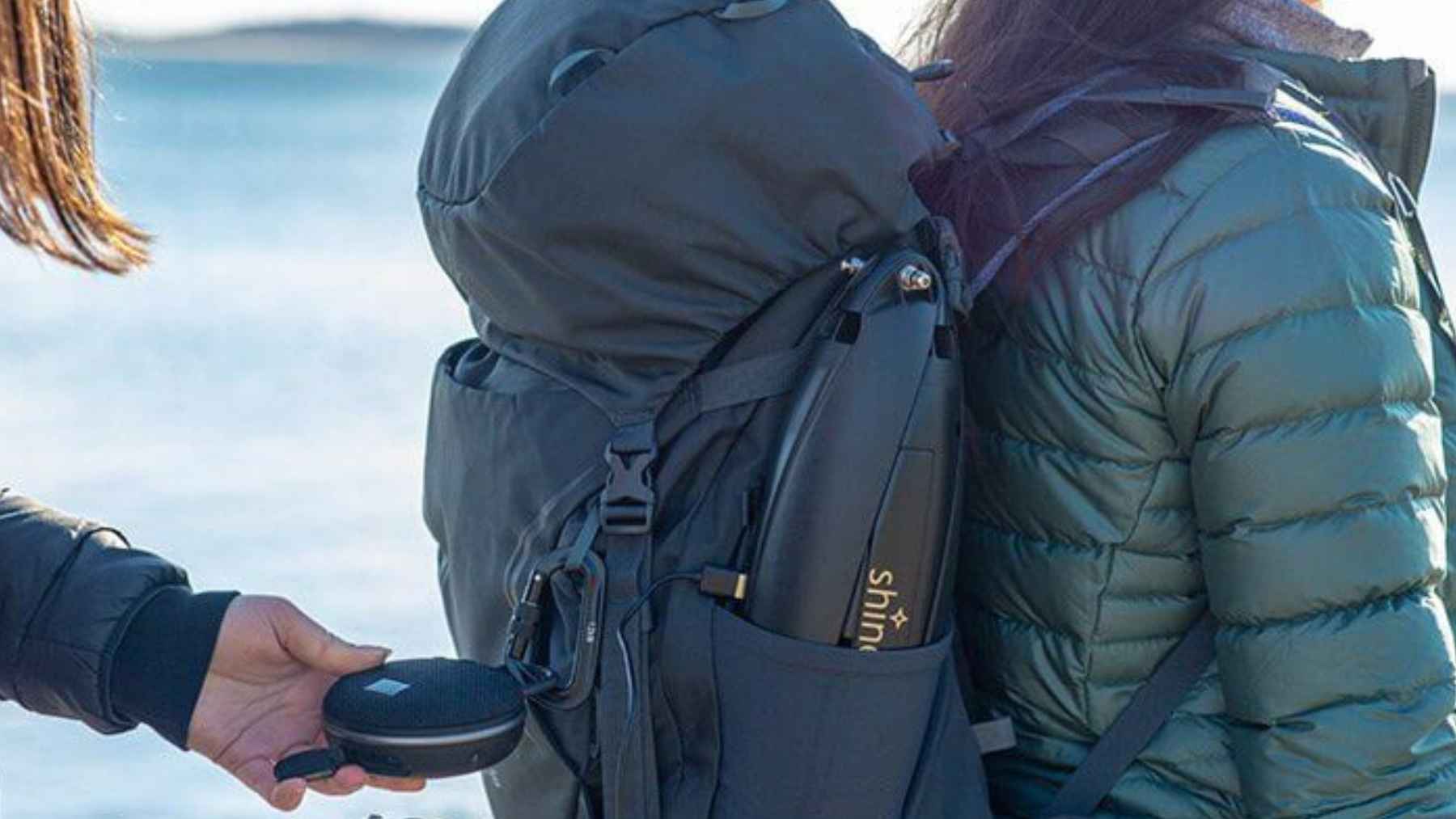
At its core, Shine 2.0 is a compact turbine rated at 50 watts, designed to operate in winds from about 8 to 28 miles per hour. It folds down into a roughly 3-pound kit with a support pole, and buyers can add a taller 6-foot mount to get the rotor into cleaner airflow.
It also tries to solve a common camping headache with a simple trick. Shine 2.0 includes a 12,000-milliamp hour internal battery, so it can behave like a regular power bank even when you are not actively spinning the blades.
Under the hood, Aurea is leaning on the kind of power management you usually see in bigger renewable systems. GearJunkie reports that Shine 2.0 uses a built-in controller the company calls “Maximum Power Point Tracking” to improve efficiency as wind speeds rise and fall, plus a Bluetooth app that shows battery state and recent power generation.
A crowdfunding bet with real money behind it
This is not a $40 impulse gadget. Indiegogo’s listing shows the turbine priced around $399 compared with a stated $571 retail price, and it also lists an estimated delivery timeframe of July 2026.
The backing is also substantial for a niche piece of hardware. Indiegogo’s rewards snapshot lists $815,782 funded by 1,565 backers, which signals a real market of people willing to pay for portable renewable power that works after dark.
Aurea is not starting from zero, and it wants buyers to remember that. On Shine’s own site, the company says its original turbine reached its Kickstarter goal within an hour in 2021, sold out an initial run of 500 units, and later gained support from over 2,000 backers across 50 countries through Indiegogo InDemand.
Why wind is suddenly getting a second look
For a lot of people, portable power has become part of daily life, not just a weekend hobby. Remote work, van travel, and more frequent severe weather have turned charging into a small form of insurance, because your phone is also your flashlight, your map, and your connection to family.
That context explains Shine’s sales pitch. GearJunkie quotes Shine spokesperson Vanessa Ferguson saying the product has “one of the highest power-to-weight ratios” among comparable portable renewable products, and that it can generate power “day or night, rain or shine” in windier landscapes like coasts and mountains.
In practical terms, this is where wind can beat solar. A solar panel is happiest in direct midday sun, while wind can show up at night and during storms, which is often exactly when the grid is most likely to fail.
The physics buyers cannot ignore
Here is the catch that no app can smooth over. Small wind power is intensely dependent on wind speed, and “rated output” is a best case, not what you should expect behind your tent in a protected campsite.
New Atlas, citing the company’s own estimates, says Shine 2.0 can reach 50 watts in a 28-mile-per-hour wind, enough to top up a phone in about 17 minutes or a laptop in under two hours. But at the minimum 8-mile-per-hour breeze, it cites estimates showing that same laptop taking more than 75 hours, which is another way of saying you will run out of patience first.
The Verge frames the same problem in blunt numbers. It reports that at the bare minimum wind speed, charging can dip below 5 watts, and that Aurea estimated it could take over 11 hours to charge a smartphone in a “slight breeze.”
The timeline is part of the product
If Shine 2.0 were already on store shelves, the main question would be performance. Because it is still in a crowdfunding delivery cycle, buyers also have to watch execution, meaning certification, quality control, logistics, and software stability.
The company has been signaling that work publicly. Indiegogo’s March 2026 update says Shine 2.0 “remains on track for spring shipping” while final efforts continue across certification, quality control, logistics, and software.
Earlier updates also pointed to an April shipment start, which highlights a key reality of hardware crowdfunding. Early coverage in 2024 talked about an expected April 2025 delivery, but current Indiegogo messaging is tied to spring 2026 shipping and a July 2026 delivery estimate on the campaign page.
What comes next for portable wind
Aurea is already talking about scaling up. GearJunkie reports the company is planning Shine 3.0 with a 100-watt rating and up to 200-watts output from its internal battery, plus additional vehicle mounting options designed for use when a vehicle is stationary at camp.
That evolution makes sense because setup is everything. A turbine that is quick to mount, high enough to escape turbulence, and easy to leave running safely is far closer to how people actually live off grid, especially when they need to work the next morning.
For now, Shine 2.0 looks less like a solar replacement and more like a specialized add-on for the right geography. If your trips often involve windy coastlines, open desert, or mountain passes, it could be a practical piece of kit, and if not, it may end up as an expensive reminder that calm air does not care about the spec sheet.
The official campaign update was published on Indiegogo.