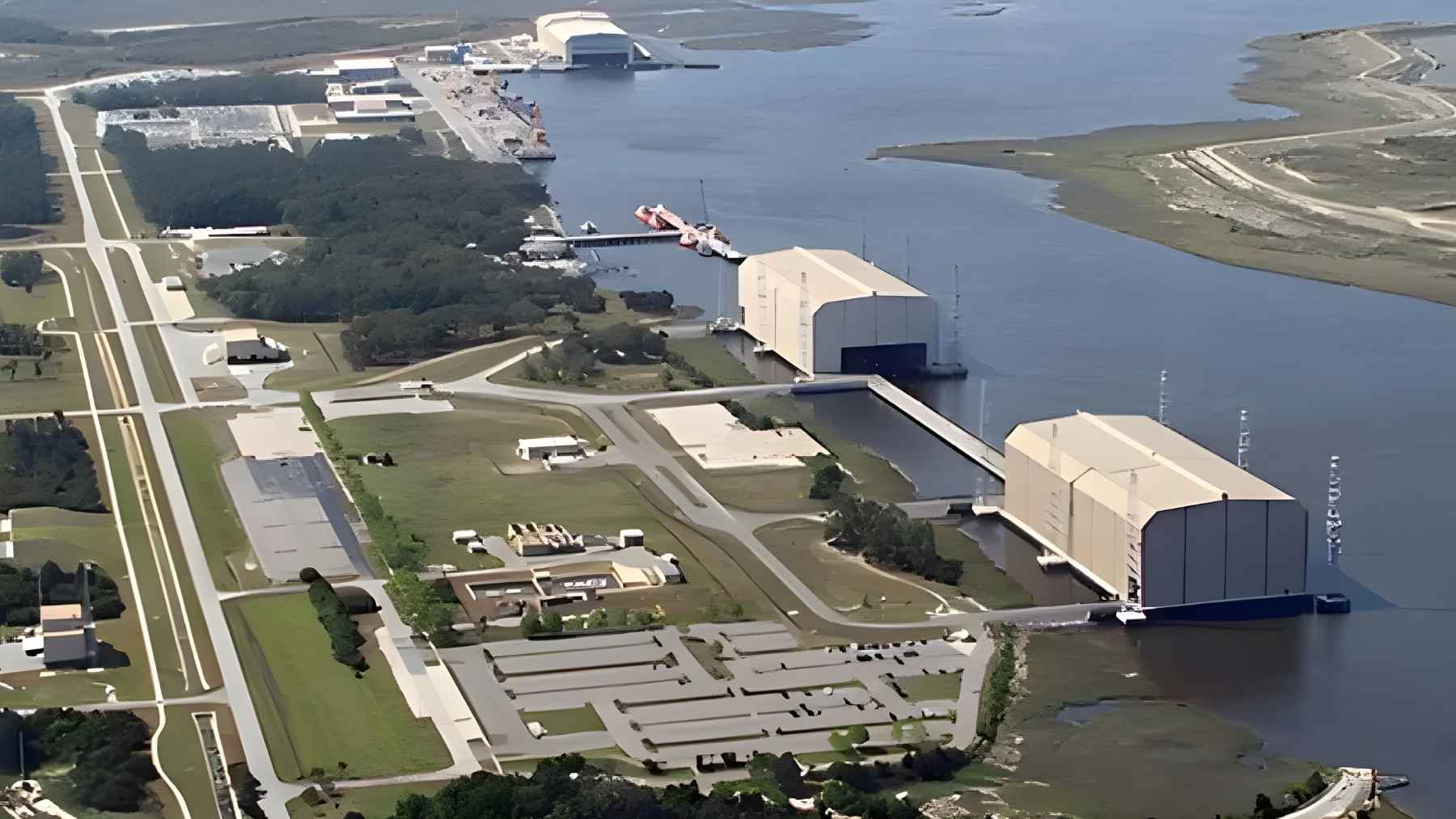
China’s first officially acknowledged overseas military base sits in a place most people could not point to on a map. Yet Djibouti, a small country on the Horn of Africa, is now one of the world’s most watched coastlines, largely because it hugs the Bab el-Mandeb strait, a key gateway between the Red Sea and the Gulf of Aden.
The main takeaway is simple. As shipping and energy routes become less predictable, the countries that can stay close to the choke points gain options, even if they describe their presence as “logistics” or “support.” And Djibouti keeps attracting them.
Why the Bab el-Mandeb keeps showing up in headlines
Bab el-Mandeb is one of those places that quietly powers everyday life. It is part of the route linking the Red Sea to the Suez Canal, so when traffic slows here, everything from fuel deliveries to retail supply chains can feel it.
The latest data shows how quickly this corridor can change. The U.S. Energy Information Administration reported that oil and petroleum product flows through Bab el-Mandeb averaged about 4.0 million barrels per day in the first eight months of 2024, down from 8.7 million barrels per day in full-year 2023.
That drop was tied to shipping risk in the Red Sea, with vessels choosing longer routes around the Cape of Good Hope. In practical terms, that means higher shipping costs can ripple outward, sometimes all the way to what you pay at the pump or what shows up on a store shelf.
China’s base looks like logistics and still changes the map
China’s Djibouti facility is not a rumor anymore. Reuters reported in 2017 that China began sending troops to open what it called a logistics base in Djibouti, its first overseas naval base, even as Beijing described it as a support facility.
Independent reporting adds useful detail about what is actually on the ground. A Brookings analysis says the PLA Navy “Logistics Support Base” opened in August 2017, occupies roughly 90 acres, and includes features like barracks, a helicopter pad, underground storage, and a dock about 984 feet long (converted from 300 meters).
Here is the wrinkle many readers miss. The U.S. Department of Defense’s 2025 report says that, as of 2024, the Djibouti base had “minimal participation” in the publicly stated mission of protecting Chinese citizens or investments, and it had not supported evacuations or provided support to the Red Sea crisis, while still enabling a persistent regional presence and expanding military diplomacy.
Djibouti is crowded for a reason
Djibouti is often described as the world’s densest cluster of foreign military bases, and the list is not small. Al Jazeera reported in April 2026 that the United States, China, France, Japan, and Italy all operate bases within miles of each other along the coastline.
The U.S. footprint is anchored by Camp Lemonnier, which the U.S. Navy describes as supporting about 4,000 U.S., joint, and allied military and civilian personnel and contractors, and employing about 1,000 local and third-country workers. It is also widely described as the only permanent U.S. base in Africa.
Proximity changes behavior. When major powers operate a few miles apart, everything becomes more sensitive, from airspace routines to port access to who is watching which ships, and with what sensors.
Ports, money, and the tech layer beneath the ships
China’s military site in Djibouti sits next to commercial infrastructure that matters for business, not just defense. Brookings notes the base is directly adjacent to the Chinese-built Doraleh Multipurpose Port, which is exactly the kind of “dual-use” geography that makes analysts pay attention.
The port itself has been repeatedly valued in the hundreds of millions of dollars. An Oxford University Press journal article describes Doraleh Multipurpose Port as a roughly $580 million project, and an Associated Press report carried by Arab News similarly called it a $590 million joint project involving China Merchants.
Then there is the tech reality that does not show up on most maps. Djibouti is also a cable landing hub, with listings showing multiple cable landing stations and major subsea systems terminating there, including a newer landing station reported operational since August 2023. Those cables are part of the same strategic neighborhood as the ships.
What to watch next for trade, defense, and markets
The big question is whether Djibouti is a one-off or a template. The U.S. Department of Defense’s 2025 report says China seeks a global logistics and basing network with different models of access, and it adds that the PLA is considering additional facilities, even citing a case where Gabon’s president confirmed China’s interest in a base in the Gulf of Guinea.
For shipping and energy markets, the watch items are less abstract. If Red Sea risk persists, detours become routine, freight capacity tightens, and price pressure can rise, even without a full blockade, as the EIA’s 2024 flow data illustrated.
And for policymakers, Djibouti is a reminder that “security” is no longer only about warships. It is also about ports, contracts, and the quiet intelligence value of being close enough to observe, which the Pentagon explicitly flags as a counterintelligence risk tied to overseas facilities.
The official report was published by the U.S. Department of Defense.