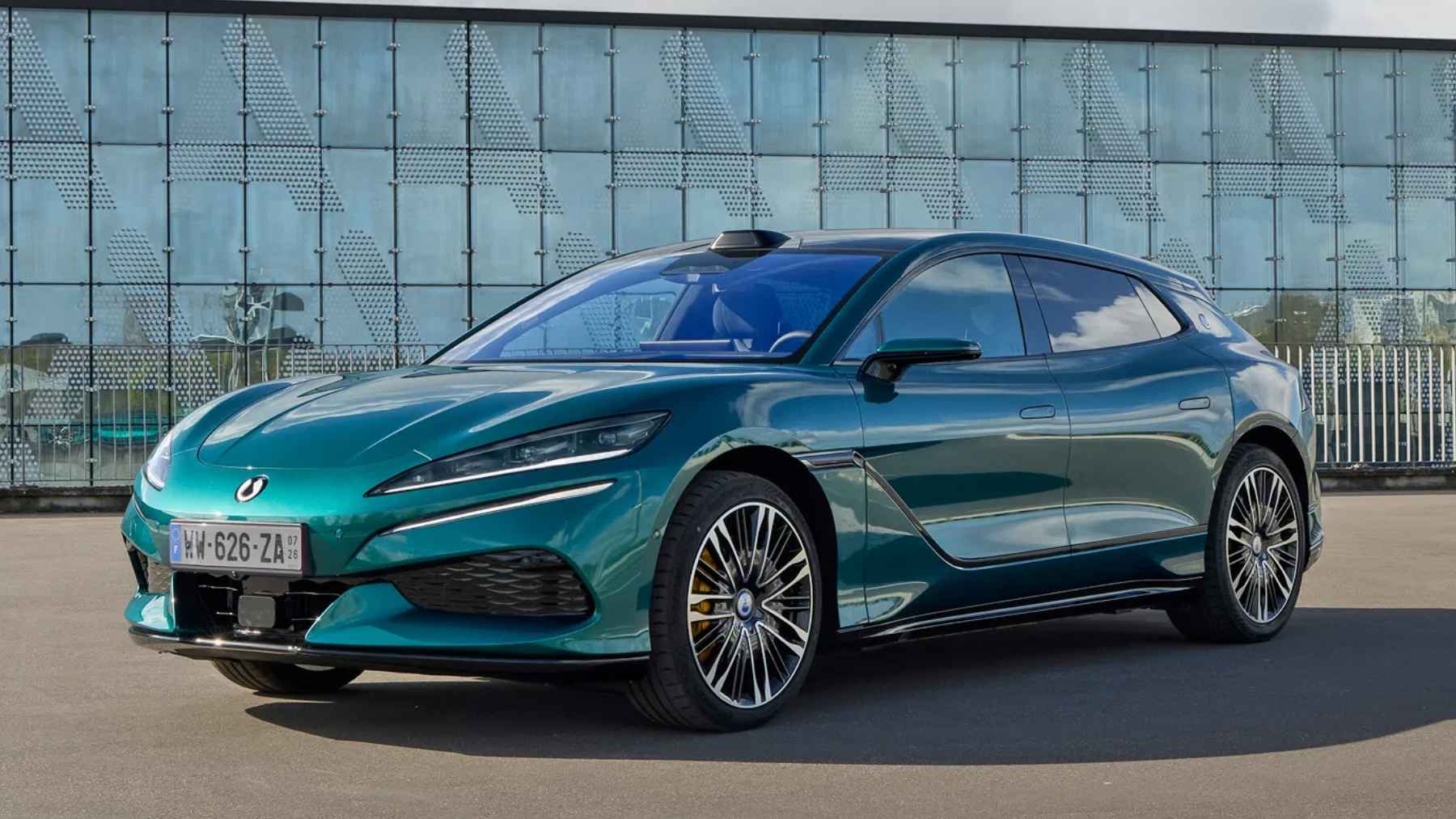
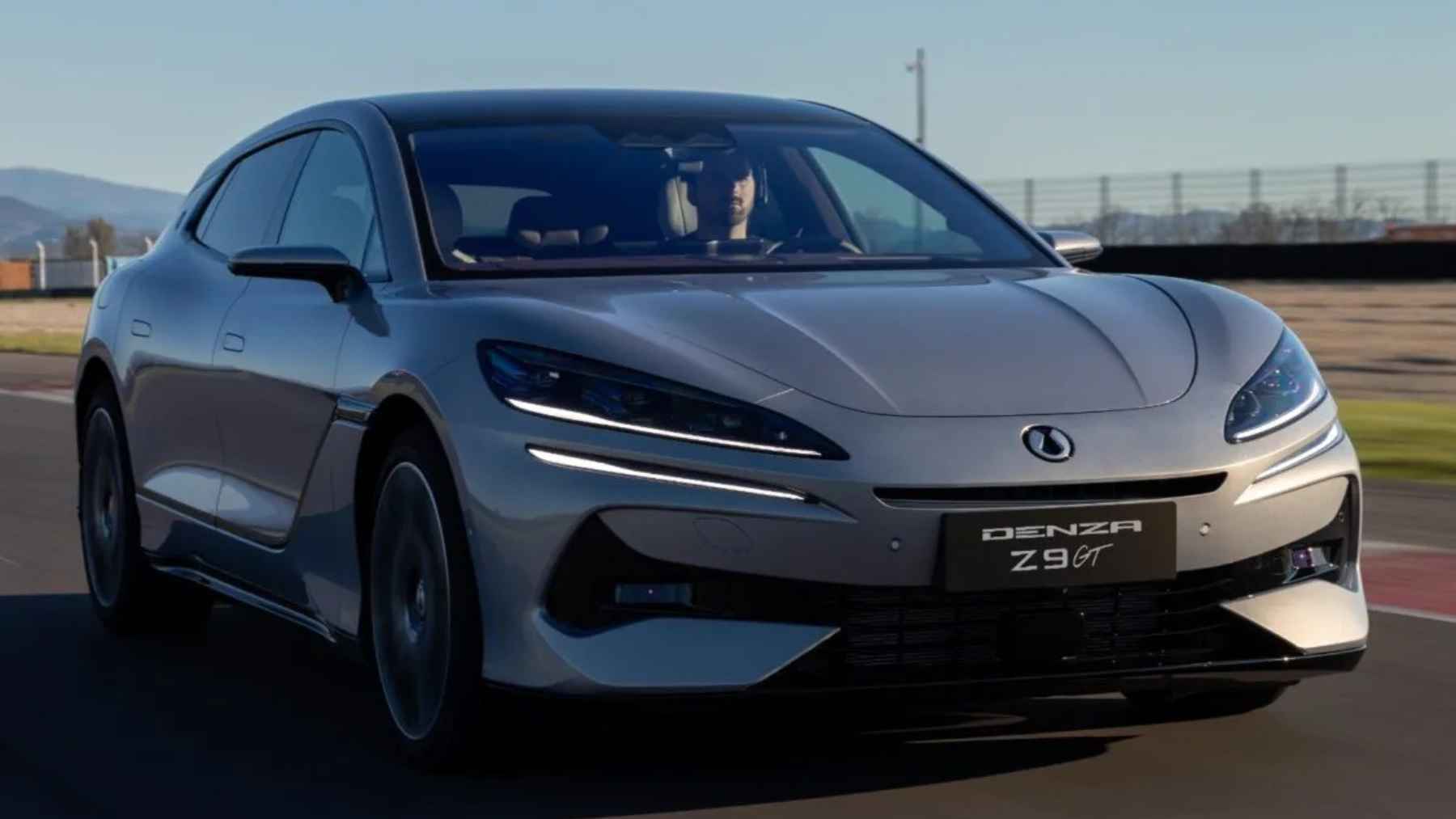
BYD is bringing a new bragging right to Europe that sounds almost impossible if you have ever waited around a public charger. Its premium brand Denza says the upcoming Z9GT can go from 10% to 70% battery in five minutes using “FLASH Charging” at up to 1,500 kW, with a full 10% to 97% refill quoted at nine minutes.
BMW is not dismissing the engineering, but it is pushing back on the consumer takeaway. BMW executives argue that chasing a single headline number can force trade-offs in battery durability, range, cost, and safety, and they say their own 400 kW approach is already “fast enough” for real-world stops.
BYD brings “FLASH Charging” to Europe
In a March 13, 2026, announcement, BYD says Denza’s Z9GT will debut in Europe on April 8 in Paris and introduce a simple slogan, “Ready in 5, Full in 9, Cold Add 3.” The company’s headline claim is 10% to 70% in five minutes and 10% to 97% in nine minutes, plus 20% to 97% in 12 minutes even at -22°F.
BYD ties those times to two ingredients that have to work together. One is a charging station designed for up to 1,500 kW through a single cable, and the other is its second-generation Blade Battery that keeps lithium iron phosphate chemistry while aiming for higher energy density and “reduced levels of degradation.”
The Z9GT also comes with a very large pack for a passenger car, listed at 122 kWh, and BYD says the rear-wheel-drive version can reach up to about 497 miles of range on the WLTP cycle. WIRED reports watching the car charge from 10% to full in just over nine minutes, which helps explain why this announcement is getting attention outside China.
BMW says 400 kW is fast enough
BMW’s warning is basically “don’t fall for the single number.” In an interview with Carsales, BMW battery production chief Markus Fallböhmer said buyers should be careful with ultra-fast charging claims, arguing you can optimize one metric but “have to make compromises,” using a “blanket” analogy for the trade-offs.
BMW’s counterpoint is that its next wave of EVs is already moving quickly without going to megawatt levels. On BMW’s own Neue Klasse page, the company says a maximum 400 kW charging rate can add 372 km (about 231 miles) in 10 minutes for the iX3, and 400 km (about 249 miles) in 10 minutes for the new i3.
BMW also adds a clear caveat that these results depend on conditions like temperature, battery state, vehicle configuration, and whether the charger can actually deliver the maximum power.
Carsales adds a detail that tends to get lost in marketing, which is average charging power over a session. The outlet says the i3’s 10-minute “range replenishment” corresponds to roughly 290 kW average, and it quotes BMW’s Mike Reichelt joking that at that pace “You have to decide whether you go to the toilet or get a coffee.”
It is a funny line, but it also underlines BMW’s main argument that after a point, faster charging starts colliding with basic human needs on a road trip.
The grid and station upgrades are the hidden cost
A 1,500 kW passenger car charger is not just a faster version of what most drivers see today. For context, IONITY, one of Europe’s best-known highway charging networks, says its stations support up to 350 kW, and one of the common high-power charger products on the market, Alpitronic’s HYC400, is built around a 400 kW ceiling.
Now compare that to BYD’s stated peak, which is more than four times IONITY’s headline number. Even if you never hit peak power for long, the infrastructure still has to be sized for those bursts, and that usually means heavier cabling, more aggressive cooling, and more serious electrical equipment behind the scenes.
Also, someone pays for that eventually, and it tends to show up in site economics and, indirectly, in the kind of grid investment that people notice when the electric bill creeps up.
There is another reason utilities will pay attention. Back-of-the-envelope math using U.S. Energy Information Administration data shows the average residential customer used about 865 kWh per month in 2024, which works out to roughly 1.2 kW on average.
A single 1.5 MW charging stall is therefore in the neighborhood of the average load of about 1,200 homes, at least for the minutes it is operating near peak.
What shoppers should ask before buying the headline
The most important word in fast charging is not “peak,” it is “typical.” Charging curves usually rocket at low state of charge and then taper off, so the window being quoted matters a lot, and BYD’s own statement emphasizes 10% to 70% in five minutes rather than a full charge every time.
BMW’s critique is that pushing harder can mean sacrificing something else, while BYD’s pitch is that it has engineered around the usual heat and degradation problem.
BYD says its updated Blade Battery improves ion transport, increases energy density, and reduces degradation, and WIRED describes engineering choices aimed at cutting heat and resistance so the battery can accept extreme power without damage.
So what should a normal buyer actually do with this information? Ask to see the charging curve, ask what happens after repeated fast charging, and read the warranty language the way you would read a phone contract before signing.
If you can charge at home, this might be a “nice to have,” but if you are relying on public fast chargers like a daily habit, the long-term battery story becomes the whole story.
A new battleground for automakers
This debate feels familiar because we have watched it play out in smartphones for years. The difference is that an overheated phone is an inconvenience, while an overheated high-voltage pack is a safety and reputation problem, and the supporting infrastructure is far more expensive and politically sensitive.
BYD is also signaling that charging is not only a feature, it is a strategy. WIRED reports that BYD is building thousands of new charging locations outside China, aiming for a network effect similar to what Tesla achieved with Superchargers, and BYD’s own announcement says thousands of FLASH Charging stations are already installed in China with a European rollout to follow.
At the end of the day, the winners are likely the companies that make fast charging both believable and easy to access, without turning battery life into a hidden cost that shows up three summers later when the car has aged a bit.
The press release was published on BYD.