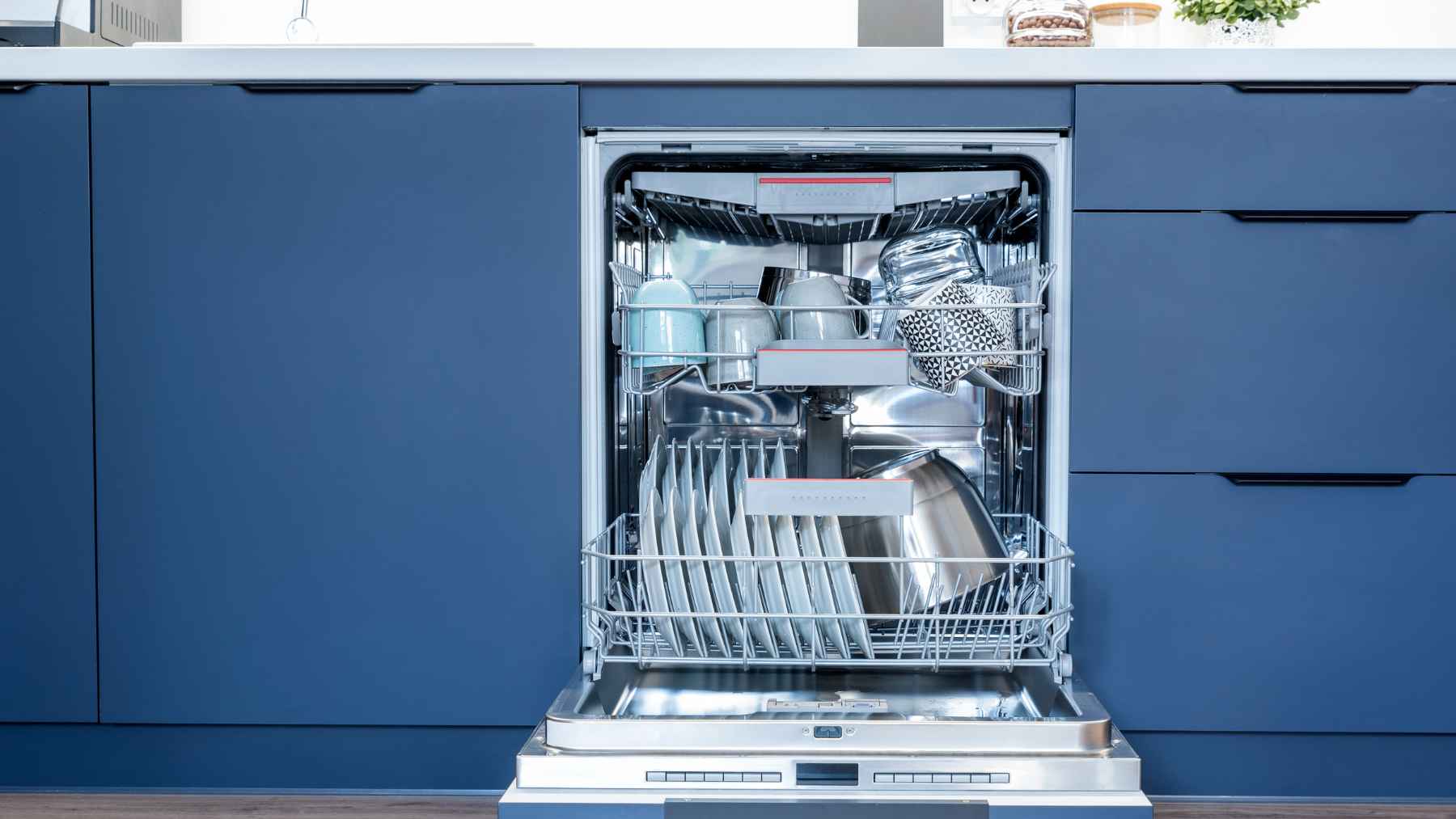
If you have ever looked at your kitchen after dinner and thought, “Why does it always feel messy even when it is clean?” you are not alone. A growing design push is telling people to stop treating the countertop dish rack as a permanent fixture and move drying and storage up and out of the way.
On its face, this sounds like a simple home hack. But it is also a clear signal about where consumer spending is going next, toward smaller, targeted upgrades that feel instantly useful, sell well online, and fit homes where space is tight and remodeling budgets are getting more careful.
Countertops are being reclaimed
A recent Homes and Gardens report framed the change bluntly. Traditional dish racks may “trap water” and visually dominate the counter, while sink-spanning versions drain straight into the basin and keep surfaces clear.
Chiana Dickson, the outlet’s kitchen appliances editor, put it in everyday terms, saying that making a kitchen feel more organized can start with rethinking the items you leave out. In other words, the fastest way to make a kitchen look calmer might be removing the one object that quietly screams “work in progress” every day.
It helps that the functional argument is easy to grasp. When water drips directly into the sink instead of onto the counter, you reduce damp patches and the constant wipe down routine that feels never-ending in busy households.
Smaller homes make every inch count
This trend is landing at a moment when U.S. housing is sending mixed but important signals about space. The National Association of Home Builders reported that the median new single-family home size in third quarter 2025 data was 2,176 square feet, with an average of 2,405 square feet.
Apartments are tighter. NAHB analysis of Census data shows multifamily construction starts averaging 1,052 square feet, with a median of 1,006 square feet in third quarter 2025.
In practical terms, that means kitchen counters have less slack. When your prep space is also where you dry dishes, store appliances, and stack grocery bags, a rack that moves up over the sink is not just a style choice, it is a space strategy.
The new rack is a modular system
The products gaining attention are not just smaller versions of the old dish rack. Many are modular, adjustable, and built around measurements, including sink width, faucet height, and vertical clearance, which makes them feel more like a system than a basket.
Take Sakugi’s over-sink rack category. A Walmart listing describes a model with an adjustable width from 31 inches to 39 inches, designed to fit many sinks and keep the countertop clear, and it highlights stainless steel construction.
Then there are the mainstream premium brands that turn small design choices into repeatable features. OXO’s official product page emphasizes rustproof aluminum, extendable arms, and plate holders that keep dishes upright, plus a removable utensil cup for faster unloading.
The e-commerce tailwind
This is also an online retail story, because kitchen organization is the kind of category where shoppers compare photos, dimensions, and reviews, then buy quickly. U.S. Census data shows e-commerce sales totaled about $1.2337 trillion in 2025, and accounted for 16.4% of total retail sales that year.
That same Census report estimates fourth quarter 2025 e-commerce sales at $316.1 billion on a seasonally adjusted basis, or 16.6% of total sales for the quarter. So when a storage trend starts circulating through design sites and social feeds, the path to purchase is short.
There is another reason these products sell well online. They are “fix the annoyance” purchases, usually far cheaper than remodeling, but they still deliver that satisfying before-and-after feeling when you walk into the kitchen and see a clear counter.
Built-in drying goes premium
Not everyone wants a rack visible above the sink, and designers are also pushing hidden solutions. Homes and Gardens described a built-in approach where a cabinet above the sink includes a bottomless drying area, so you wash dishes, close the doors, and let everything drip-dry out of sight.
At the higher end, brands like deVOL lean into open storage that looks intentional. On its own site, deVOL describes a plate rack designed specifically for plates and shallow bowls, meant to keep daily dishes easy to grab and easy to put away without heavy stacks in cupboards.
The trend is also bleeding into cookware storage, not just dish drying. In the same Homes and Gardens report, deVOL creative director Helen Parker argued that a simple pot rail above the stove is practical and makes a strong visual statement, with some options advertised to hold up to about 22 pounds.
What shoppers should measure
Before anyone clicks buy, the boring details matter, and this is where returns happen. Over-sink racks depend on fit, so shoppers need to measure sink width, faucet height, and how much open space sits above the sink area.
Materials and drainage design are the next checkpoints. Brands highlight rust resistance and direct-to-sink drainage because the whole promise is less water sitting around, and easier cleanup when the rack itself needs washing.
It is also worth thinking about workflow, not just aesthetics. If the rack blocks your faucet handle or makes it annoying to fill a pot, you will stop using it, and the countertop clutter will creep right back like it always does.
The bottom line
For the most part, the dish rack story is not really about dishes. It is about how consumers are adapting to smaller living spaces and a home improvement market that is still huge, but expected to cool in growth through late 2026, which makes small upgrades feel even more attractive.
A rack over the sink will not change your mortgage payment, but it might change the way your kitchen feels on a random Tuesday night.