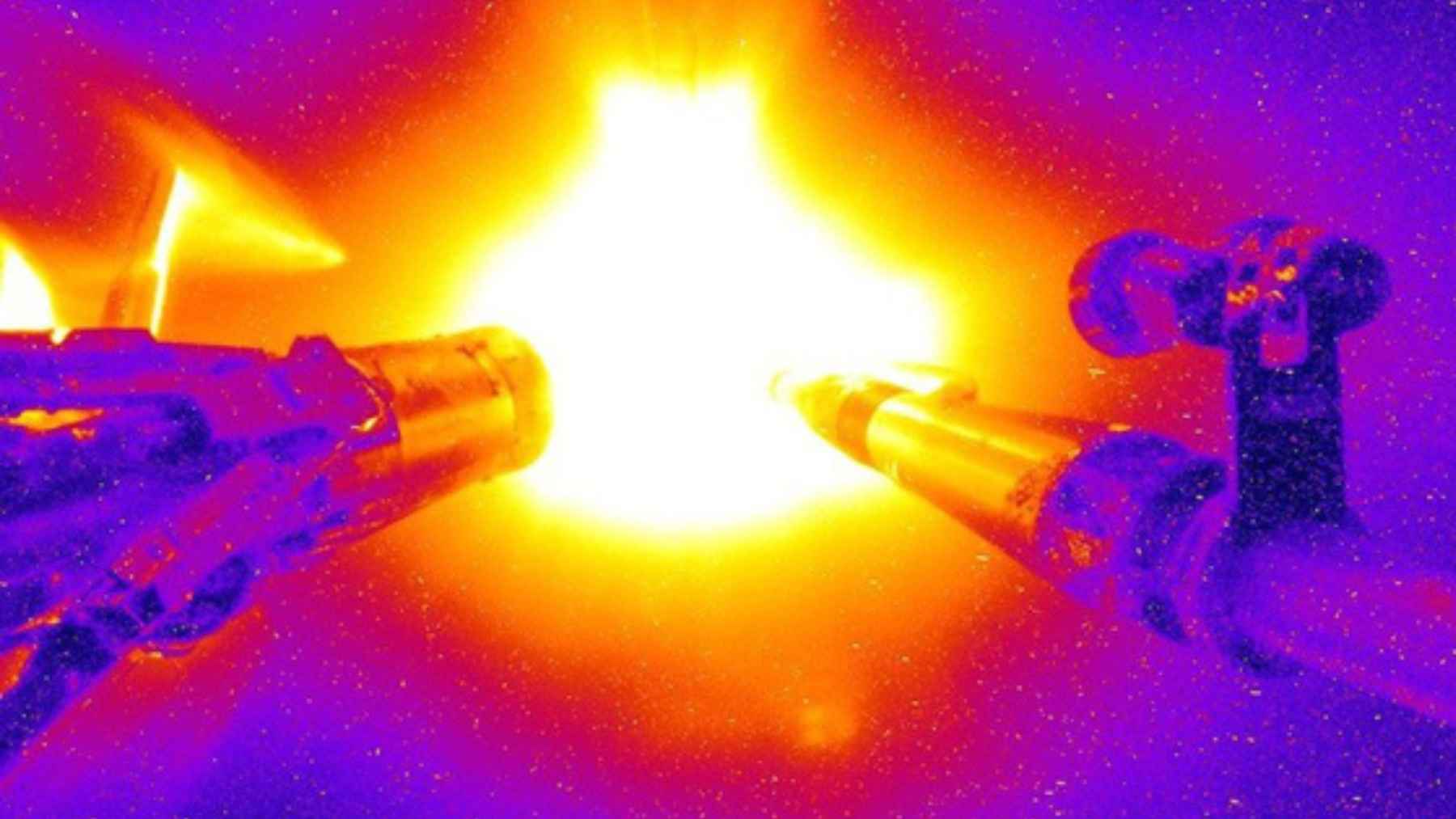
Pulsar Fusion says it has generated and confined plasma inside the exhaust test system for its “Sunbird” nuclear fusion propulsion concept, and it did it in a live-streamed demo from Bletchley, England, to Amazon’s MARS Conference in Ojai, California.
It is an early milestone, but it is also a rare one for fusion propulsion because it shows physical hardware, not just simulations.
So what changed this week, and what still has to be proven? Pulsar says the next phase is about measuring thrust and exhaust velocity, while working with the UK Atomic Energy Authority on how radiation can wear down reactor walls and magnets over time.
A live demo with real hardware
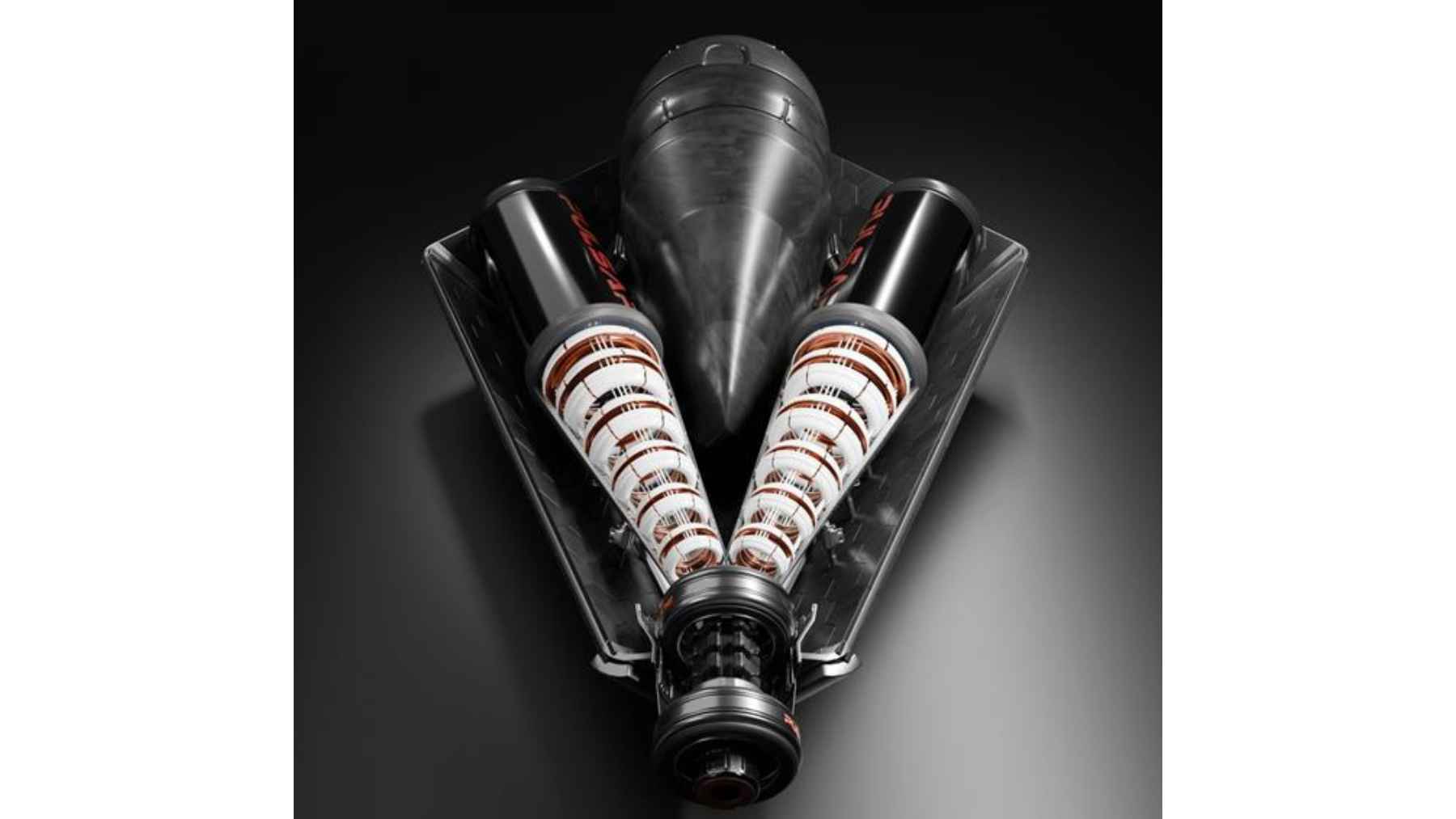
In its March 25 announcement, Pulsar called the event “first plasma” in its Sunbird exhaust test system and said it offered “the first glimpse” of a fusion exhaust architecture for space travel. The test used electric and magnetic fields to confine plasma and steer charged particles through an exhaust channel.
For the initial series, the company used krypton as a propellant because it ionizes efficiently and stays chemically inert at the flow rates needed for early tests. Think of it as choosing a predictable fuel while you are still checking whether the engine’s “plumbing” and field geometry behave the way the math says they should.
CEO Richard Dinan said the live MARS Conference moment was “an exceptional moment and a genuine privilege,” underscoring how much the company wanted a public proof point. The demo was run by Pulsar staff back in the UK while Dinan narrated from the stage in California.
Why “first plasma” matters for propulsion
Space propulsion is usually a choice between speed and efficiency. Chemical rockets deliver high thrust, which is why we can launch at all, but they are limited by relatively low exhaust velocity once a spacecraft is in space.
Electric propulsion systems like ion or Hall thrusters flip the script with high exhaust velocity and low thrust, so they accelerate gradually over long periods.
Pulsar’s argument is that fusion propulsion could eventually combine high thrust with very high exhaust velocity, shrinking travel times for deep-space missions.
On its Sunbird technical page, the company lists targets that include 2 megawatts of power and a specific impulse of 10,000 to 15,000 seconds, along with an estimated exhaust velocity of about 219,000 to 329,000 miles per hour (98,100 to 147,150 meters per second).
Those figures are not the outcome of this week’s test, and Pulsar is not claiming they are. But they explain why controlling plasma in the exhaust path is a make-or-break step, because everything that follows depends on that stability.
The next tests will decide how real this gets
Pulsar says the next phase will focus on collecting performance data such as thrust and exhaust velocity using a thrust balance and plasma diagnostics including E×B probes and retarding potential analyzer measurements. It also plans to add rotating magnetic field heating and radio frequency heating to expand the test envelope.
Durability is the other looming hurdle. The company says it is collaborating with the UK Atomic Energy Authority to study how neutron radiation affects reactor walls and magnets, since radiation damage can be a major driver of wear inside fusion systems.
Looking further ahead, Pulsar plans upgrades to rare-earth, high-temperature superconducting magnets to reach stronger fields and higher plasma densities, and it wants to start experimental work with aneutronic fusion fuel cycles. Its published timeline points to an in-orbit demonstration of core components in 2027, with a production-ready system aimed for the early 2030s.
The business bet is on space logistics
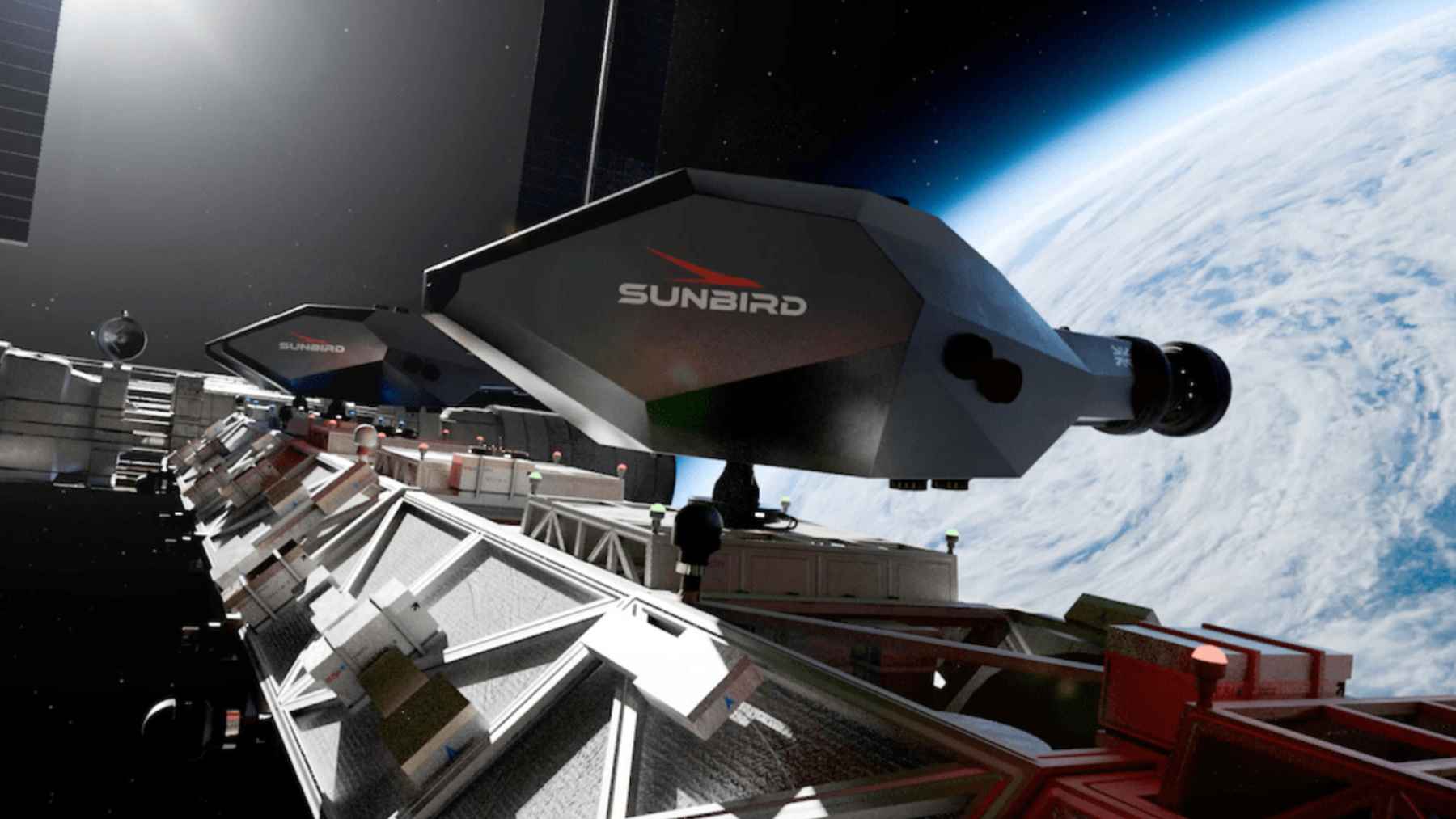
Sunbird is easy to misread as a replacement for launch rockets, but Pulsar’s concept is closer to an orbital tug that is already waiting in low Earth orbit. A visiting spacecraft would still need a conventional launch, about 21,000 miles per hour of delta v (9.4 kilometers per second) to reach low Earth orbit, then dock and let the tug handle the harder part.
Pulsar estimates a standard Earth-to-Mars mission needs about 25,300 miles per hour of total delta v (11.3 kilometers per second), while a docked spacecraft could need only about 6,700 to 11,200 miles per hour (3 to 5 kilometers per second) beyond low Earth orbit.
The company says that could cut the delta v burden on the launch vehicle by 20 to 50%, which is a big deal because hauling extra propellant off Earth is often what makes a mission expensive and heavy.
The market context helps explain why investors pay attention even at the prototype stage. Pulsar cites World Economic Forum and McKinsey research projecting the space economy could surpass $1.8 trillion by 2035, and it argues that faster in-space transport pulls economic activity forward.
At the end of the day, shorter “shipping times” in s pace can mean earlier revenue for communications, science, and servicing missions.
Defense interest will follow the technical proof
Pulsar says it is building propulsion for both satellite and deep space markets, and it notes backing from the UK Space Agency and the European Space Agency. That mix of commercial and public support is typical for technologies that can reshape access and mobility in orbit.
But for government buyers, the real story is whether the data holds up. “First plasma” is a controlled demonstration of plasma confinement in an exhaust architecture, not a full engine firing with verified thrust, lifetime, and safety margins.
The next results Pulsar is promising are the ones that procurement teams actually care about, repeatable measurements of push and performance over time.
For now, the milestone is best read as a clear sign that the company is building and instrumenting hardware in public, which is a high bar in itself.
The press release was published on GlobeNewswire.