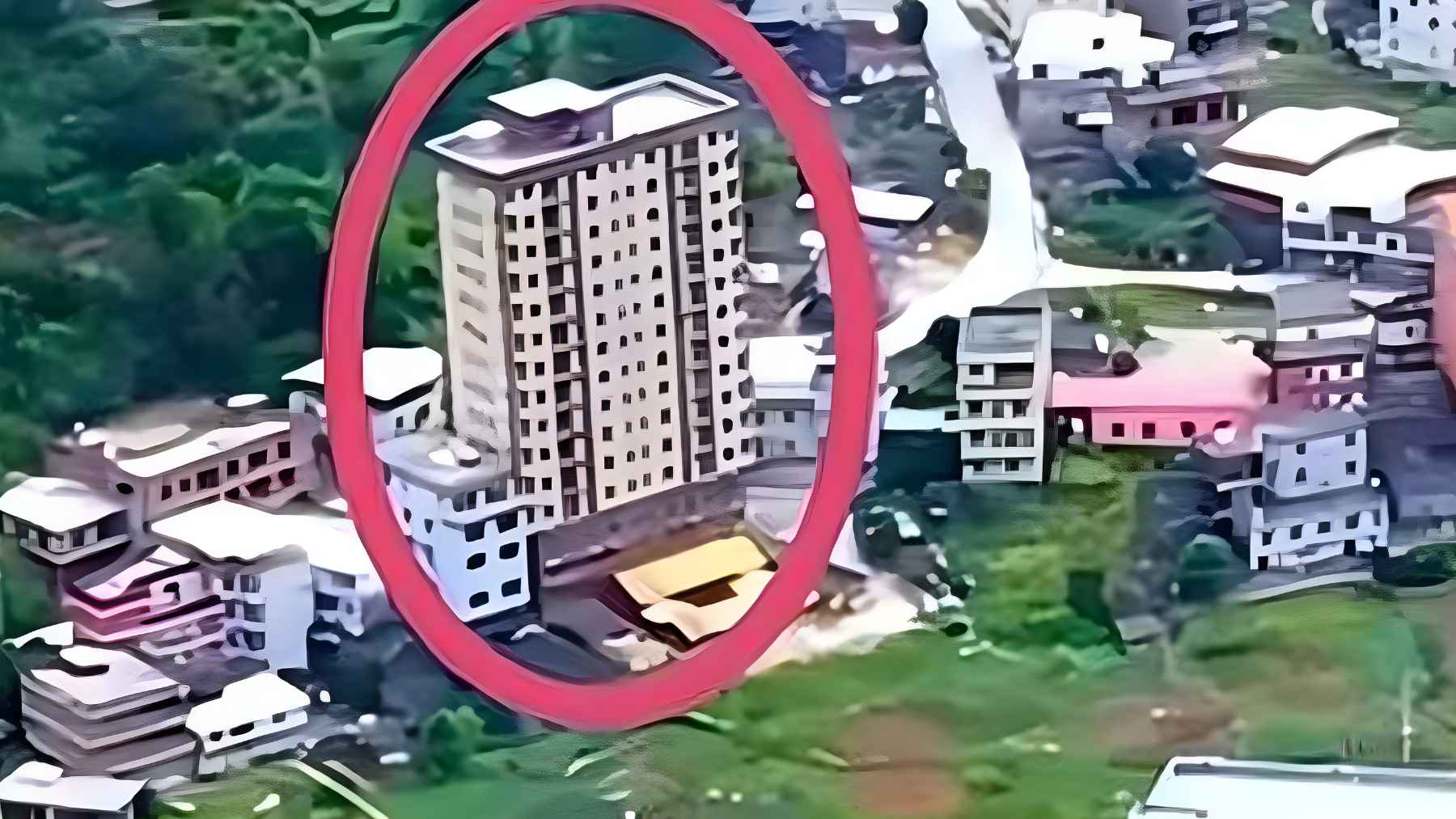
In China’s Fujian province, one extended family built what looks like a private high-rise in the middle of a village: a 15-story tower with elevators, underground parking, and 22 apartments for more than 100 relatives across four generations. It has been shared widely online as a feel-good story about family closeness, but the bigger takeaway is more practical than sentimental.
Housing is now a front-line climate issue, whether people realize it or not. The UN Environment Programme (UNEP) says buildings and construction consume 32% of global energy and contribute 34% of global CO2 emissions, which is why even a single building design choice can echo into policy debates about density, materials, and energy use.
A rural high-rise built for family logistics
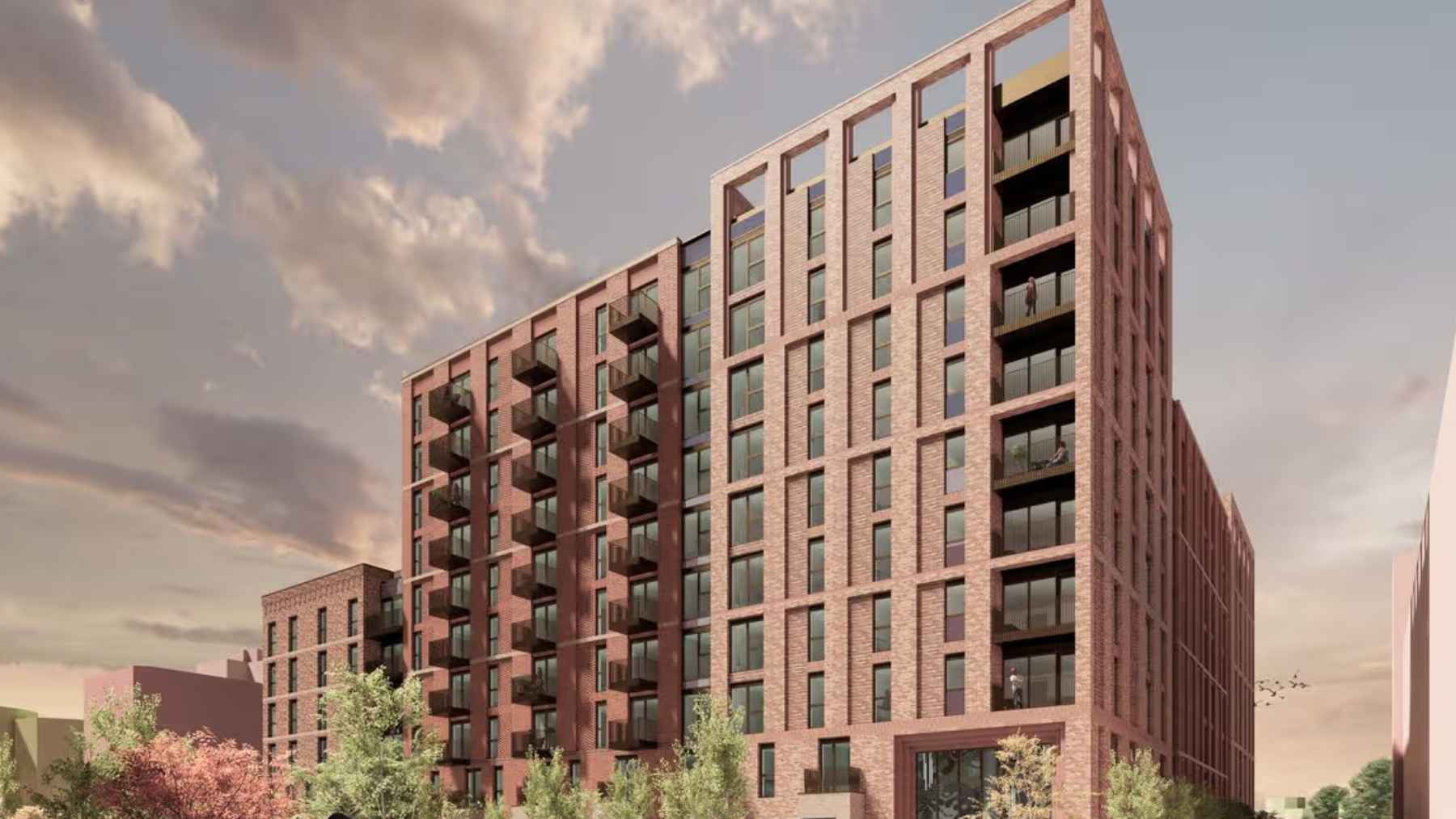
The tower sits in Zhuyuan village and has been described by local reporting as the “big golden building,” rising far above its neighbors in rural Fujian. It reportedly includes two underground parking levels, a ground floor used for food storage and children’s play, and 22 apartments on floors two through twelve, with two units per floor.
The numbers help explain why it works as a “vertical village” instead of a cramped shared house. Reports put the footprint around 2,150 square feet and individual units at roughly the same size, which gives each household privacy even when relatives are nearby.
Daily life inside is not a constant family reunion, and that detail matters. Only about 20 to 30 relatives reportedly live there most days because many younger family members work in other cities, then return during holidays, and a 70-year-old family member told reporters they had “initially wanted to build new, independent homes.”
Why dense housing shows up in climate math
When a sector drives about a third of global energy use and emissions, the climate conversation naturally expands beyond cars and power plants. UNEP’s global snapshot frames buildings as a central part of the problem, and by extension, a major part of the solution if policymakers can cut energy demand and emissions without cutting living standards.
The IPCC has also put a concrete number on what smarter urban form can do. In the Sixth Assessment Report technical summary, the IPCC says integrated spatial planning that supports compact, resource-efficient growth could reduce urban energy use between 23% and 26% by 2050 compared with business as usual.
That is not just an argument for height. The same IPCC material ties the gains to co-located housing and jobs, mixed land use, and shifting trips away from private vehicles, and it also notes broader health benefits when cities get this right.
Apartments usually cost less to heat and cool
If you have ever compared utility bills across housing types, the gap can be obvious. The U.S. Energy Information Administration says that in 2020, the average household in a single-family detached home used nearly three times more energy than a household living in an apartment building with five or more units.
A big reason is physics, not lifestyle. Apartments are often smaller and partially insulated from weather by adjacent units, which means less heat leaking out in winter and less cooled air bleeding away during that sticky summer heat when the air conditioner feels like it never stops.
The Zhou family tower hints at how that plays out in real planning choices. If roughly 20 related households build one shared structure instead of 20 separate houses, they reduce repeated roofs and exterior walls, but the long-term benefit depends on steady occupancy over decades, not just a clever blueprint.
Embodied carbon is the hard part
Here is the catch that tends to get buried under the word “density.” UNEP warns that the sector still relies heavily on cement and steel, and it points to these materials as responsible for about 18% of global emissions, which means new construction can arrive with a large upfront carbon cost before the first light switch is flipped.
That is why climate strategy is shifting toward the full life cycle of buildings, not just monthly energy use. UNEP has emphasized circular construction approaches such as using recycled materials and prioritizing retrofits over demolition where possible, because avoiding new material production can be as important as improving efficiency.
In practical terms, a shared tower becomes more climate-aligned when it lasts a long time, stays well-used, and gets updated as energy systems evolve. Durability and lower operating costs are not just nice extras – they are part of whether a building ever “pays back” its initial footprint.
What this means for the building business
For developers and suppliers, this is becoming less of a niche sustainability debate and more of a core market question. UNEP’s 2024/2025 buildings report explicitly highlights pressure points such as stronger building energy codes, expanding renewable energy, and financing that can support the transition to net-zero buildings.
For local governments, the tower also illustrates a social reality that keeps showing up in housing demand. Families are spread across cities for work, older relatives may prefer to stay near home, and the cost of pushing roads and utilities farther outward adds up quickly, even before you factor in emissions.
The bigger lesson is not that every village should build a high-rise, or that density automatically equals sustainability. It is that shared space can line up everyday needs with lower energy demand, if it is paired with smart planning and lower-carbon construction.
The official report was published by UNEP.