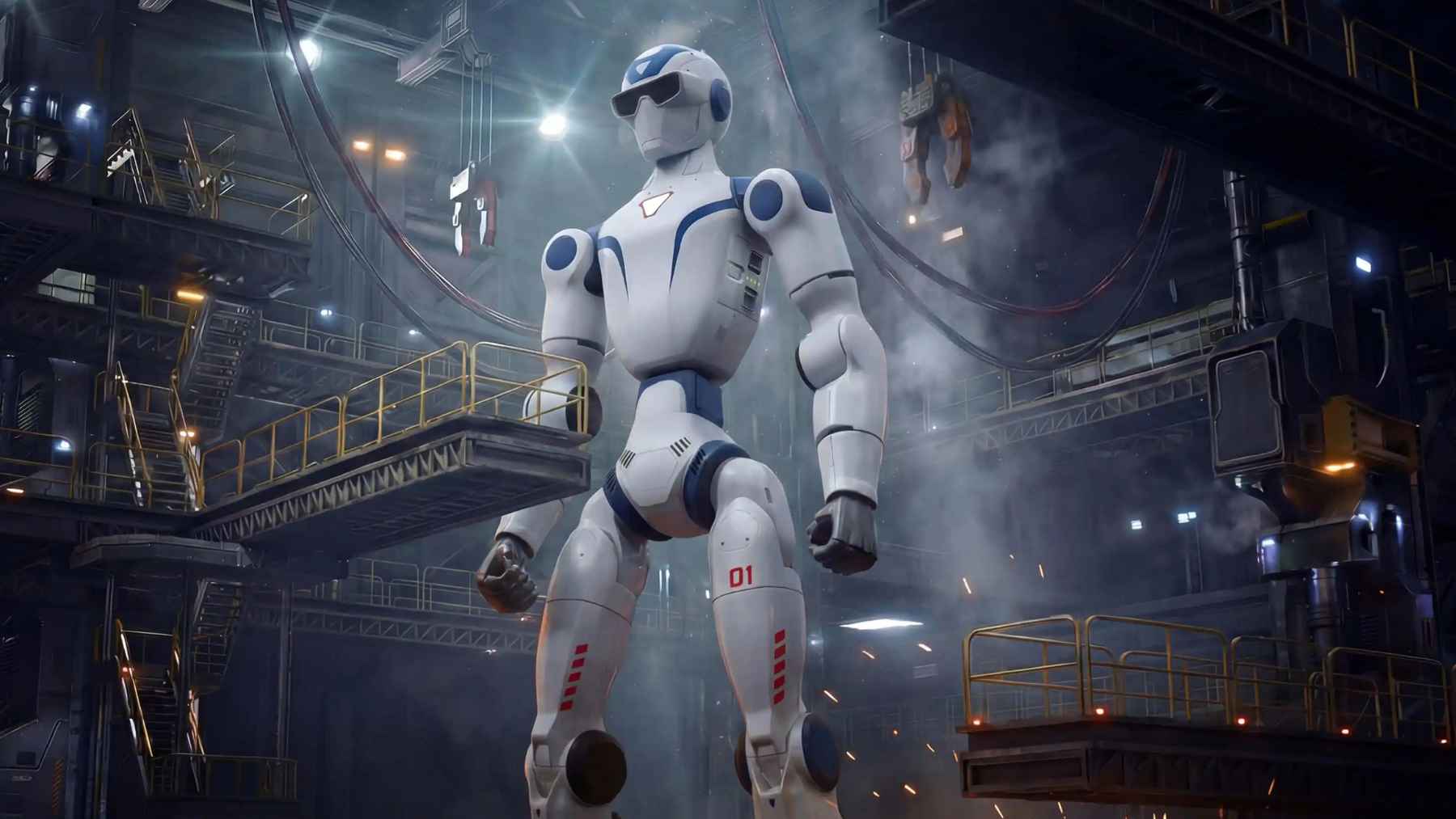
If you have ever tossed a gadget into an online cart just because it looked cool, here is a new level of temptation. Unitree Robotics says it has started selling its R1 humanoid robot internationally on Alibaba’s AliExpress, with a delivered U.S. price of about $8,150 once import fees are included.
This is a real commercialization step, not just another flashy demo. But it is also a reality check about what early humanoids can do, what they cannot, and why China’s robotics push is starting to look more like a manufacturing story than a science project.
A humanoid in the shopping cart
Unitree told Bloomberg News that the R1 is now being sold through AliExpress in markets including the United States, Canada, Japan, the United Arab Emirates, and Singapore.
The company said U.S. shipping will be free and that the roughly $8,150 price includes import fees, while a smaller R1 AIR version is listed at about $6,800. Deliveries are expected to start around late June.
That last part is what changes the feel of the category. Until now, most humanoids have been sold like industrial machines, meaning direct sales teams, long lead times, and contracts that read like a car lease. Putting a humanoid on a mainstream marketplace moves it closer to consumer electronics, for better and for worse.
It also looks like a pre-IPO flex. Bloomberg Law described the AliExpress rollout as part of a broader global push ahead of Unitree’s planned listing ambitions, putting the company in front of rivals whose humanoids are still not sold directly to consumers. For Unitree, “available now” is a competitive feature all by itself.
What $8,150 actually buys
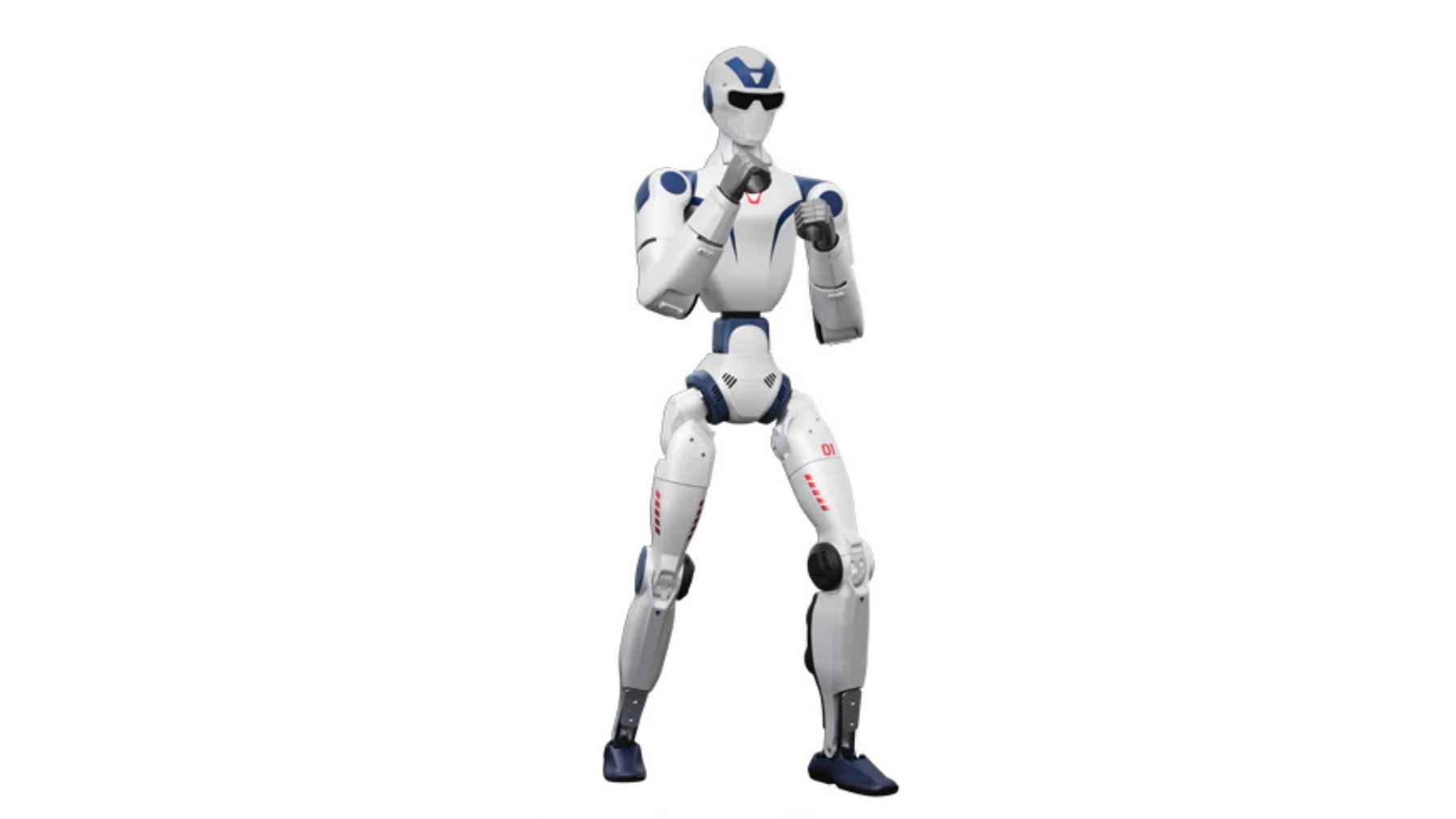
On Unitree’s official product pages, the R1 lineup is described as a compact humanoid platform about 4 feet tall. Depending on the model, it weighs roughly 60 to 64 pounds and offers 20 to 26 degrees of freedom, which is robotics shorthand for how many independent joints it can move.
Unitree leans into motion first. Its store page pitches “agile motion” and highlights an integrated multimodal AI model for speech and vision, plus open joint and sensor interfaces for interaction.
At the same time, Unitree’s own specifications put battery life at about one hour, and the documentation includes safety language that urges users to understand the robot’s limits and keep a safe distance.
Then there is the software catch. Unitree’s store warns that the standard R1 product “does not support secondary development,” and its spec sheet lists secondary development only for the EDU model. In plain English, many buyers are not getting a fully open developer platform unless they purchase the education edition through sales.
Delivered price vs. sticker price
The AliExpress price is eye-catching, but it is not the whole pricing picture. Unitree’s own shop lists the R1 AIR from $4,900 and the R1 from $5,900, while noting shipping can run from $300 to $1,200 and that customers are responsible for customs duties and taxes.
That is why Unitree’s “fees included” message on AliExpress matters. If the company truly bundles import fees and offers free U.S. shipping at checkout, it reduces a major headache for first-time buyers who do not want a surprise bill after the robot is already en route. It is the difference between budgeting for a big purchase and gambling on the final invoice.
Still, the bigger cost question is what happens after delivery. Humanoids have lots of motors, bearings, and sensors, and even a small fall can mean repairs or replacement parts. Marketplace sales can make buying easier, but they do not automatically make service networks appear overnight.
China’s scaling advantage is showing up in the numbers
Unitree’s push comes as China accelerates humanoid robot production more broadly. China Daily reported that Foshan in Guangdong province opened what was described as the country’s first automated humanoid robot production line with annual capacity over 10,000 units, built through a collaboration between Leju Robotics and Dongfang Precision Science and Technology.
Reports said the line can produce one robot about every 30 minutes.
The same region already makes a lot of conventional robots. A Xinhua report citing local authorities said Foshan’s industrial robot manufacturing topped 46,000 units in 2025, up 29.6% year over year. That kind of base matters because humanoids still depend on supply chains for motors, sensors, and quality testing, not just clever code.
TrendForce expects the ramp to continue. In an April 9 press release, it projected China’s humanoid robot output could rise about 94% in 2026, with Unitree and AgiBot together accounting for nearly 80% of shipments. TrendForce also said the second half of 2026 should be a key commercialization phase as companies focus more on user value, not just impressive movement.
What buyers and policymakers should watch next
For businesses, the R1 is a signal that humanoids are drifting toward a consumer-like distribution model. For households, it is more like buying a high-end experimental device than a finished helper, especially given the one-hour battery and the software limits on non-EDU versions. So the practical question is simple: what job do you want it to do on a normal Tuesday?
For regulators and security teams, the questions are different. A network-connected humanoid with cameras and microphones lives at the intersection of robotics, AI, and data governance, and the policy conversation is still catching up.
Even Unitree’s documentation warns against dangerous modifications and stresses compliance with local laws, which is a reminder that the guardrails are still being built.
Bloomberg reported deliveries are expected around late June, and Unitree’s own store also points to June 2026 as the start of shipments. Once units arrive, the story will shift from price tags and videos to returns, repairs, updates, and whether owners actually keep using the robot after the first weekend.
The press release was published on TrendForce.