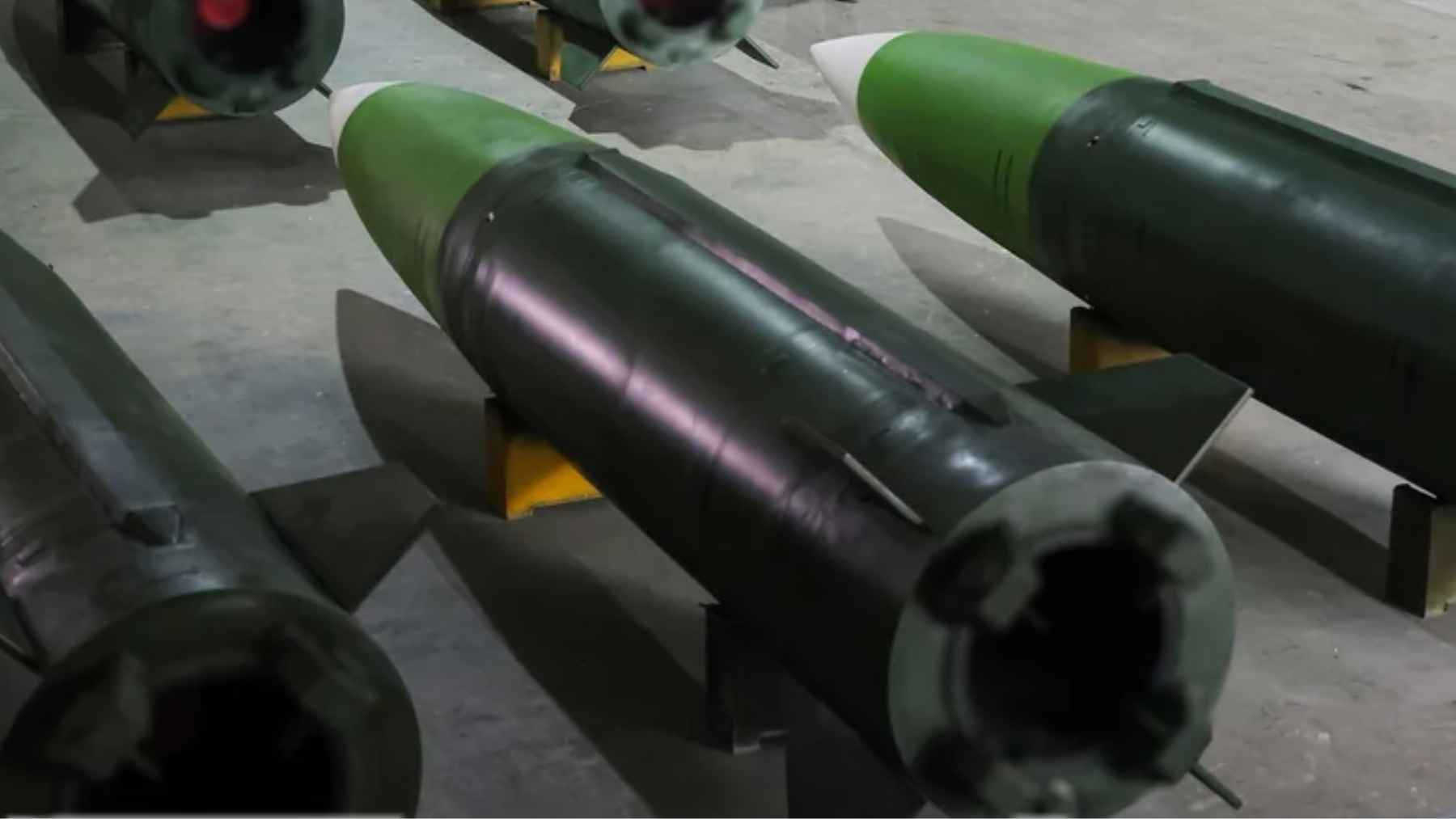
When a ballistic missile hits a city, the debris is more than twisted metal. Ukraine’s defense ministry says its labs studied fragments of North Korea’s KN-23 and KN-24 missiles used on Ukrainian territory in early 2024 and found a mix of modern components and manufacturing that looks decades behind, including soldering quality that appears roughly 50 years out of date.
So how can a weapon that looks like it came from another era still threaten a modern capital? Because guidance and control can hinge on commercial electronics that move through the same global supply chains that stock routers, factory sensors, and your next phone upgrade. Ukraine’s findings suggest that choking off those flows is harder than banning a finished missile.
What the wreckage revealed
The ministry says its engineers ran laboratory studies after Russia used KN-series missiles during large strikes on Ukrainian cities, including a missile that fell in Kharkiv on January 2, 2024. Their analysis matched parameters in South Korean scientific publications, turning battlefield forensics into a technical report.
Ukraine also says the missiles rely on less energy-dense fuel than comparable Russian systems, so their engines have to be bigger and longer by about 1.5 times to reach a similar range. Bigger engines mean more volume devoted to propulsion, which can squeeze design choices elsewhere and complicate manufacturing.
Then there is the craftsmanship. The ministry says the production uses outdated methods and that the soldering quality dates back about 50 years, while the nose section includes a graphite fairing described as a relatively cheap way to handle heat during atmospheric flight.
Even with those shortcuts, Ukraine warns that ballistic missiles remain “extremely inconvenient” targets for air defenses.
A design fingerprint
Ukraine says the KN-23 stands out by geometry alone. Investigators measured a rear diameter of 110 centimeters (about 43.3 inches), tapering to 90 centimeters (about 35.4 inches) toward the front, and the ministry says that 110 centimeter dimension is unique to North Korea.
For the KN-24, the reported diameter is roughly 100 centimeters (about 39.4 inches), which the ministry notes is not unique worldwide.
To confirm identification, experts compared debris with photos from North Korean missile factories and recorded seven key matches, including bolt-hole patterns for nozzle mounts and niches for satellite navigation receivers.
The same comparison also supports a more nuanced origin story. Ukraine’s experts say the KN-23 and KN-24 are not direct copies of Soviet or Russian missiles and were not built “under license” of the Iskander 9M723, even if there are signs North Korea refined an early Iskander development path.
Efficiency and reliability
A 1.5 times larger engine is not just trivia. If a missile needs more motor to fly the same distance, it can hint at older propellant chemistry, less refined manufacturing tolerances, or limits in materials, although Ukraine’s report does not pin it on any single factor.
On the battlefield, Ukraine has repeatedly questioned the KN-series track record. In May 2024, Ukrainian prosecutors told Reuters that about half of the North Korean missiles launched in a two-month window lost their programmed trajectories and exploded in the air, which often meant little debris to recover.
And change may be exactly the point. Reuters reported in February 2025 that Ukrainian sources saw a sharp improvement in accuracy for North Korean ballistic missiles used by Russia, with strikes landing within roughly 50 to 100 meters (about 165 to 330 feet) instead of being off by up to 1 to 3 kilometers (about 0.6 to 1.9 miles) earlier in the war.
That kind of jump would worry any neighbor watching from across a border.
Commercial chips in a military weapon
One of the most uncomfortable findings is how ordinary some parts may be. Ukraine’s defense ministry says the missiles’ control units contained “civilian purpose” components from leading brands, and that Pyongyang likely buys these chips by working around sanctions.
Ukraine’s Defense Intelligence, known as GUR, has been publishing component details since late 2024.
In a November 2024 statement, the agency said debris from KN-23 and KN-24 missiles contained parts manufactured by companies based in countries including the United States, the United Kingdom, China, Japan, and Switzerland, and highlighted a power converter marked as produced in February 2023.
The War and Sanctions portal run by GUR turns that into a searchable database and pairs it with policy recommendations.
Its KN-23 and KN-24 entry lists dozens of items, including a microcontroller identified as an NXP product and power components tied to firms like XP Power and Texas Instruments, while urging tougher due diligence and re-export controls for high-risk electronics.
Why Russia keeps buying anyway
Quality issues have not stopped the flow. In April 2025, Reuters reported that President Volodymyr Zelenskiy said a North Korean KN-23 missile was used in a deadly strike on a residential building in Kyiv, and Ukrainian officials said North Korea had supplied Russia with at least 148 KN-series ballistic missiles by early 2025.
For Moscow, foreign supply can help stretch Russia’s own missile inventory and keep pressure on Ukrainian air defenses that already face a constant drone-and-missile workload.
For Pyongyang, the war offers something money cannot buy easily, combat feedback and a chance to refine designs against real defenses, and U.S. and South Korean officials have warned about that learning loop.
Ukraine’s report paints a picture of a missile industry that can ship weapons abroad while still leaning on globally traded electronics and cheaper materials.
The official statement was published on Ministry of Defence of Ukraine.