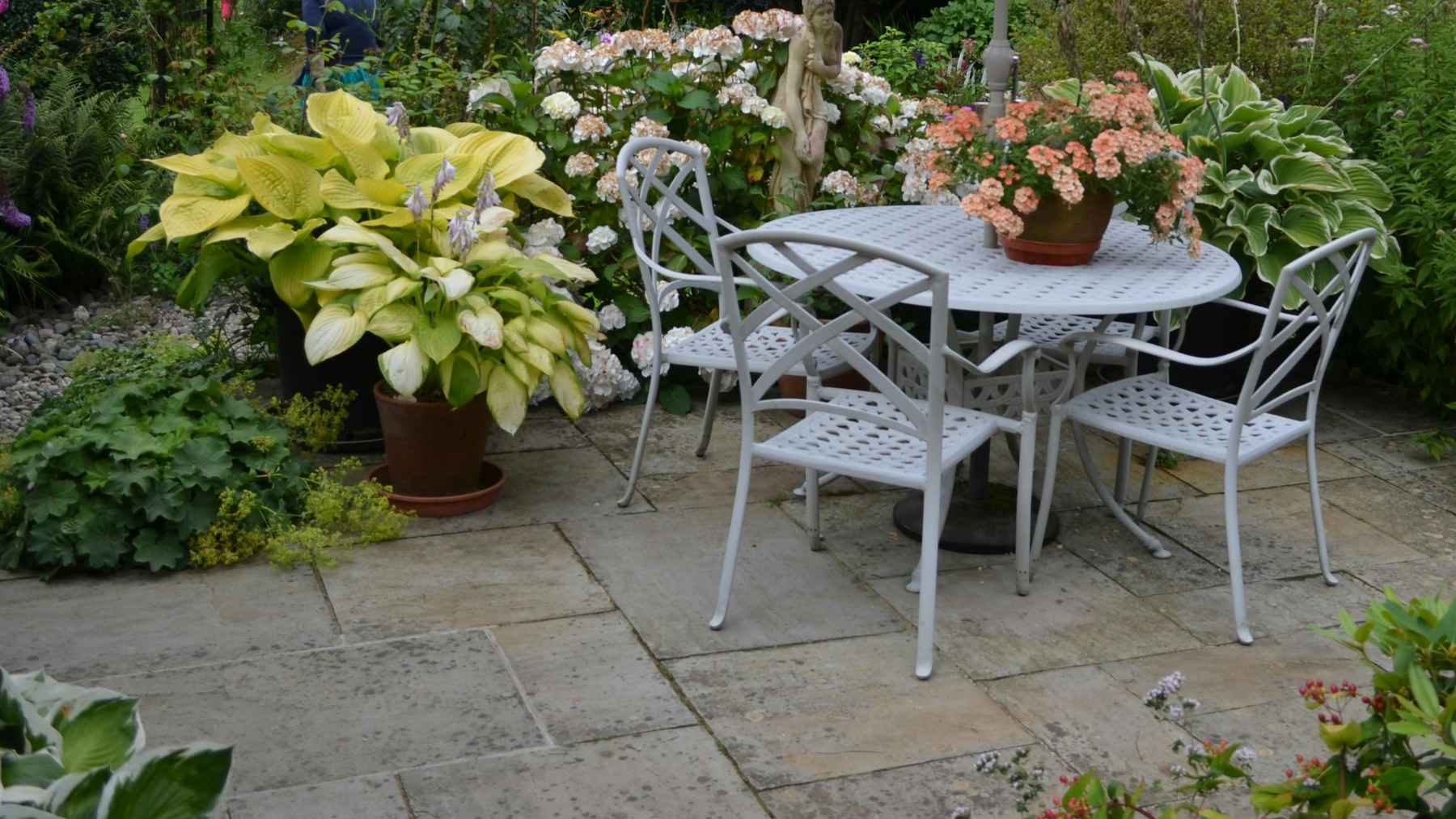
If you’re planning a new patio, the material choice can feel like a purely personal decision. Do you want a clean, uniform slab, or something with more character under your feet?
But there’s a bigger story hiding in the backyard. New homeowner guidance is spotlighting natural stone as a more eco-friendly alternative to concrete, especially when the stone is local, minimally processed, or reclaimed from another project.
Why concrete is under the microscope
Concrete is everywhere, from highways to high-rises, and its climate impact largely comes down to cement. The Global Cement and Concrete Association (GCCA) says cement production is responsible for about 7% to 8% of current global CO2 emissions, which is huge for a single material most people rarely think about.
What makes it so hard to clean up is that cement emissions are not only about energy use. A lot of the CO2 is baked into the chemistry of turning limestone into clinker, the key ingredient that makes cement bind, so simply switching to cleaner power does not solve the whole problem.
And the progress line is not moving fast enough. The International Energy Agency (IEA) says the direct CO2 emissions intensity of cement production has been broadly flat in recent years, even as the sector needs steep annual declines to align with net-zero pathways.
Natural stone looks greener but it depends
Natural stone is getting fresh attention because it can deliver the “sturdy and stylish” look people want while aiming for a smaller environmental impact than concrete. Hunker’s recent write-up frames it simply: stone still has impacts from quarrying and shipping, but concrete’s CO2 footprint is often larger today.
The key word is “depends.” Stone that’s trucked across long distances or heavily processed can rack up its own environmental costs, so it is not automatically a free pass just because it is “natural.”
Still, the tradeoff is real enough that it is shaping consumer advice. Hunker explicitly points readers toward local quarry stone, minimally processed options, or reclaimed stone to push the impact lower.
Local and reclaimed stone is where the savings show up
In practical terms, heavy materials mean heavy transport. Anyone who has watched delivery trucks rumble down the street for a remodel knows that fuel and distance matter, and sourcing stone locally is one of the clearest levers a homeowner can actually pull.
Reclaimed stone is the other lever, and it is easy to overlook. Using stone that already exists in the built environment can cut down on new extraction and keep usable material out of waste streams, which is why it keeps showing up in “lower impact” guidance.
There’s also a quiet business angle here. A stronger resale and salvage market for stone favors local yards, contractors, and suppliers who can sort and move reclaimed materials efficiently, which is a very different supply chain than fresh-poured concrete on demand.
Design choices that last matter more than you think
The greenest patio is usually the one you do not have to redo in five years. Hunker emphasizes starting with the basics: measure the size and shape first, because that decision affects everything from how much material you need to how long installation will take.
Then there’s style and repeatability. If you want a rustic look, irregular flagstone is a classic, while cut stone pavers offer a more uniform grid if you like cleaner lines and tighter joints.
Color and comfort matter too, especially when summer heat turns patios into frying pans for bare feet. Hunker points to granite or bluestone for grays, and travertine, limestone, or sandstone for warmer earthy neutrals, with flagstone sitting in the middle depending on what you can source.
Holding it in place is not glamorous but it is the difference
Most patio regrets are not about the stone itself. They are about shifting, weeds, or that annoying wobble under a chair leg when you are trying to eat outside.
That is why installation details deserve more attention than they usually get. Hunker notes that low-profile edge restraints help lock in tight-fitting pavers, while sand, gravel, or stone dust can fill wider gaps for irregular stone shapes.
Skip those steps and you may pay later in small, irritating ways. Stones can move over time, and grass or weeds can creep into gaps, which turns a “set it and forget it” patio into a weekend chore.
The cement industry is betting on new tech and it is expensive
None of this means concrete is going away. The cement sector is trying to decarbonize with clinker substitution, efficiency improvements, alternative fuels, and carbon capture, but the IEA stresses that new technologies need to scale quickly to change the emissions curve.
The cost challenge is real. In its Breakthrough Agenda coverage, the IEA estimates that early commercial plants for near-zero-emissions cement using carbon capture can cost 75% to 150% more than conventional plants, depending on the region.
Some projects are moving from theory to contracts. Reuters reported that Heidelberg Materials pre-sold all the “zero-emissions” cement it planned to produce in 2025 from its Brevik plant in Norway, supported by a carbon capture system designed to capture about 400,000 metric tons of CO2 a year (around 440,925 U.S. tons).
What to ask before you buy a single paver
If you are leaning toward natural stone, start with sourcing questions that are surprisingly practical. Where was it quarried, how far did it travel, and is there a reclaimed option available right now that fits your design and budget?
If you still want concrete, the better question is what kind. Ask contractors about lower-carbon mixes and whether they can document the product’s emissions profile, because the industry is actively building definitions and standards around “low carbon” cement and concrete.
At the end of the day, a patio will not solve the cement sector’s climate problem on its own, but it does show how climate decisions are starting to trickle into everyday purchases.
The original report was published on the International Energy Agency.