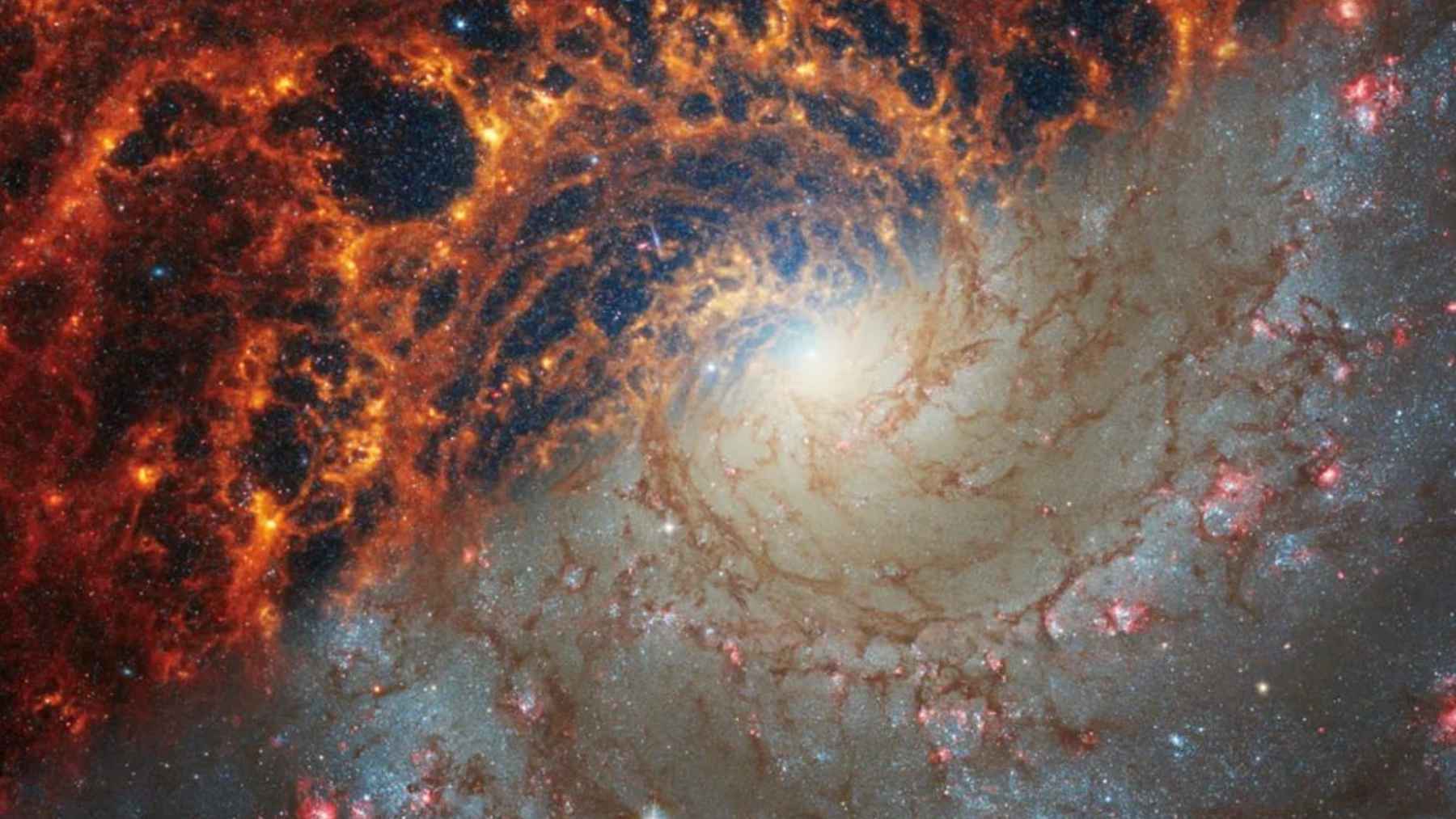
Gravity is the force we learn about from falling apples, but it also quietly shapes everything from galaxy clusters to the cosmic web. Now a new analysis using the Atacama Cosmology Telescope suggests that, even across separations of roughly 750 million light-years, gravity still weakens with distance exactly the way Isaac Newton and Albert Einstein said it should.
That result matters because it narrows the universe’s options. If gravity is not “breaking” at huge distances, then the long-running mystery of galaxies and clusters moving too fast points back, once again, to an unseen mass component, meaning dark matter remains the leading explanation, according to reporting from the Simons Foundation and an official release from the University of Pennsylvania.
A gravity test built from the universe’s oldest light
The researchers used the cosmic microwave background, the faint afterglow of the Big Bang, as a backlight. As that ancient light passes through hot gas around galaxy clusters, the clusters’ motion leaves tiny fingerprints that can be measured.
This approach lets scientists estimate how strongly clusters are pulling toward one another across enormous separations. In practical terms, that means they can check whether gravity keeps fading with distance the way the inverse-square law predicts, even where everyday intuition is useless.
The telescope and survey data behind the result
The analysis combined measurements from the Atacama Cosmology Telescope with galaxy data from the Sloan Digital Sky Survey. Together, those datasets let the team track motions among galaxy clusters separated by tens to hundreds of millions of light-years.
That is the scale where some alternative ideas would expect gravity to behave differently. Instead, as Penn physicist Patricio Gallardo put it in the university’s write-up, the classic picture appears to be “still holding its ground,” even where Newton never could have imagined testing it.
Why this strengthens the dark matter case
For years, astronomers have seen the same uncomfortable pattern. Stars at the edges of galaxies and galaxies inside clusters often move too fast for the amount of visible matter we can count, which leaves a gap in the cosmic accounting.
If gravity itself were changing at large scales, that could have offered another way out. But with gravity matching the standard prediction, the simplest explanation is that extra mass is there, it is just not emitting light, and dark matter remains the best fit for most cosmologists.
Where everyday technology quietly overlaps with Einstein
It can feel like deep-space physics has nothing to do with daily life, but the same underlying rules show up closer to home. The timing and positioning that make GPS work depend on relativity corrections, which is why modern navigation is not just a map problem but a physics problem.
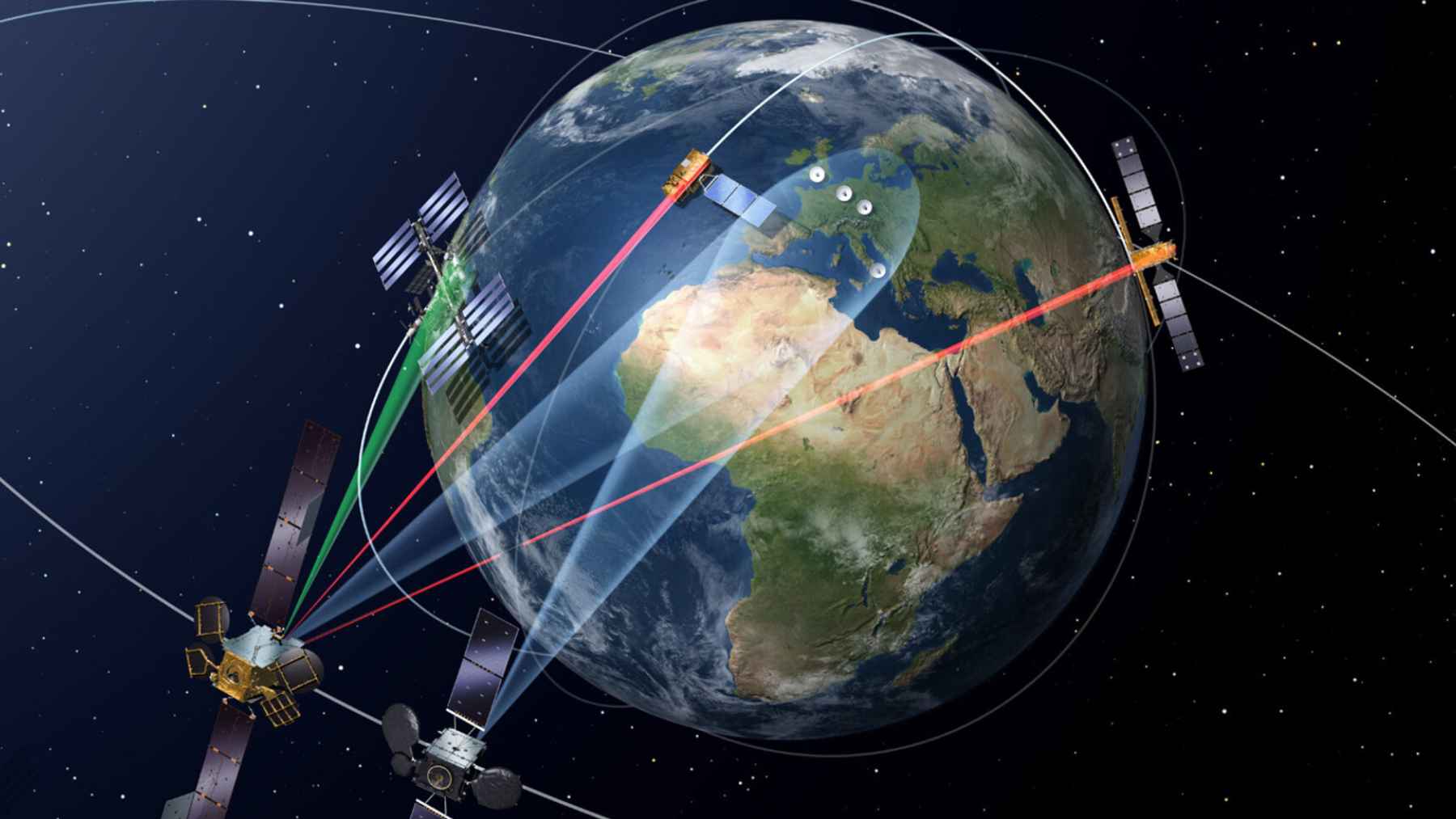
And the push to move data reliably across longer distances keeps accelerating. Projects aimed at building sturdier deep space communications and infrastructure are a reminder that space is becoming more like a working environment, not just a destination.
What to watch next in the search for “missing mass”
Confirming that gravity behaves normally does not solve dark matter. It simply tightens the logic, and it raises the pressure on experiments that are trying to detect dark matter particles directly.
Meanwhile, more sensitive observations are on the way, along with more ambitious space efforts, from new propulsion concepts that hinge on plasma advances to fresh debates about what we can learn from interstellar visitors passing through our neighborhood.
The peer-reviewed study was published on Physical Review Letters.