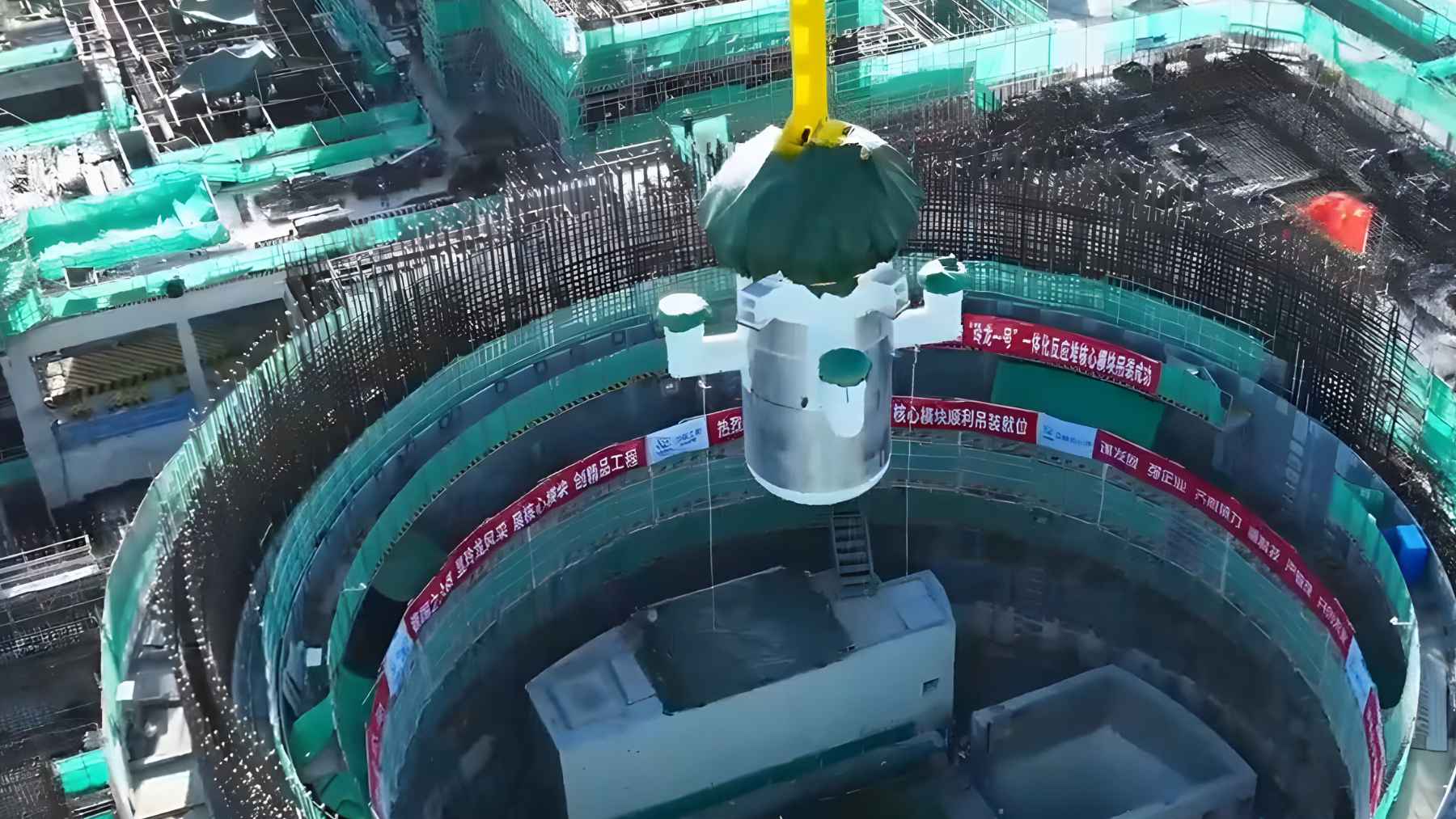
China is scaling up nuclear power at a pace the rest of the world is struggling to match. The International Atomic Energy Agency’s PRIS database lists 35 nuclear power reactors under construction in China, totaling about 37,700 megawatts (37.7 gigawatts) of net capacity, with PRIS updated as recently as April 13, 2026.
Put that in global context and the picture sharpens. PRIS shows 72 reactors under construction worldwide, meaning China accounts for close to half of all active nuclear projects and nearly half of the net capacity being built.
A build-out that has passed the 20-reactor mark
On paper, “more than 20 reactors under construction” sounds like a milestone. In practice, China has moved well beyond it, and that scale is becoming a policy tool as much as an energy story.
The pipeline also keeps getting refilled. In April 2025, China’s State Council approved 10 new nuclear generating units, with a reported total outlay of about 200 billion yuan (around $27.4 billion), according to Reuters.
China National Nuclear Corporation has described that approval package as five projects totaling 10 reactors, including eight Hualong One units. That detail matters because domestic designs are part of the industrial playbook, not a side note.
Why oil keeps driving the strategy
Here is the uncomfortable reality for any import-heavy economy. When a large share of your oil arrives by sea, the biggest risk is not the price on a screen – it is whether the cargo shows up at all. What happens if a key chokepoint slows to a crawl for weeks?
The latest disruption has made that tangible. Reuters reported that Middle East crude shipments to China fell 28% year over year in the first five months of 2026, dropping the region’s share of China’s oil imports from 52% to 31% amid shipping constraints tied to the conflict around Iran.
China has tried to avoid becoming dependent on a single supplier, and Reuters data shows less than 20% of China’s oil imports come from any one source. But diversification cannot erase exposure to maritime chokepoints – it mainly spreads the risk across more routes.
Electrification needs steady power
Nuclear power’s advantage is boring, and that is the point. It produces steady electricity around the clock, which is what chip fabs, industrial parks, and data centers need when demand spikes and everyone is running the air conditioner.
The electricity appetite is already huge. China’s National Energy Administration said the country consumed 10.4 trillion kilowatt-hours of electricity in 2025, the first time it passed the 10 trillion mark. PRIS reports China supplied 450,845 gigawatt-hours of nuclear electricity in 2024, which is about 450.8 billion kilowatt-hours.
Official statistics suggest the grid is also getting cleaner, even if the transition is uneven. China’s National Bureau of Statistics reported that “clean energy” electricity generation, including hydropower, nuclear, wind, and solar, reached 4,248.1 billion kilowatt-hours in 2025, up 14.4% from the prior year.
China’s leadership has also pledged to reach carbon neutrality before 2060, which raises the pressure for more low-emissions electricity that can run when wind and solar output dips.
Advanced reactors are not just a science project
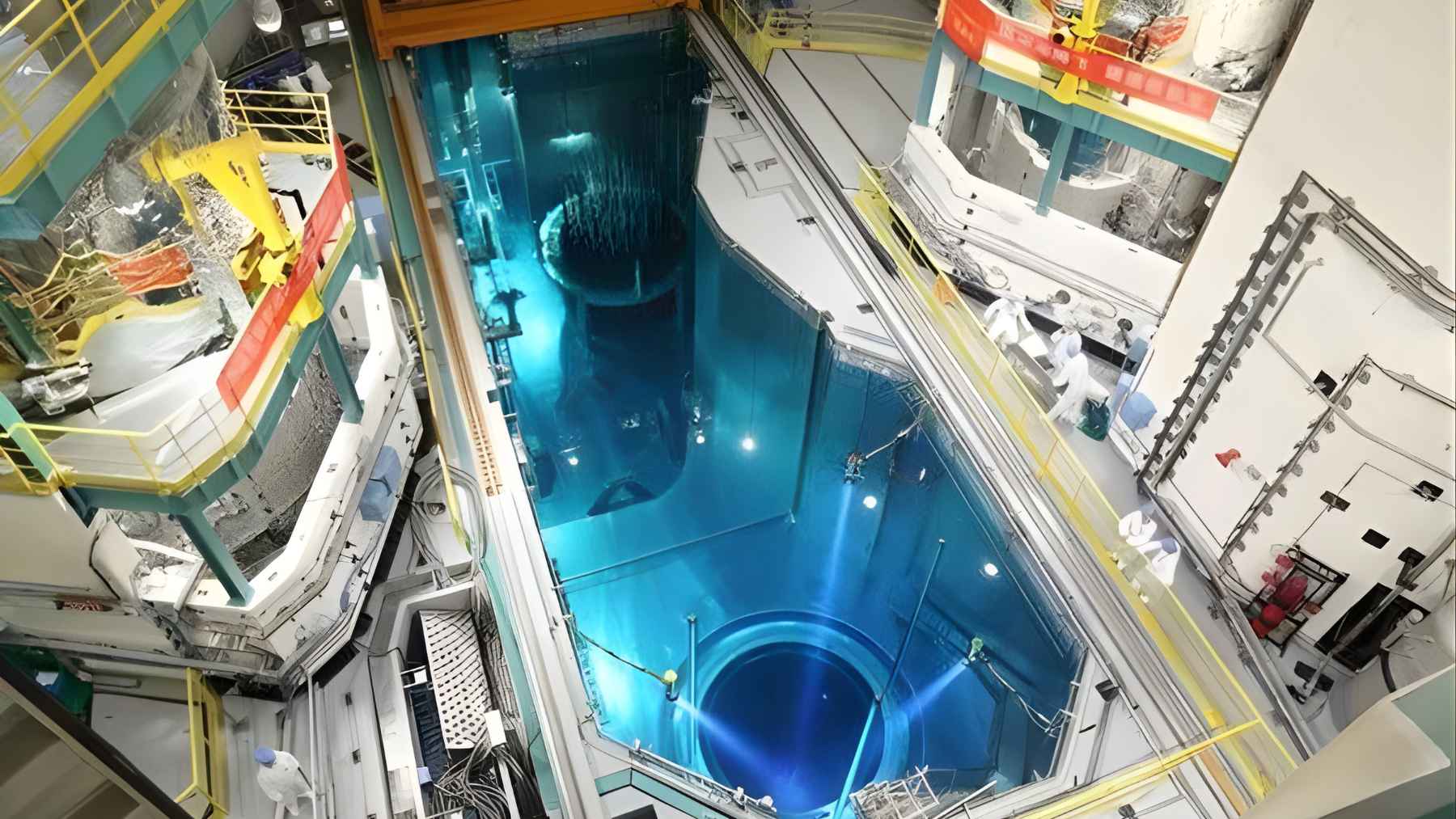
China’s nuclear expansion is not limited to conventional large reactors. PRIS lists advanced designs alongside mainstream units, including an operational high temperature gas cooled reactor at Shidao Bay and fast breeder reactors under construction at Xiapu.
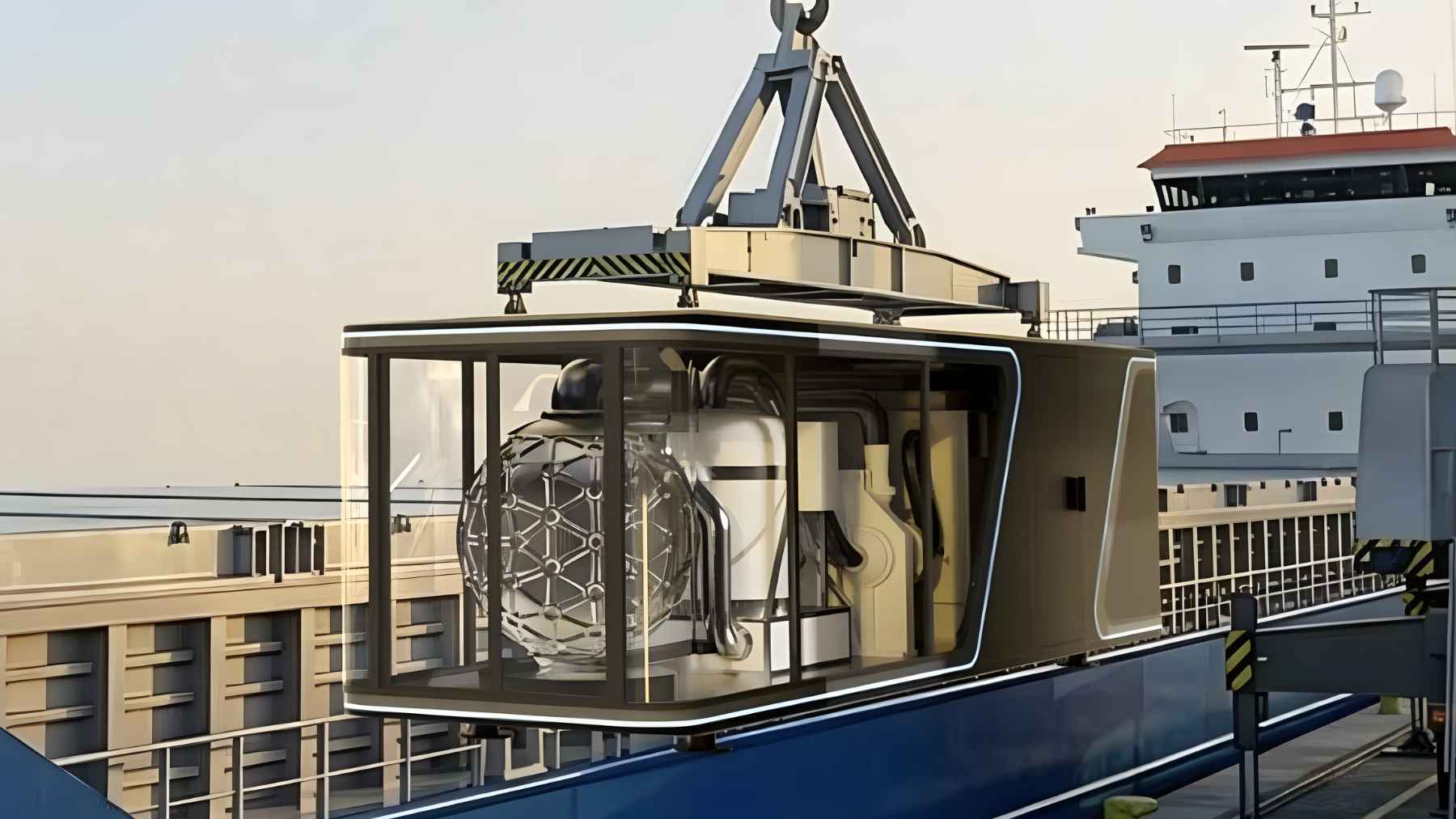
It also includes smaller projects, such as Linglong-1, a 100-megawatt unit listed as under construction. That is a reminder that China is building experience across a range of reactor types, including categories often discussed internationally as “small modular” options.
This is where the tech and business angles converge. The International Energy Agency has argued that electricity demand is rising not only for traditional uses but also for electric vehicles, data centers, and artificial intelligence, and it describes nuclear as a clean, dispatchable source that complements renewables.
Business and defense implications are intertwined
At the end of the day, energy systems are economic infrastructure. If a country can reliably produce more of its power at home, it can reduce exposure to fuel shocks that hit industry first and households later, sometimes right when the monthly bills land.
There is also a national security angle that does not require dramatic hypotheticals. When oil routes are disrupted, governments are forced into costly workarounds, and Reuters reporting this month has shown how quickly import patterns can shift when shipping becomes constrained.
China’s nuclear build-out will not make that problem vanish overnight, but it can shrink the slice of the economy that depends on imported barrels.
By China’s own official statistics, total energy consumption in 2025 was 6.17 billion tons of standard coal equivalent (about 6.8 billion short tons), with coal at 51.4% and “clean energy” at 30.4%, leaving oil as the remaining share at roughly 18%.
What global markets should watch next
A rapid nuclear build-out does not mean China stops buying oil tomorrow. In March 2026, Reuters reported China imported about 11.77 million barrels per day of crude oil, even as refinery utilization fell amid supply risks.
What changes, over time, is bargaining power and trajectory. If more transport, heating, and industrial processes shift to electricity, oil demand growth can slow even while overall energy demand keeps rising.
Oil exporters are already feeling how flexible China can be when it needs alternatives. Reuters reported China lifted crude imports from Brazil to a record 1.6 million barrels per day in March 2026, a surge tied in part to Middle East supply disruptions.
The caveats that can slow the story down
Nuclear power is not a simple swap for oil. Projects can face delays and cost overruns, and even the IEA notes that longtime nuclear leaders have struggled in recent years with schedule slippage and rising costs for new large reactors.
There is also a grid reality check. Even with more nuclear power, China is still balancing coal, renewables, and rising demand, and the transition will likely be uneven across provinces for the most part. So the nuclear boom is best understood as a strategic hedge.
It does not remove geopolitical risk, but it can change the odds.
The official reactor status data was published on IAEA PRIS.