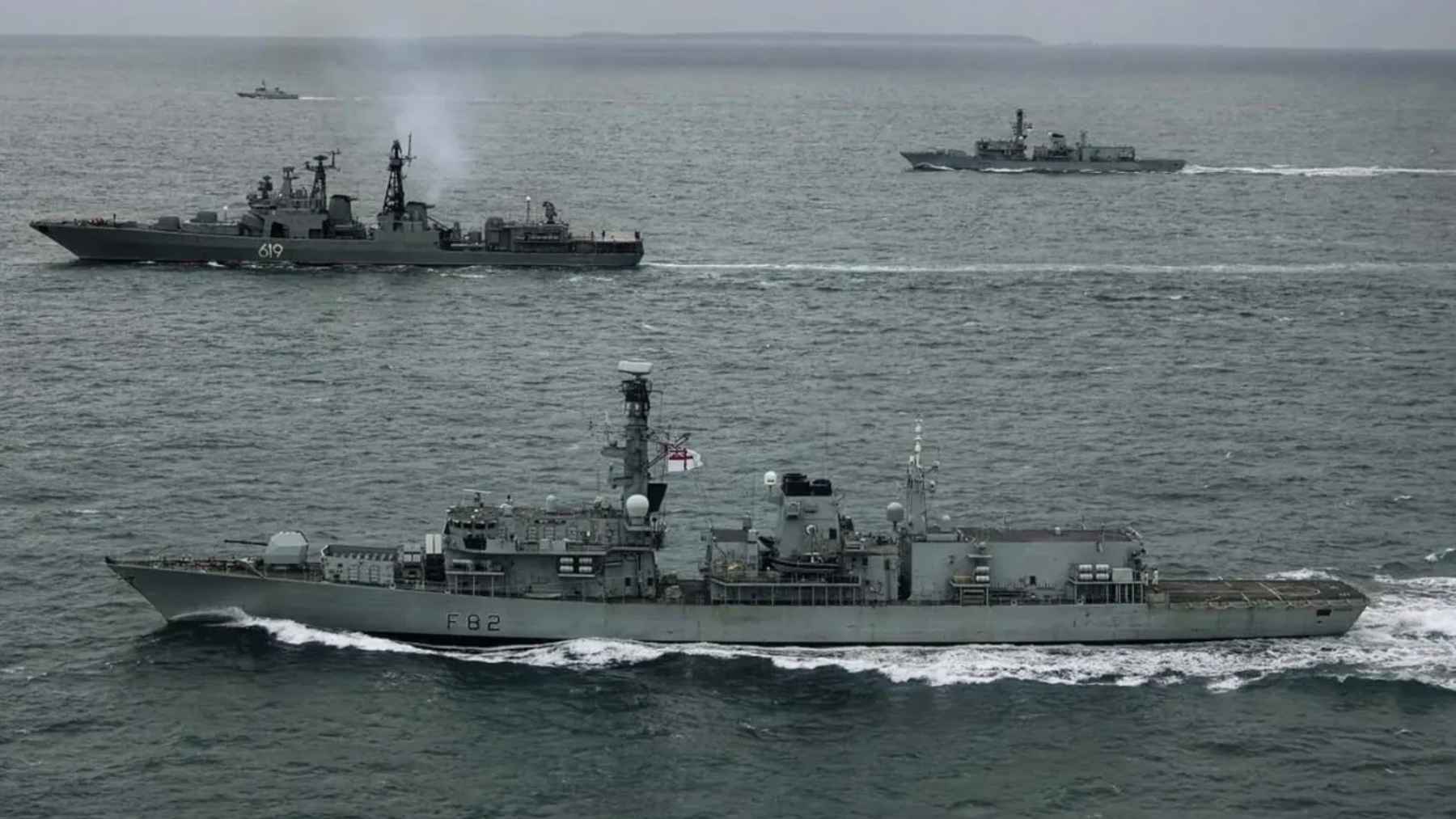
For 10 straight days, the Royal Navy kept close watch on Russian warships and a submarine moving through the English Channel and the North Sea. London says the operation brought together ships and helicopters in a coordinated NATO effort, with the goal of understanding what was in the water and where it was headed.
At first glance, this looks like another familiar episode of navies shadowing navies. But the backdrop has changed, because the same waters now sit at the intersection of defense, global shipping, energy flows, and the undersea cables that keep businesses online. So why should anyone outside a naval base care?
What happened in the Channel
The Royal Navy said it dispatched HMS Somerset, HMS St Albans, HMS Mersey, and the tanker RFA Tideforce, alongside naval helicopters, to monitor four Russian naval vessels including a surfaced submarine. The watch ran from March 29 to April 7, covering transits through the Channel and into the North Sea.
In the Navy’s account, HMS Mersey was activated three times and worked with a Wildcat helicopter from 815 Naval Air Squadron to track the frigate Admiral Grigorovich, the landing ship Aleksandr Shabalin, and the Kilo-class submarine Krasnodar.
Mersey and Tideforce then worked with Belgian, French, and Dutch aircraft and ships as the Russian group moved eastbound through the Channel.
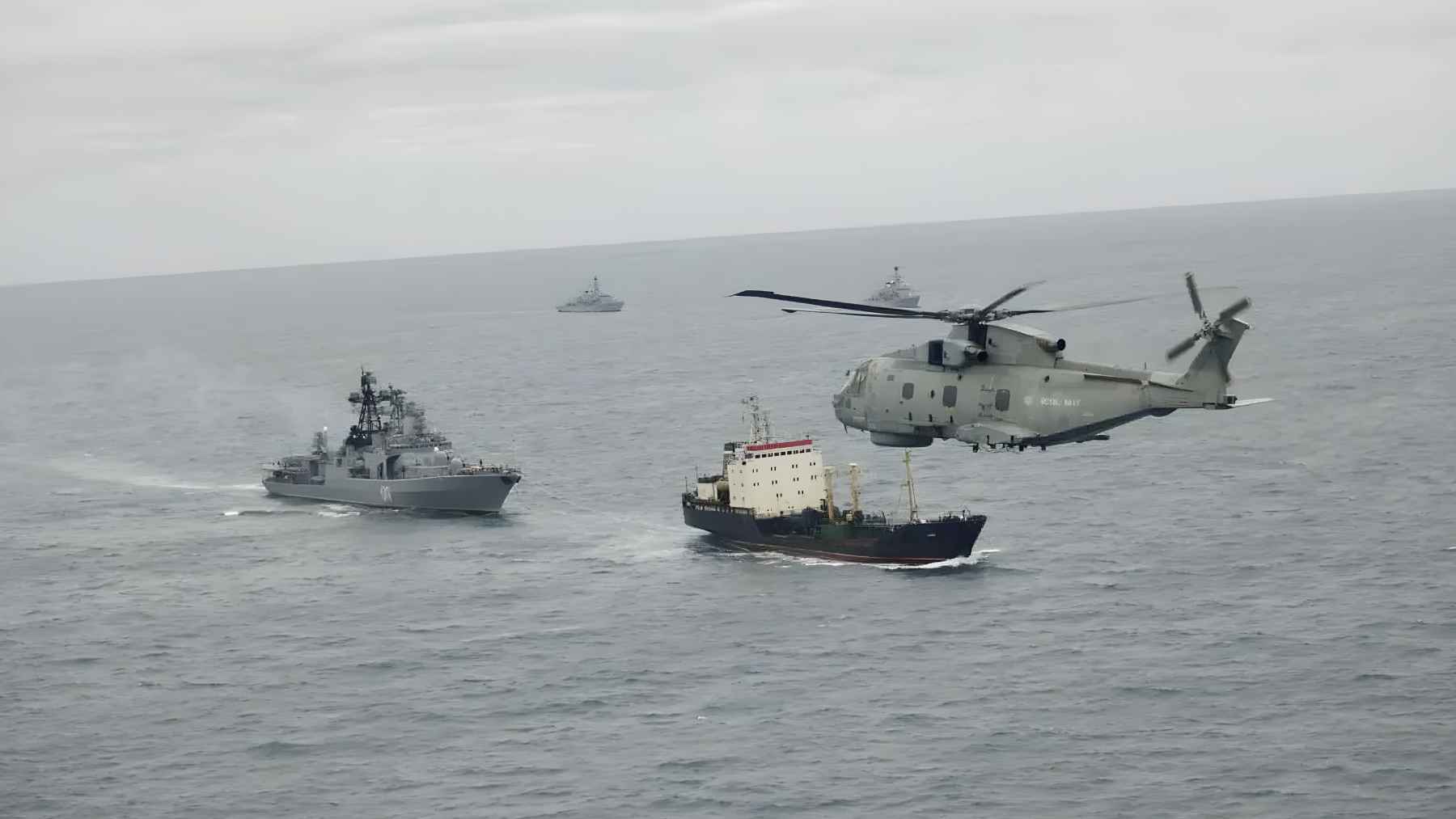
In parallel, HMS Somerset and a Merlin helicopter monitored the destroyerSeveromorsk and its accompanying oilerKama, watching them from near the coast of Brittany through the Channel and into the North Sea. “Our ability to provide a presence to monitor Russian activity in U.K. water is no small feat,” Lieutenant George Hage said.
Operation Ceto and why submarines raise the stakes
A key element of the story is what happened next. The Royal Navy said HMS St Albans briefly joined Somerset to formally hand over duties for Operation Ceto, described as the U.K. ‘s standing operations for strategic deterrence protection and monitoring potential submarine activity in the North Atlantic.
Somerset is set to begin about four months of operations in the North Atlantic, aimed at monitoring submarine movements and protecting critical undersea infrastructure.
This is a reminder that today’s maritime competition is not just about surface ships you can photograph from shore. It is also about quieter activity under the waterline, where detection is harder and response options are narrower.
Somerset’s commanding officer, Commander Matt Millyard, framed the near term as a workload challenge rather than a one-off spike. “The months ahead promise to be a complex mix of tasking for the ship but we are ready,” he said.
NATO coordination is becoming the default setting
The Royal Navy emphasized that allied support was part of the picture, particularly aircraft and ships from Belgium, France, and the Netherlands. In practical terms, that shared presence reduces gaps in coverage and lowers the chance that a vessel of interest slips through a seam between national patrol areas.
This also fits a pattern seen repeatedly since Russia’s full-scale invasion of Ukraine, where NATO members track Russian naval groups as they move past chokepoints.
In March 2025, for example, the Royal Navy described a three-day mission in which HMS Somerset monitored a Russian corvette and a merchant ship moving through the Channel and North Sea, working with allied forces and U.K. patrol aircraft.
For the public, these shadowing missions can seem abstract, like distant chess moves. For naval planners, they are closer to air traffic control – constant, detail-heavy, and unforgiving if you lose the plot for even a short time.
Commerce, sanctions, and the shadow fleet problem
Admiral Grigorovich showed up in more than one headline this month. Reuters reported that the frigate escorted two oil tankers sanctioned by Britain through U.K. waters in the English Channel, and that the U.K. used a patrol vessel, helicopter, and tanker to report on the Russian movements with allied support.
That connection matters for business because it shows how maritime security and economic enforcement are colliding in the same tight geography. When a warship escorts commercial shipping, the legal and political calculations for any kind of interdiction get complicated fast, even if a government says it wants to crack down.
Moscow, for its part, argued that Russia has a right to protect its maritime interests from what it called piracy. The larger point is that shipping routes and sanctions policy are now tied to visible military behavior, which can add friction for insurers, shippers, and anyone tracking delivery risk.
The tech stakes under the sea
It is easy to treat “critical undersea infrastructure” as a vague phrase, but it maps directly onto modern life. The International Telecommunication Union says submarine cables carry about 99% of the world’s Internet traffic, enabling everything from cloud computing to financial transactions.
The same ITU backgrounder estimates that, as of 2024, more than 500 active and planned submarine cable systems span the globe. It also notes that building a new cable can take more than two years, which helps explain why resilience and repair capacity matter as much as deterrence.
Meanwhile, NATO has been trying to pull industry into the room, not just uniformed forces. In 2025, NATO said its Critical Undersea Infrastructure Network met in Sweden to deepen cooperation on protecting cables and pipelines, including through new sensing and monitoring technologies and better information sharing.
What to watch next
The most immediate takeaway is that this was not a one-day spike. The Royal Navy itself pointed to “such an increase in activity over the last few months,” language that suggests more frequent tasking, not less.
At the government level, the UK has been linking surface ship movements to a broader concern about undersea surveillance and potential sabotage.
Reuters reported that Britain tracked Russian submarines for more than a month in the North Atlantic earlier this year as part of an effort to deter any malign activity near cables and pipelines, while Russia denied threatening that infrastructure.
For businesses and tech operators, the practical question is how much redundancy and monitoring is enough. Most of the time, the sea looks calm from the coast and your video call works fine, but the systems underneath are not self-defending.
The official statement was published by Royal Navy.