China says it has drilled roughly 11,200 feet (3,413 meters) through Antarctic ice using a hot-water system, a depth officials describe as a new record for polar hot-water drilling.
The work, carried out during the country’s 42nd Antarctic expedition above the Qilin Subglacial Lake area in East Antarctica, is meant to create a contamination-free path to water and sediment that have been sealed off for ages.
It sounds like a pure science story, but it is also a signal flare about capability. Deep hot-water drilling is less about one dramatic hole in the ice and more about proving you can run a complex industrial operation at the end of the world, keep it clean, and bring the data home, like the logistics questions that show up even in ordinary transport rollouts.
And in Antarctica, where science and geopolitics often share the same runway, that matters.
What happened under China’s 42nd Antarctic expedition
According to China’s Ministry of Natural Resources, the drilling test reached 11,197 feet (3,413 meters) on Feb. 5, and the result was announced in early April. State media said it exceeded a previous polar hot-water drilling depth of 8,333 feet (2,540 meters).
The site is tied to Qilin Subglacial Lake, a buried lake system China says it independently named in 2022. Chinese reporting places it in Princess Elizabeth Land on the East Antarctic inland ice sheet, about 75 miles (120 kilometers) from China’s Taishan Station.
Guo Jingxue, described by Xinhua as the head of the expedition’s subglacial lake team, said these lakes are sealed in “high pressure, low temperature, darkness and low nutrient levels.” That extreme isolation is exactly why scientists want to reach them without dragging modern microbes and chemicals along for the ride.
Why hot water drilling is such a big technical flex
Hot-water drilling does what it sounds like, pumping a high-pressure stream of near-boiling water to melt a vertical shaft through ice rather than grinding it out with a mechanical bit. China Daily notes that approach can be faster and can support large-diameter holes that are easier to instrument.
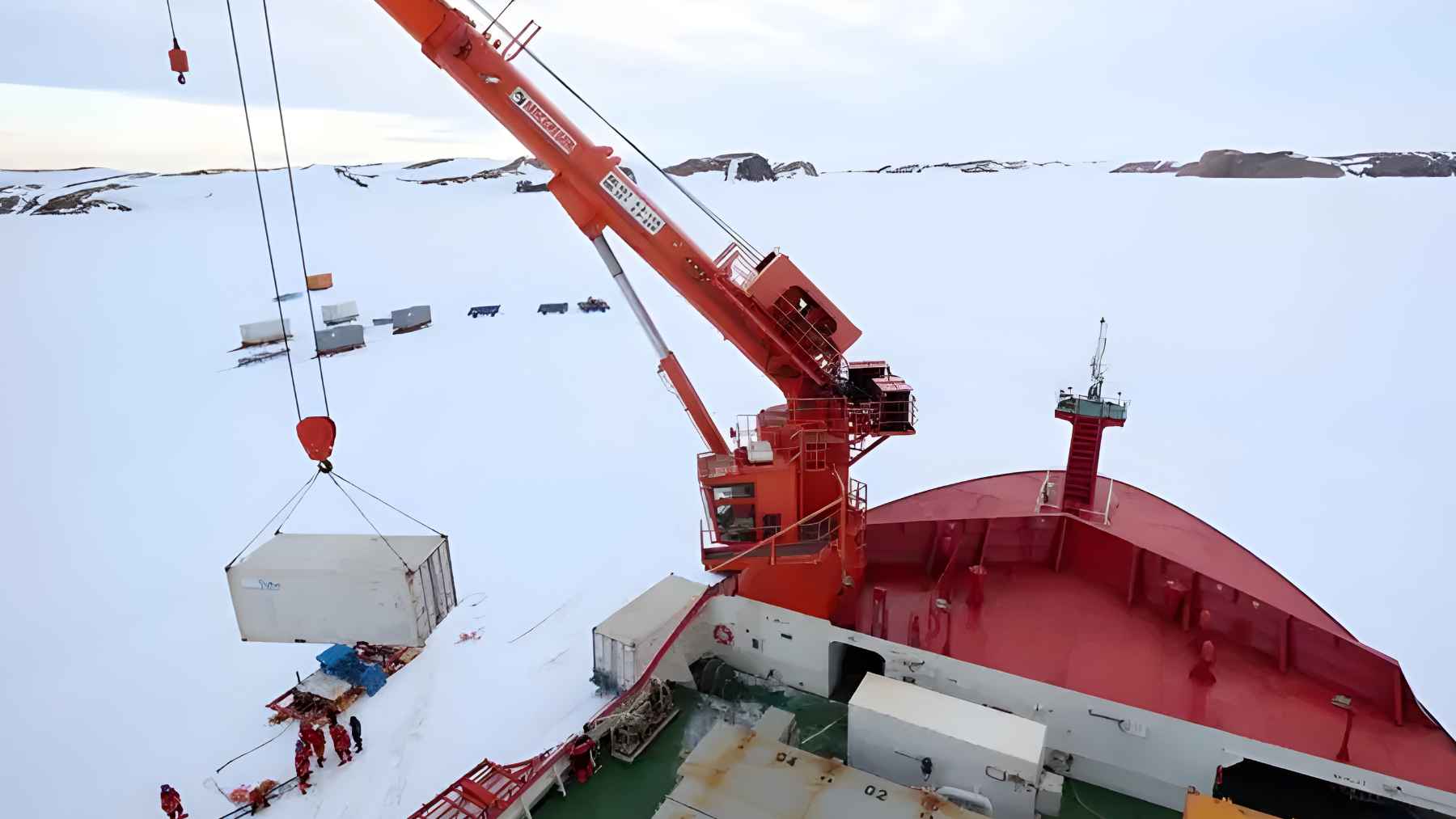
The hard part is everything around the nozzle. Xinhua says the test included transport over sea ice and inland routes, assembly and debugging of equipment, the drilling itself, and contamination monitoring across the process.
If this feels abstract, think about making coffee at home, then imagine trying to keep a whole system of heaters, pumps, hoses, and sensors running in bitter cold for days. A deep borehole is a supply chain problem, an energy problem, and a quality control problem all rolled into one.
“Clean access” is not a slogan in Antarctica
Subglacial lakes are tempting targets because they can hold ancient water and sediments, but they are also fragile. That is why hot-water drilling has been developed into “clean hot-water drilling” systems designed to reduce the risk of contaminating the environment being studied.
A well-known example is the U.S.-led WISSARD project, which used a clean hot-water drill to reach Subglacial Lake Whillans in West Antarctica through about 2,625 feet (800 meters) of ice. Researchers have described how that system enabled “clean access” for cameras, probes, and sampling tools.
Not every attempt goes smoothly. The British Antarctic Survey called off its Lake Ellsworth drilling mission in 2012 after technical issues, a reminder that even well-funded teams can get tripped up by boilers, water circulation, and the simple reality of working far from help.
What scientists hope to learn from Qilin’s hidden water
The scientific payoff is about time. Water and sediment trapped under thick ice can preserve signals of past climate and environmental change that help researchers understand how Earth’s systems shifted over long periods.
There is also the biology question. If organisms survive in cold, dark, high-pressure water with limited nutrients, they can teach scientists where life’s boundaries really sit, including in environments that resemble icy moons and other “ocean worlds.”
And yes, this does connect back to everyday life. Climate models built on better paleoclimate data are part of what eventually shapes flood maps, insurance prices, and the summer heat that makes the electric bill sting. The path from an Antarctic borehole to your wallet is not direct, but it is real.
Antarctica’s science race has a strategic shadow
China’s reporting frames the drilling as a technology milestone that “fills a gap” in its polar research toolkit and supports “green exploration.” It also says the capability could apply across more than 90% of the Antarctic ice sheet and the entire Arctic ice sheet, though that claim will ultimately be judged by future field work and independent results.
It is worth remembering what the rules of the game are supposed to be. The Antarctic Treaty sets Antarctica aside for peaceful purposes and protects freedom of scientific investigation, while the Madrid Protocol prohibits mineral resource activities other than scientific research.
Still, infrastructure is never just infrastructure. The same logistics that move drilling systems also support mapping, communications, and longer seasons on the ice, which is why national programs treat polar capability as both scientific and strategic. That tension is not new, but feats like a two-mile-deep clean borehole make it harder to ignore.
What to watch next
For now, the headline number is only the start. The real test is whether the drilling system can repeatedly support in situ observations and the careful collection of lake water and lakebed samples, as Chinese researchers said is the point of the demonstration.
The next question is transparency and sharing. The Antarctic Treaty encourages the exchange of scientific observations and results, and China Daily reported that the ministry said it would share relevant technologies and data, so observers will be watching what gets released and when.
If the sampling comes, so will scrutiny, including how contamination control was verified and how any biological findings are validated.
The official statement was published on Xinhua.