Microplastics are no longer just an ocean headline. They are showing up in the same place many of us expect to be “clean” by default, the water coming out of a faucet, a community tap, or the bottle you toss into a gym bag.
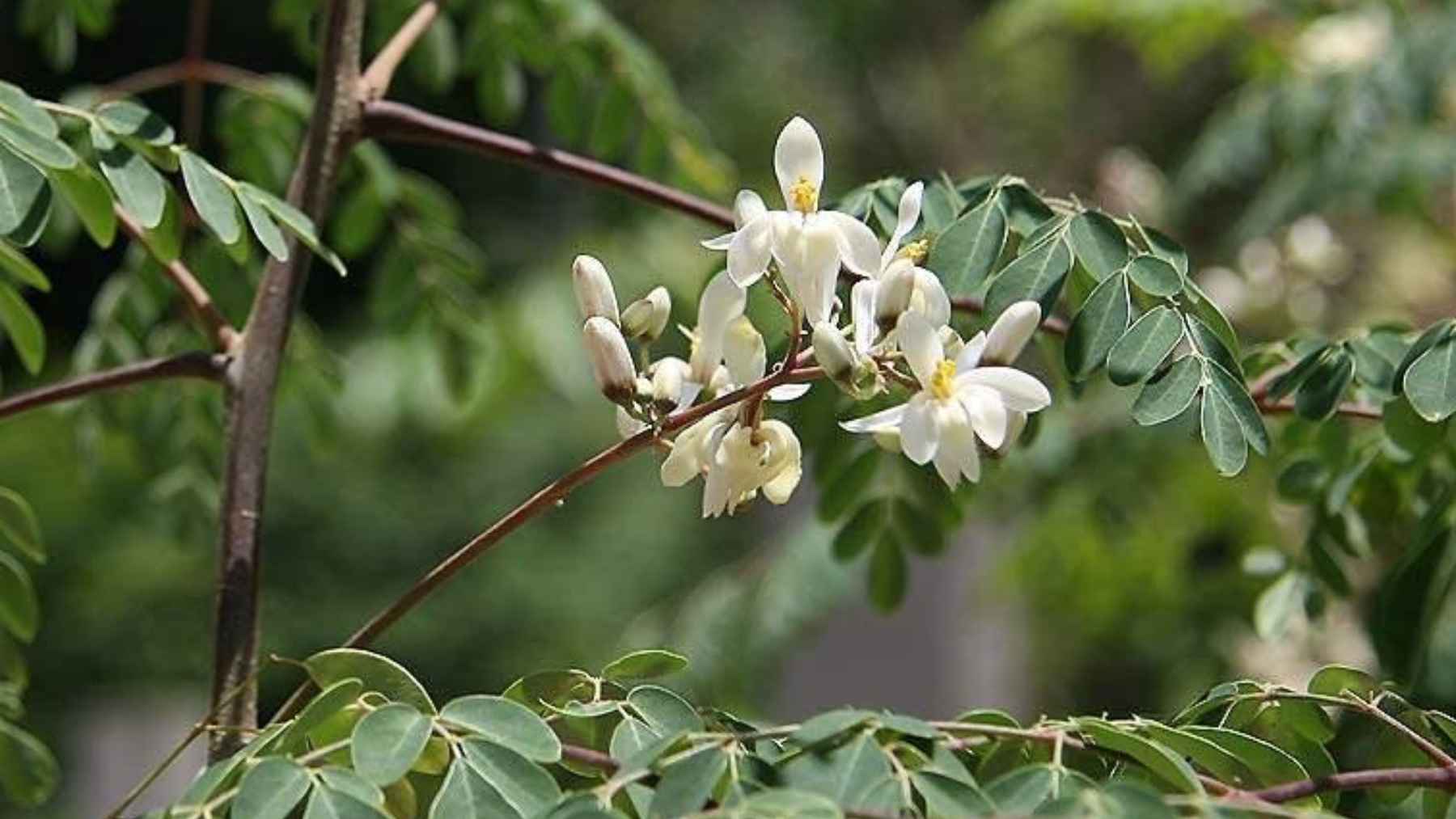
A new study from researchers at São Paulo State University in Brazil suggests a common plant, Moringa oleifera, can help remove microplastics from low-turbidity drinking water using a straightforward process that water treatment operators already understand.
In lab tests, a moringa seed saline extract performed similarly to aluminum sulfate (often called alum), and it stayed effective across a wider range of water conditions.
Moringa takes on alum
The work was conducted at the Institute of Science and Technology of São Paulo State University (ICT-UNESP) in São José dos Campos, Brazil, with Gabrielle Batista as first author and Adriano Gonçalves dos Reis coordinating the research. The peer-reviewed paper was published in ACS Omega, and the project is tied to research supported by the São Paulo Research Foundation (FAPESP).
Their question is the kind that matters outside the lab. Can a biodegradable, plant-based coagulant do the same job as alum, the “workhorse” chemical used to help tiny contaminants clump together so filters can catch them.
What was tested and why PVC mattered
To keep conditions controlled, the team spiked low-turbidity water with aged polyvinyl chloride (PVC) microplastics at 15 mg/L (about 15 parts per million). The reported median particle size was 15.0 micrometers (about 0.00059 inches), and they also added humic acid at 10 mg/L (about 10 parts per million) to represent natural organic matter found in real-world source water.
PVC was not chosen casually. The researchers said PVC is “one of the most dangerous plastics” for human health due to documented mutagenic and carcinogenic potential, and they noted it is often found both on the surface of water bodies and in water treated by conventional processes.
Coagulation is the hidden step most people never see
If you have ever tried to rinse glitter off your hands, you know how stubborn tiny particles can be. Microplastics and other contaminants can carry a negative electrical charge, which makes them repel one another and even repel the sand grains inside common filtration systems.
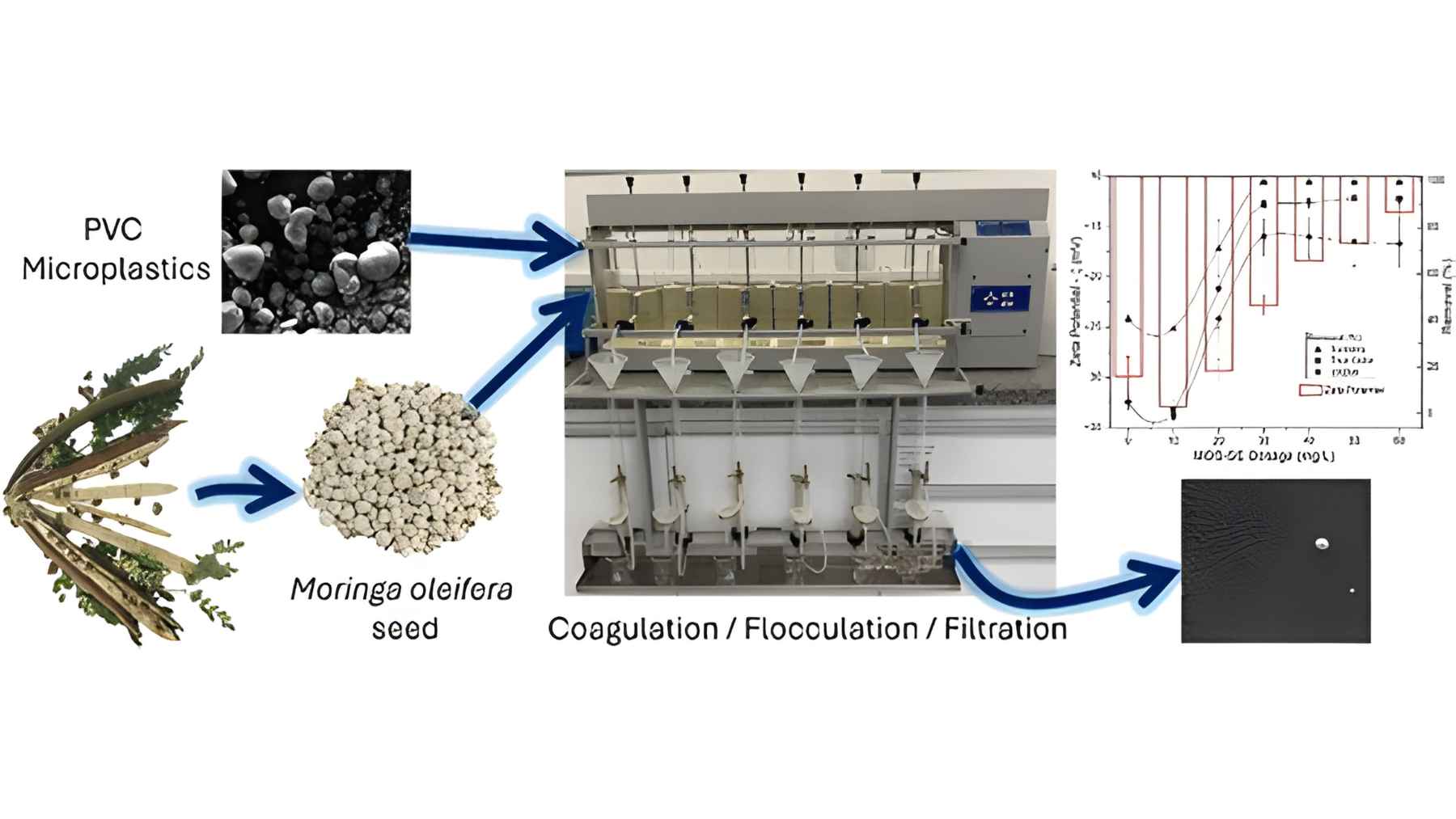
That’s where coagulation comes in. A coagulant, either alum or a moringa seed saline extract, neutralizes that charge so particles can collide, stick, and form larger clumps (often called “flocs”) that a sand filter can trap. It’s not flashy tech, but it’s one of the quiet workhorses of drinking water treatment.
The key result was not just removal but simplicity
The researchers compared “direct filtration” (coagulation, flocculation, filtration) with “in-line filtration” (coagulation, filtration) in terms of microplastic removal. In this low-turbidity setup, in-line filtration performed equivalently to direct filtration, which suggests the added flocculation step was not necessary to get strong removal in these conditions.
They also tracked particle clumping with imaging. Coagulated aggregates measured about 43 to 46 micrometers (roughly 0.00169 to 0.00181 inches), while flocculated aggregates measured about 61 to 66 micrometers (roughly 0.00240 to 0.00260 inches), yet removal outcomes remained comparable between the approaches.
The numbers behind the headline
Under the authors’ reported optimal conditions at pH 6.0, the moringa seed extract achieved more than 98 percent turbidity removal at a dose of 30 mg/L (about 30 parts per million). Alum achieved similar turbidity removal at 9 mg/L (about 9 parts per million) at the same pH.
When the team counted aged PVC microplastic particles using scanning electron microscopy, they reported 98.5 percent removal with the moringa extract and 98.7 percent removal with alum under those conditions.
The bigger difference showed up in the “comfort zone” for water chemistry, with the moringa extract performing across pH 5.0 to 8.0 while alum held up across pH 5.0 to 7.0.
Organic matter is the tradeoff engineers will watch
The researchers did not present moringa as a free lunch. Because the seed extract contains organic compounds, it can increase dissolved organic carbon in treated water, and removing that extra organic matter can add cost and complexity at larger scale.
At the same time, the team reported an 88 percent reduction in specific ultraviolet absorbance (SUVA), a commonly used indicator linked to aromatic natural organic matter.
Put simply, the extract may also help pull out some of the “brown tea” organics that show up in many natural waters, even if it adds other dissolved organics that need attention downstream.
Why this matters for business and defense resilience
This is not only an environmental story. Water treatment is a major industrial market, and utilities and facility operators face constant pressure to improve quality without blowing up budgets or driving up energy use, which eventually shows up in someone’s electric bill.
A plant-based coagulant that can be produced locally and transported more easily could appeal to small systems, rural properties, and temporary operations where chemical supply chains are fragile.
That includes disaster response and certain military logistics scenarios where moving large volumes of industrial chemicals is expensive or slow, and where simpler treatment trains can be an operational advantage.
The next tests will decide if it scales
The team is already moving beyond lab-created water. They are testing the moringa extract with water collected from the Paraíba do Sul River, which supplies São José dos Campos, and they report strong early performance in natural water so far.
Now comes the hard part. Can the extract deliver consistent results across seasons and source-water swings, and can operators standardize something that is “makeable at home” into a product regulators and utilities can reliably approve. That’s the gap between an exciting paper and something you would trust from the tap.
The study was published on ACS Omega.