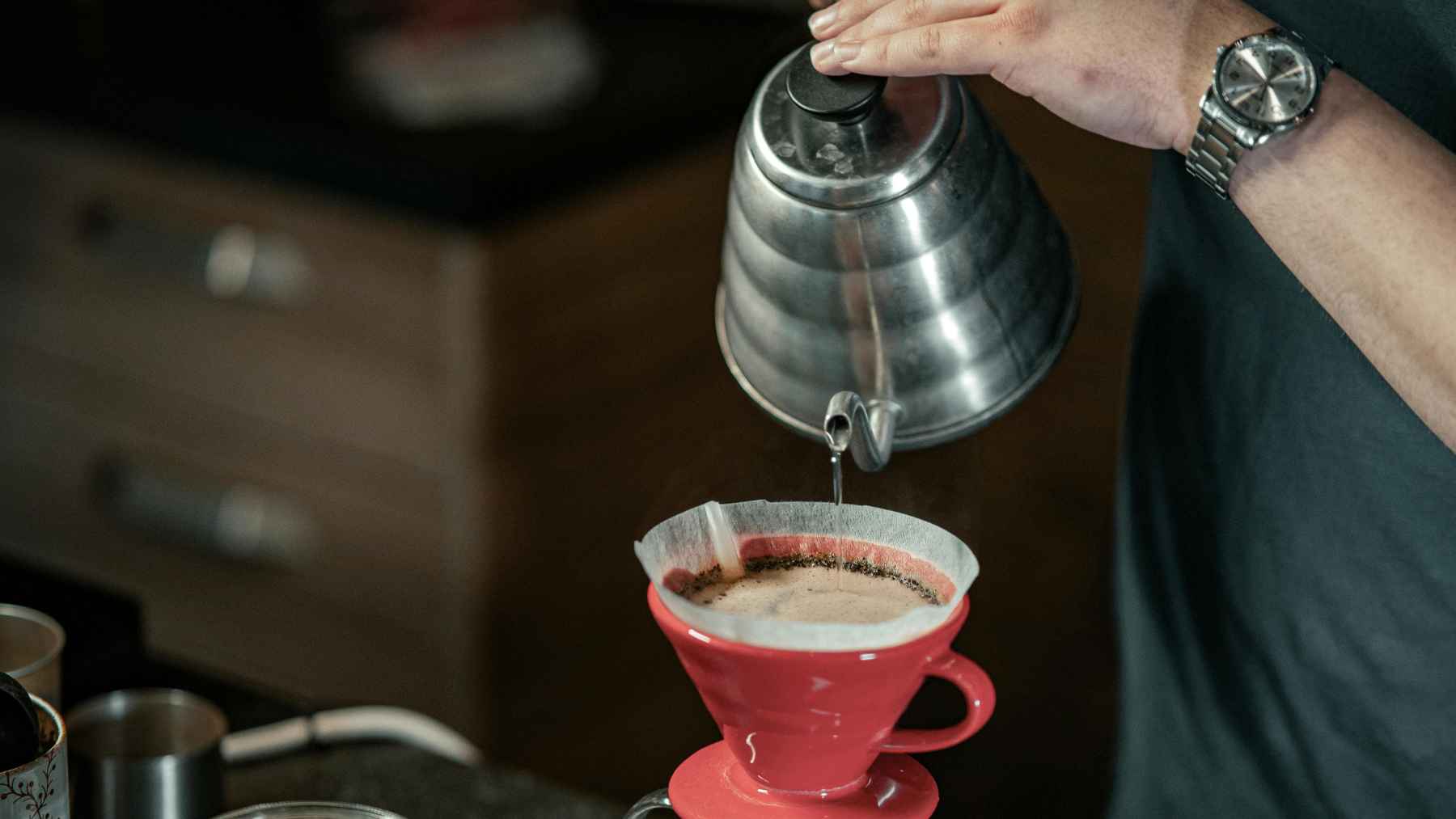
What happens after the last espresso is poured and the office coffee machine is scraped clean? Usually, the grounds go straight into the trash.
But researchers in Spain say that same soggy residue can be converted into biobutanol, an advanced biofuel, with a process designed not just to work in a lab, but to tackle the cost and efficiency problems that usually stop waste-based fuels from going any further.
That matters because spent coffee grounds are not some niche waste stream. Reviews of the sector say the world generates roughly 6 million tons of them every year, and the U.S. Department of Energy notes that biobutanol offers relatively high energy content among gasoline alternatives and lower volatility than ethanol.
In other words, yesterday’s cup could end up mattering a lot more than it looks.
Why this stands out
A lot of waste-to-fuel stories sound impressive at first and then fade once the economics show up. This one is different, at least to a large extent, because the ITACyL and University of León team optimized the whole production chain, from pretreatment and hydrolysis to detoxification and fermentation, instead of treating each step as a separate science experiment.
The numbers are what grab attention. Under the best conditions, the researchers recovered more than 91% of the sugars locked inside the used coffee grounds, then cleaned the hydrolysate enough to fully remove furans and cut phenolic compounds by more than 80% without major sugar losses.
That is the kind of housekeeping that can decide whether microbes produce fuel or simply stall out.
Why biobutanol gets attention
Biobutanol has been discussed for years as a stronger liquid fuel candidate than many people realize. According to the DOE, it offers higher energy content than ethanol and lower vapor pressure, which means lower volatility.
That alone helps explain why it keeps showing up in conversations about cleaner transportation fuels.
No, it is not a magic switch that suddenly replaces gasoline. But it fits more naturally into the broader push for lower-carbon liquid fuels, and that is why every improvement in feedstock cost or process simplicity matters more than the average person sees when tossing out a paper filter at home.
The microbe question
Then there is the biological bottleneck. After evaluating eight bacterial strains from the Clostridium group, the researchers identified Clostridium saccharoperbutylacetonicum as the most effective option for both butanol production and sugar use, outperforming other commonly used strains.
That may sound like a detail for specialists. It is not. In fermentation-based fuel projects, the right microbe is a bit like the right engine in a truck. Get it wrong, and the whole system carries extra weight without moving fast enough to justify the trip.
The cost story
Here is where the business angle really sharpens. Reports on the study say the team reduced the fermentation medium to just three essential supplements, cutting fermentation costs by nearly 50% compared with conventional formulations while keeping performance strong.
That is the kind of change investors and industrial operators usually want to see before they take a waste-to-fuel idea seriously.
The optimized setup reached up to 7.9 grams of biobutanol per liter, which is about 1.05 ounces per gallon, and nearly 12 grams per liter of total solvents, or about 1.60 ounces per gallon. Those are still research-stage figures, not a refinery launch, but they push the story beyond a clever lab demo and closer to a real industrial conversation.
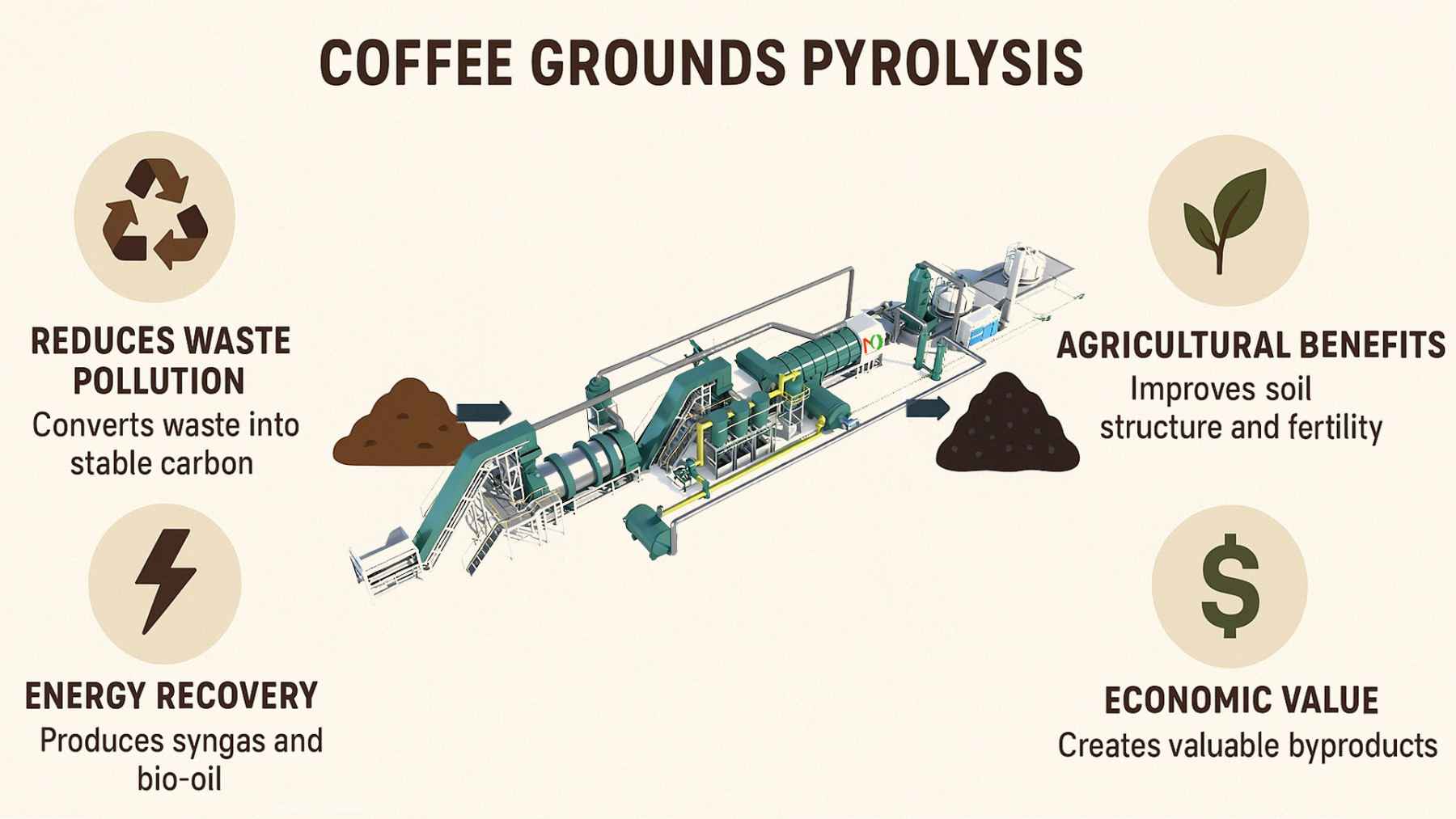
Sustainable loops: Pyrolysis technology turns ordinary coffee waste into energy recovery streams and high-value agricultural byproducts.
Why the circular economy angle matters
Coffee waste is everywhere, from instant coffee plants to cafés and office break rooms. The European Commission says the Circular Economy Action Plan (adopted in 2020) is meant to keep resources in the economy for as long as possible and prevent waste, while the EU bioeconomy strategy is centered on replacing fossil-based resources with sustainable biological ones.
That is why this research lands in a bigger debate than fuel alone. For the most part, it is about whether a very common food residue can be turned into a more valuable product stream while reducing disposal pressures and trimming part of the fossil fuel burden at the same time. Not glamorous, maybe. But practical.
What comes next
The obvious next question is scale. The paper strengthens the case that spent coffee grounds can be converted into biobutanol under more efficient and more economical conditions, but real-world deployment will depend, to a large extent, on whether collection systems, consistent feedstock quality, and plant-level economics can hold together outside controlled research settings.
Still, there is something appealingly simple about the idea. The leftovers from a daily habit that fills kitchen bins and café bags could, with the right process, become part of a cleaner fuel chain instead of another waste management headache. And that is where this story starts to feel less like lab trivia and more like industry.
The study was published on ScienceDirect.