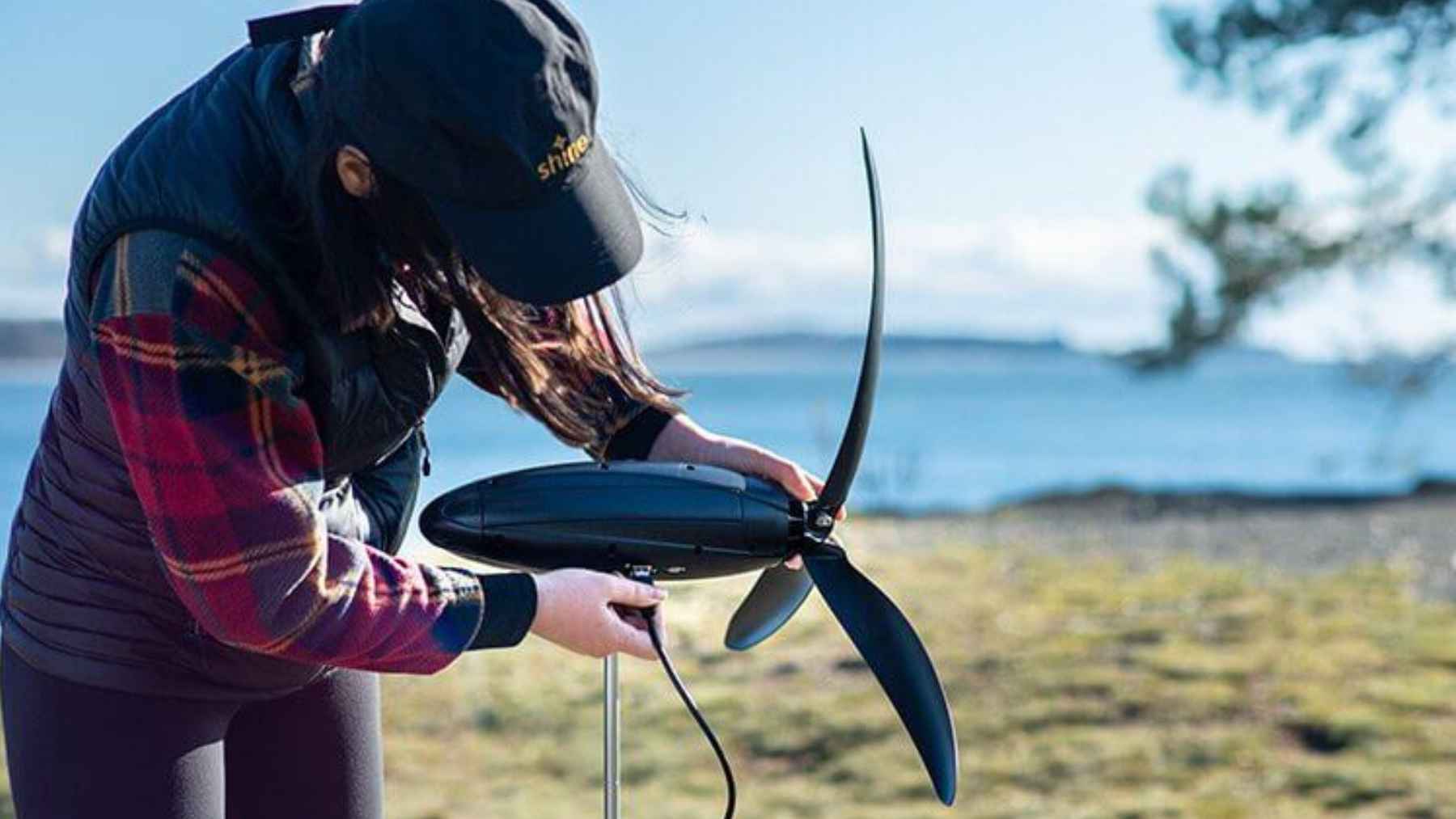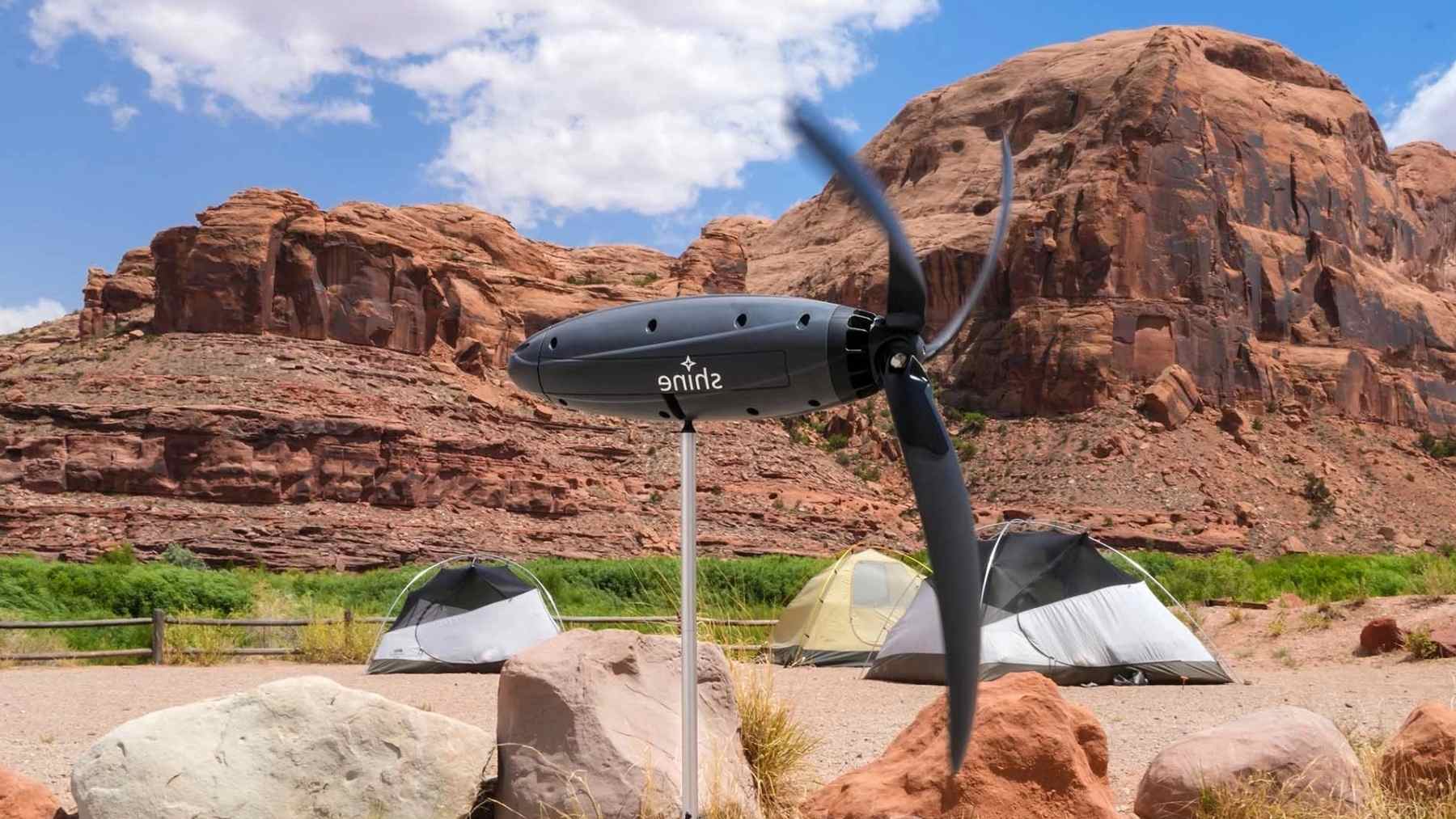
Picture this. You reach camp, your phone sits at 15 percent, and clouds have killed your solar panel. A Canadian startup thinks the backup plan is wind. Its Shine 2.0 turbine is about water bottle size, roughly three pounds, and meant to keep phones, laptops, and small power stations running when the breeze cooperates.
Instead of a flat panel, the unit folds into a rigid cylinder that slips into a backpack. In winds above roughly 13 kilometers per hour, the three blades can produce up to 50 watts into a built in 12,000 milliamp hour battery or any plugged in device through a USB C port that supports 75 watt USB Power Delivery fast charging. Those figures match independent previews, including one detailed look at its performance.
Shine Turbine says the idea builds on a history of small wind gear used by sailors and van lifers who could not rely on sun alone. The company argues that better materials and smarter electronics finally make backpack sized wind practical. Spokesperson Vanessa Ferguson told GearJunkie that “Shine has one of the highest power to weight ratios” among portable renewable chargers and that it can work in the same coastal or mountain winds that already feed major renewable energy projects.
How Shine 2.0 Manages The Wind
Technically, the device combines turbine, charge controller, and battery in one housing so setup stays quick. You plant a lightweight mast, unfold the blades, point it into clear air, and plug in.
The updated electronics use Maximum Power Point Tracking to squeeze extra watts out of gusty, inconsistent wind, a technique borrowed from high end solar charge controllers, while a Bluetooth app lets campers check wind speed, power output, and battery state as the generator hums along at about 50 decibels, similar to steady rainfall.
When A Pocket Wind Turbine Actually Helps
In practical terms, Shine 2.0 makes the most sense for people who already chase the wind. Van lifers on open desert plateaus, sailors on night crossings, or campers on blustery headlands can keep charging long after sunset, exactly when solar quits. Deep forest sites are different, since the turbine needs clean, steady airflow rather than chaotic breezes behind trees, so the company presents it as a partner to solar, not a magic off switch for panels that already work well at mid day.
That nuance matters because arguments over wind often play out at huge scale, fromoffshore wind projects in the Atlantic to political fights about noise and bird safety that explode into social media storms. A three pound turbine in a backpack lives in a different world from industrial machines at sea, yet it points in the same direction as new space missions that study solar wind around Mars, all aimed at understanding and harnessing moving air more effectively.
Crowdfunding, Price, And Risk
Shine 2.0 is not on big retail shelves yet. The latest generation is being funded through a crowdfunding campaign with early bird pricing around four hundred dollars and a planned retail price above five hundred, with deliveries for backers expected in 2025.
Earlier campaigns for the original Shine delivered about two thousand three hundred units to customers in North America and Europe, according to GearJunkie, which gives this project a better track record than many one off hardware pitches but still does not erase the usual crowdfunding risk or the fact that real performance depends on how often you camp in truly breezy places.
So the personal question is simple. Do you actually spend enough time in reliably windy spots to justify carrying a small turbine along with your tent and stove. If the honest answer is yes, Shine 2.0 could become a new kind of safety net next to the headlamp and water filter, especially when the sun refuses to cooperate.
The official product announcement and crowdfunding details were published on Indiegogo.