Nicaragua has started deploying 180 new Yutong buses shipped from China, the first batch in a plan that officials say could bring a total of 600 units into the country over the next year.
The announcement came from Nicaragua’s co-president Rosario Murillo, and the handoff has been presented as part of a broader effort to refresh aging fleets and improve service reliability.
On paper, it sounds like a straightforward mobility upgrade. In real life, it is also a reminder that geopolitics often shows up in ordinary places, like the bus stop on a humid morning when you just need to get to work on time. The real story starts after the ribbon cutting.
What Nicaragua just received
Murillo said the 180 Yutong buses were set to arrive on February 2, 2026, and she added that Nicaragua was expecting 600 units in total over the year ahead. A promise like that matters because fleets do not improve one bus at a time – they improve in chunks, when enough vehicles arrive to replace the worst breakdown-prone units.
By mid-February, officials held a formal delivery event for 180 Yutong “microbuses” intended to strengthen inter-municipal routes, including service in departments such as Estelí, Chinandega, Granada, Masaya, Carazo, Boaco, Matagalpa, Jinotega, Nueva Guinea, and the North Caribbean region.
For riders, the diplomatic headlines fade fast compared to the basic result: a newer vehicle that is less likely to stall in traffic.
Early reporting described the route after the buses reached Puerto Corinto, including a stop at the Julia Herrera de Pomares logistics center before the convoy moved toward Managua.
The same report said 130 transport operators organized in 23 cooperatives would benefit, with allocations that included about 50 units for Granada and smaller batches for other departments.
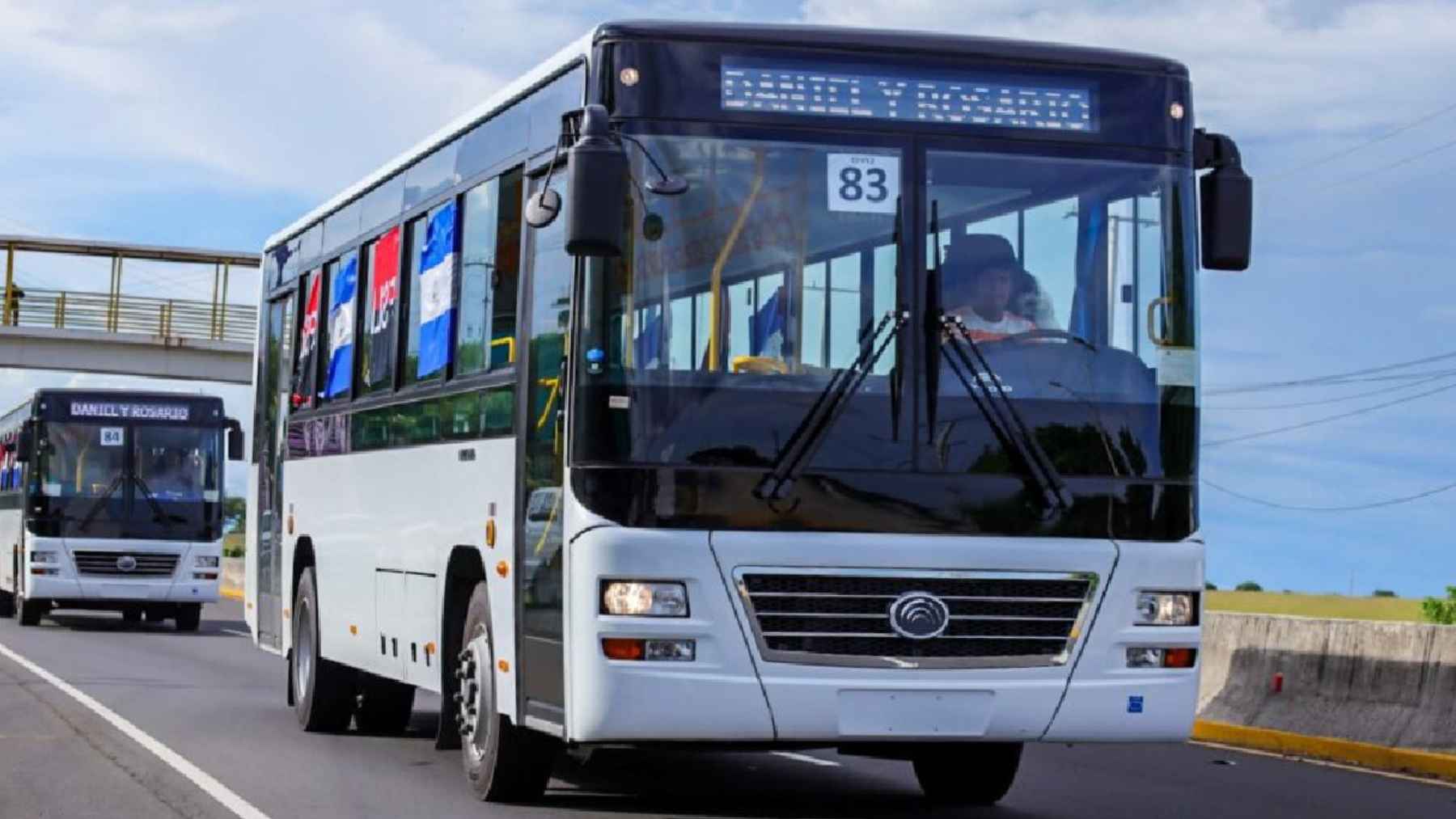
Newly deployed buses travel along a highway, illustrating Nicaragua’s push to modernize public transport with a large-scale fleet renewal backed by Chinese manufacturer Yutong.
Why Yutong wants a seat at the table
For Yutong, Nicaragua is not just a delivery, it is a market where the company can deepen relationships with operators who will need service and spare parts for years. In its own January 27, 2026, update, Yutong said it delivered 49,518 vehicles in 2025, a 5.54% year-over-year increase, and highlighted investments in overseas service stations and regional spare-parts centers.
That after-sales layer is where a manufacturer earns its reputation. A bus that cannot be repaired quickly becomes a symbol of frustration, not modernization, and it is the kind of thing commuters remember when they are stuck waiting in the sticky heat. Who gets blamed then, the operator or the foreign supplier?
Yutong also leans on technology as a selling point, including an “EV Long-life Tech” it says targets a 15-year lifespan or about 932,000 miles (1.5 million kilometers) for battery-electric buses.
Nicaragua’s official statements around the 180-unit shipment did not describe the propulsion system, but the broader direction of the industry is clear, and suppliers want to be the default choice when countries upgrade again.
China’s Nicaragua play after the 2021 diplomatic reset
This bus rollout sits inside a relationship that has been rebuilding quickly since Nicaragua and China resumed diplomatic relations in December 2021. In the joint communiqué published by China’s Ministry of Foreign Affairs, the two governments said they would recognize each other and resume relations at the ambassadorial level.
Public transportation is an unusually visible arena for diplomacy. New buses are seen by thousands of people every day, which means a manufacturing brand and a foreign partner can gain credibility in a way that a quieter investment project never will.
At Nicaragua’s February delivery event, speakers portrayed the fleet renewal as part of a broader pattern of support from external partners. One speech published by El 19 Digital listed past arrivals, including Yutong deliveries in 2023, 2024, and 2025, and it cited a national fleet total of 4,610 buses and microbuses.
Modern buses are the easy part
If you have ever dealt with a crowded commute, you know that “new buses” is a headline that sells itself. But buses are only one part of a transit system that also depends on schedules, route planning, driver training, and maintenance routines that can quietly make or break reliability.
Local transport leaders have linked fleet renewal to fare stability, too. In the February 3 reporting, a transport cooperative leader said the fare would stay “frozen” even as new units came into service, framing the new buses as a way to improve quality without raising prices.
That is a popular promise, but it has a math problem behind it. Keeping fares flat means controlling operating costs, and that can turn a procurement decision into a long-term dependency on parts supply, warranty terms, and technical know-how.
The real test comes after the handoff
The easiest metric is the one everyone can see, how many buses arrive and where they are deployed. The harder metric is how many are still running smoothly a year from now, and how quickly a broken bus can be returned to service when something fails.
This is where global trends start creeping into local decisions. The International Energy Agency says global electric bus sales reached more than 70,000 in 2024, and China’s share of global sales has dropped to less than 70% as other markets grow.
For now, the practical takeaway is simple. A shipment of 180 buses can change daily life quickly, but only if the relationship behind it stays reliable when the cameras are gone.