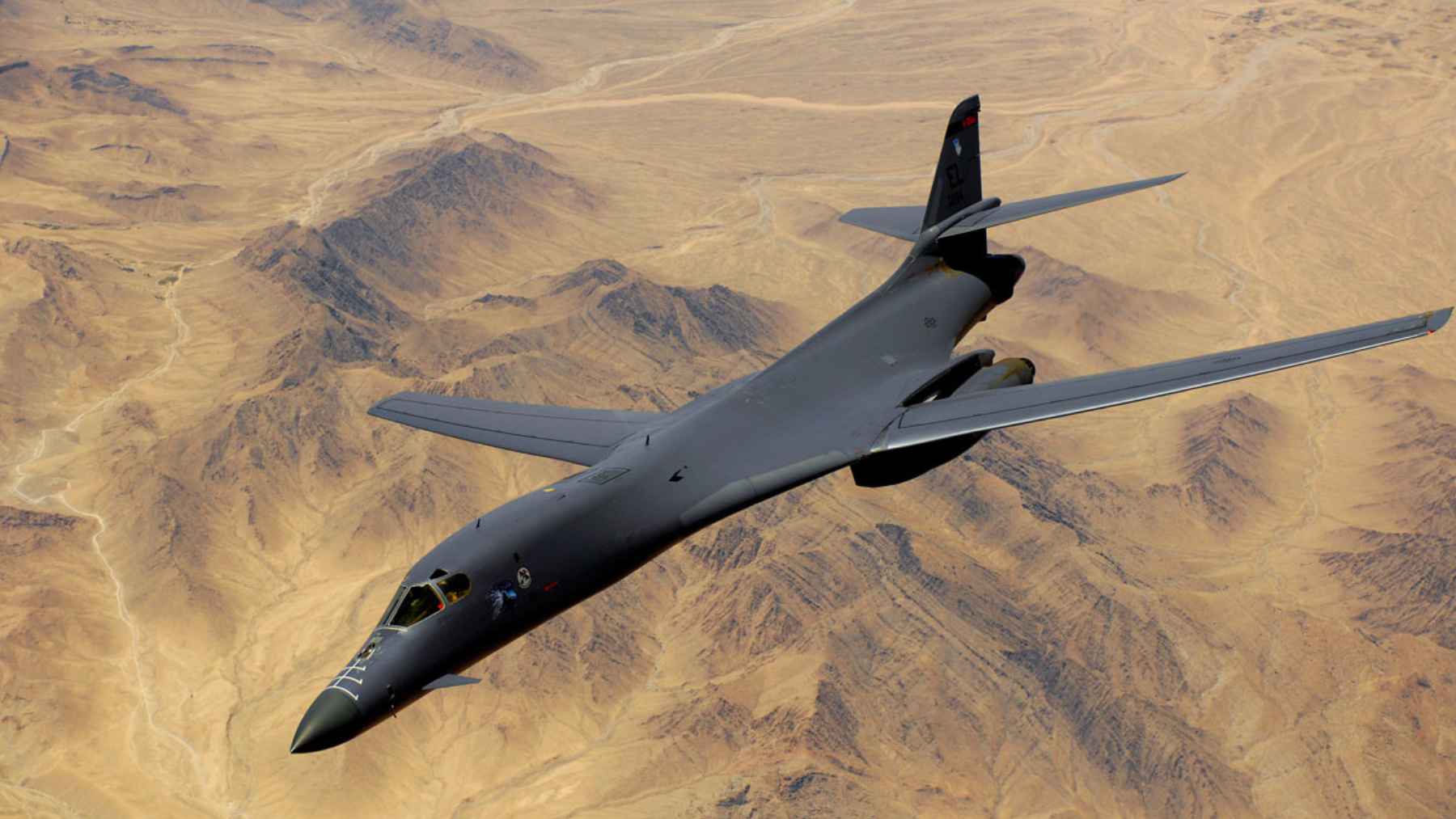
RAF Fairford in western England is no longer just a familiar stop for U.S. bomber rotations. It is fast becoming one of the most important launch points in Washington’s air war against Iran.
Operation Epic Fury began on February 28, and by mid March, Reuters images showed both B 1B Lancers and B 52H Stratofortresses at the British base, a clear sign that the campaign has moved closer to the fight and picked up speed.
Why does that matter? Because distance still shapes war, even in an age of stealth, satellites, and precision weapons. Earlier in the operation, the Air Force was flying B 1Bs on CONUS to CONUS missions from the United States.
Forward basing in Britain changes that equation. It cuts the travel burden, eases tanker demands, and gives commanders more flexibility when strike windows open and close by the hour.
Reuters also reported that Defense Secretary Pete Hegseth said March 10 would be the most intense day of the campaign so far, with the largest concentration of fighter jets and bombers yet. That is what happens when a war moves closer to the theater.
Two bombers, two different strengths
The mix at Fairford says a lot about how the Pentagon is approaching this fight. The B 1B remains the Air Force’s largest conventional payload bomber, able to carry 75,000 pounds of weapons and deliver a wide range of precision munitions.
The B 52 brings something slightly different. It can carry roughly 70,000 pounds of ordnance and has an unrefueled combat range in excess of 8,800 miles. One offers speed and heavy conventional punch. The other offers endurance and staying power. In practical terms, that means more striking power closer to the fight.
Britain is helping, but carefully
London, for its part, is trying to walk a narrow line. Prime Minister Keir Starmer has said Britain is working with the United States “every single day,” while also insisting the UK will not be dragged into a wider war.
That balancing act has grown harder after Iran carried out a drone strike on a Royal Air Force base in Cyprus, a reminder that this conflict is not just about distant targets on a map. It is already brushing up against allied infrastructure and, by extension, energy markets, shipping lanes, and the sort of everyday costs people notice when the bill arrives.
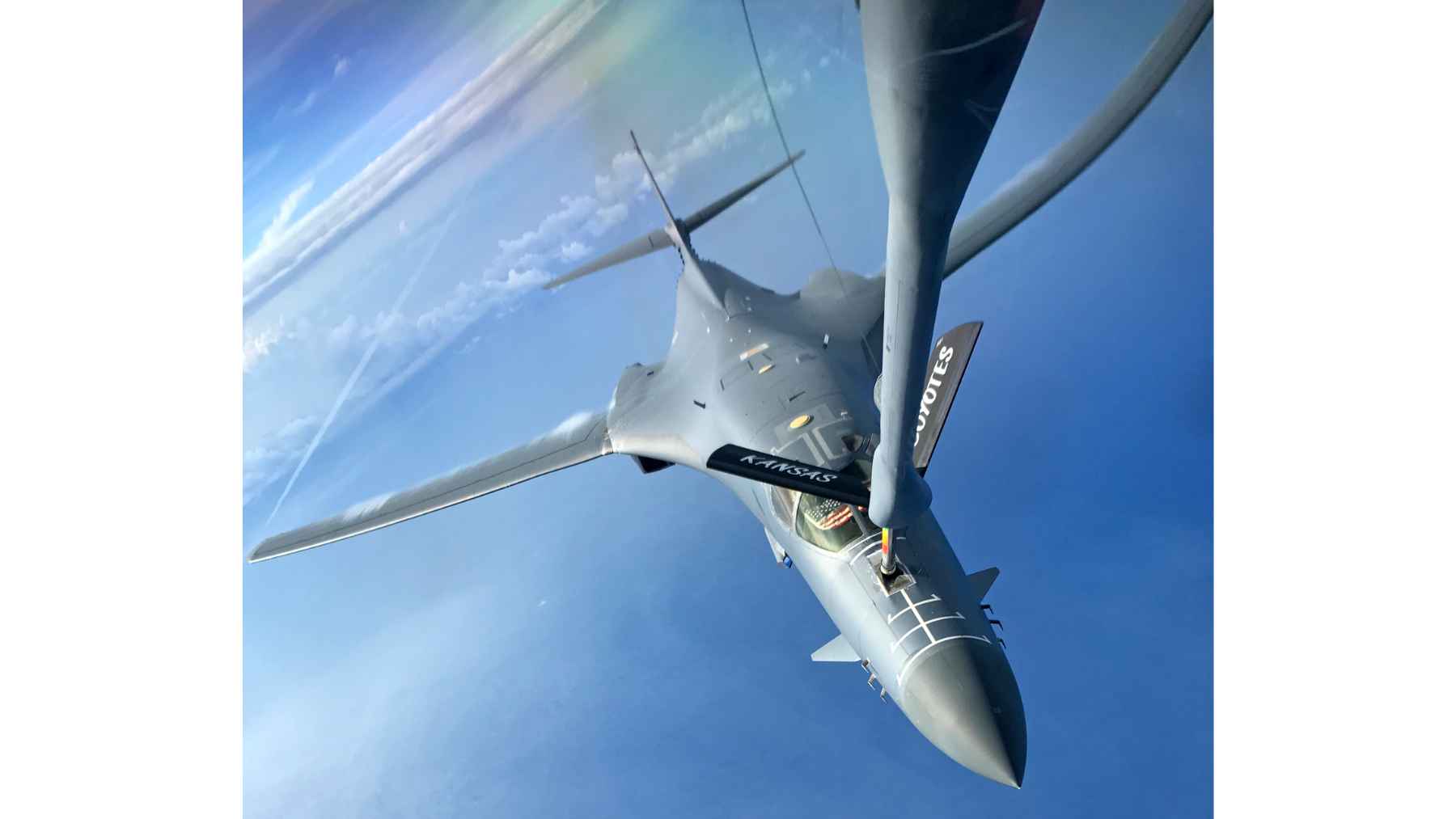
Old aircraft, current war
There is another layer here, too. The jets now flying from Fairford are products of an older era, but they are still doing the urgent work. The Air Force says the B 52 is expected to stay in service through 2050, while the B 21 Raider is still in flight testing and low rate initial production, with at least 100 planned.
So for the most part, this is what American airpower looks like in 2026. A future fleet is coming, but the present one is still carrying the load.
And right now, a big part of that load is passing through one runway in the English countryside, even as the Pentagon keeps one eye on broader strategic demands and another on the deterrence debate reshaping allied planning across Europe, including the one highlighted in Indux’s recent analysis of France’s nuclear posture.
The official statement was published on U.S. Central Command.