What keeps a Ferrari so powerful in the public imagination? Not just speed. Not just the engine note. Increasingly, it is Ferrari’s ability to sell less, charge more, and use that cushion to prepare for a lower-emissions future.
In 2025, Ferrari lifted net revenues 7 percent to 7.146 billion euros and pushed EBIT margin to 29.5 percent, even though shipments slipped slightly to 13,640 cars. The company also said demand remained strong enough for its order book to stretch toward the end of 2027.
That is the real business story here. Ferrari is still built around exclusivity, and CEO Benedetto Vigna said the company’s results confirmed the strength of its “carefully-managed volume strategy.” But the money no longer comes only from the cars leaving Maranello.
In 2025, sponsorship, commercial, and brand revenues reached 820 million euros, up 22 percent from the prior year, helped by racing, licensing, merchandising, and lifestyle activities. In practical terms, that means Ferrari keeps monetizing desire even when most admirers will never own one.
Scarcity meets electrification
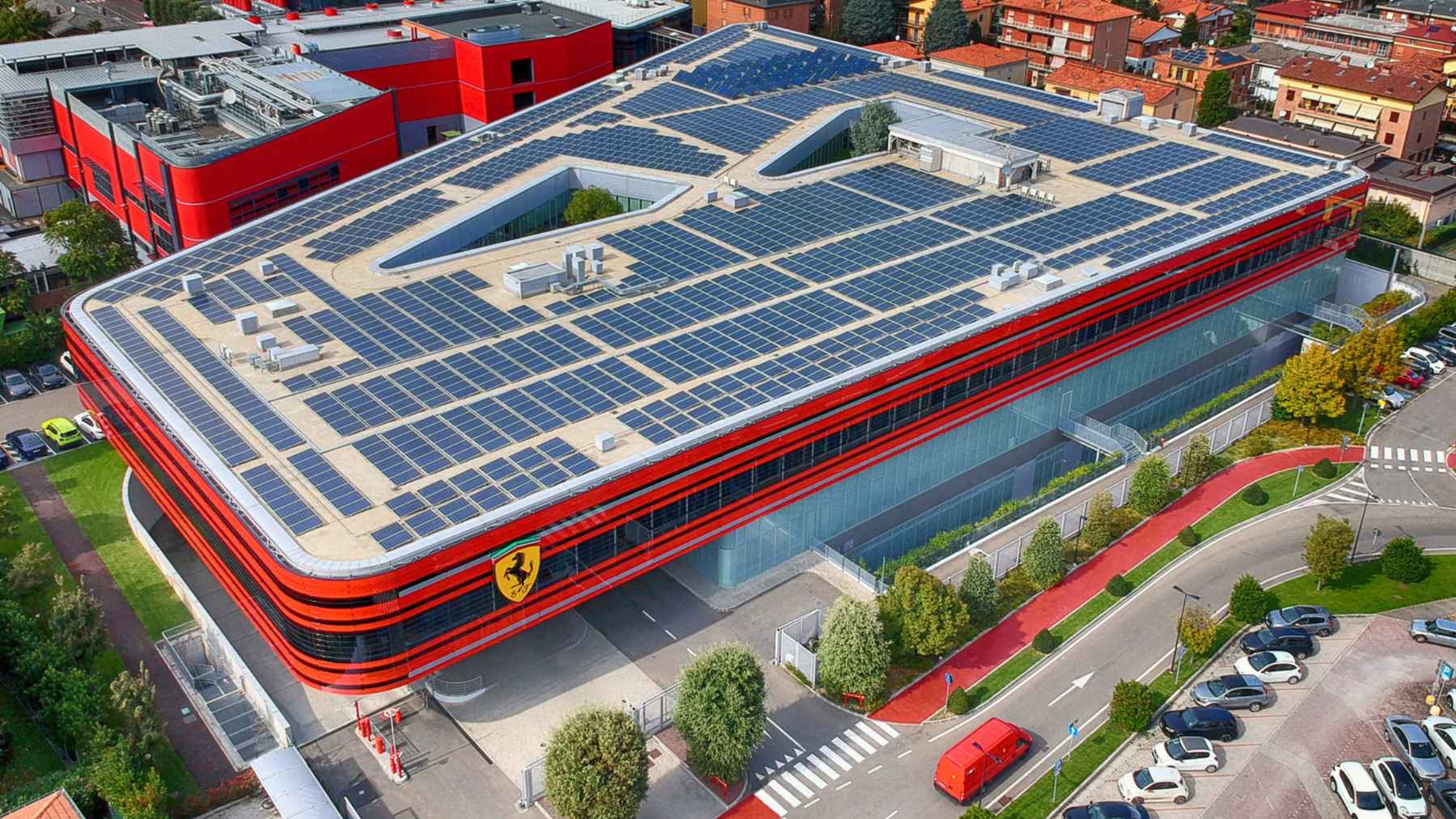
Here is the twist. That old luxury formula is also helping pay for Ferrari’s environmental shift. Ferrari says it opened its e-building in Maranello, expanded battery research through the E-Cells Lab, and has now named its first full-electric sports car the Ferrari Luce, with the world premiere scheduled for May 25, 2026.
Even before that launch, hybrids had already moved ahead of internal combustion models in Ferrari’s mix. In 2024, they accounted for 51.3 percent of shipments.
Why does that matter beyond the factory gate? Because, by Ferrari’s own numbers, the environmental challenge sits mostly outside the plant. The company said its 2024 greenhouse gas footprint totaled 1,035 ktCO2e, with 57 percent tied to the use phase of its cars and another 37 percent linked to upstream activities such as materials and logistics.
That is why Ferrari’s 2030 plan targets at least a 90 percent cut in Scope 1 and 2 emissions versus 2021 and at least a 25 percent cut in Scope 3 emissions versus 2024. The road ahead is not simple. Still, those figures show Ferrari is trying to clean up more than the showroom.

More than a status symbol
At the end of the day, Ferrari is still selling rarity. But to a large extent, that rarity now works like a financial shield. It helps protect the aura, keep margins high, and fund electrification without turning the Prancing Horse into just another automaker chasing traffic, discounts, and volume for volume’s sake.
That does not solve every environmental problem. But it does show how a luxury brand can use scarcity not only to defend status, but also to finance a cleaner next chapter.
The press release was published on “Ferrari Corporate“.