Brazil’s Marine Corps has finished a two-year restructuring that brings in attack drones, fast armored landing craft, and anti-ship missiles with an estimated 70-kilometer range. At first glance, it looks like straightforward military modernization.
But there is another story here too. The same overhaul is also meant to help the force move faster during environmental disasters, especially along the coast and in river regions where roads can vanish after heavy rain.
Announced by the Navy on March 5 as the Corps neared its 218th anniversary, the reform began in 2023 and followed the 2024 review of Brazil’s National Defense Strategy.
It reorganizes the Marines into four main branches, amphibious, riverine, coastal, and protection, without increasing troop numbers. In practical terms, that means a force built to cover more territory and more types of crises at the same time.
A force built for coastlines and rivers
The equipment helps explain the new direction. Brazil’s locally built coastal landing craft can reach about 74 km/h, carry 13 troops, and operate with heavy machine guns, sensors, and thermal cameras.
The Corps also activated a tactical reconnaissance and attack drone squadron, using quadcopters for surveillance, search and rescue, and fixed-wing drones for controlled strike missions. A new drone school is scheduled to open in Rio on March 17, which shows how central unmanned systems have become.
On coastal defense, the ASTROS system is being integrated with the Brazilian-made MANSUP anti-ship missile, which has an estimated range of 70 kilometers and a low sea-skimming flight profile.
The Marines are also adding the SMACE anti-tank system, built around the laser-guided MSS 1.2 MAX missile. That gives Brazil more deterrence along its shoreline and across the so-called “Blue Amazon.”
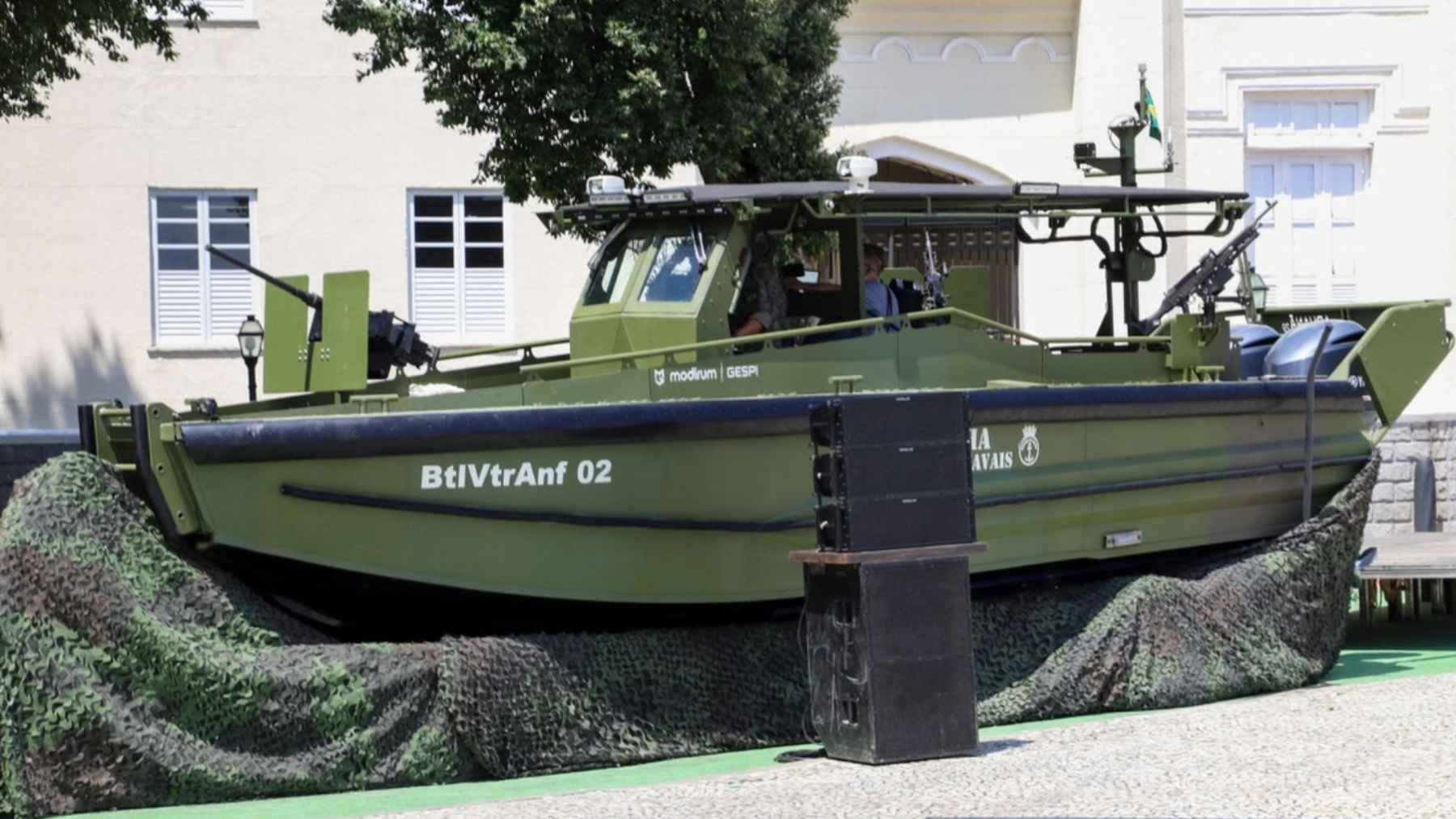
A Brazilian Marine Corps armored riverine boat showcased as part of a new military structure focused on coastal defense and disaster response.
Why the climate angle stands out
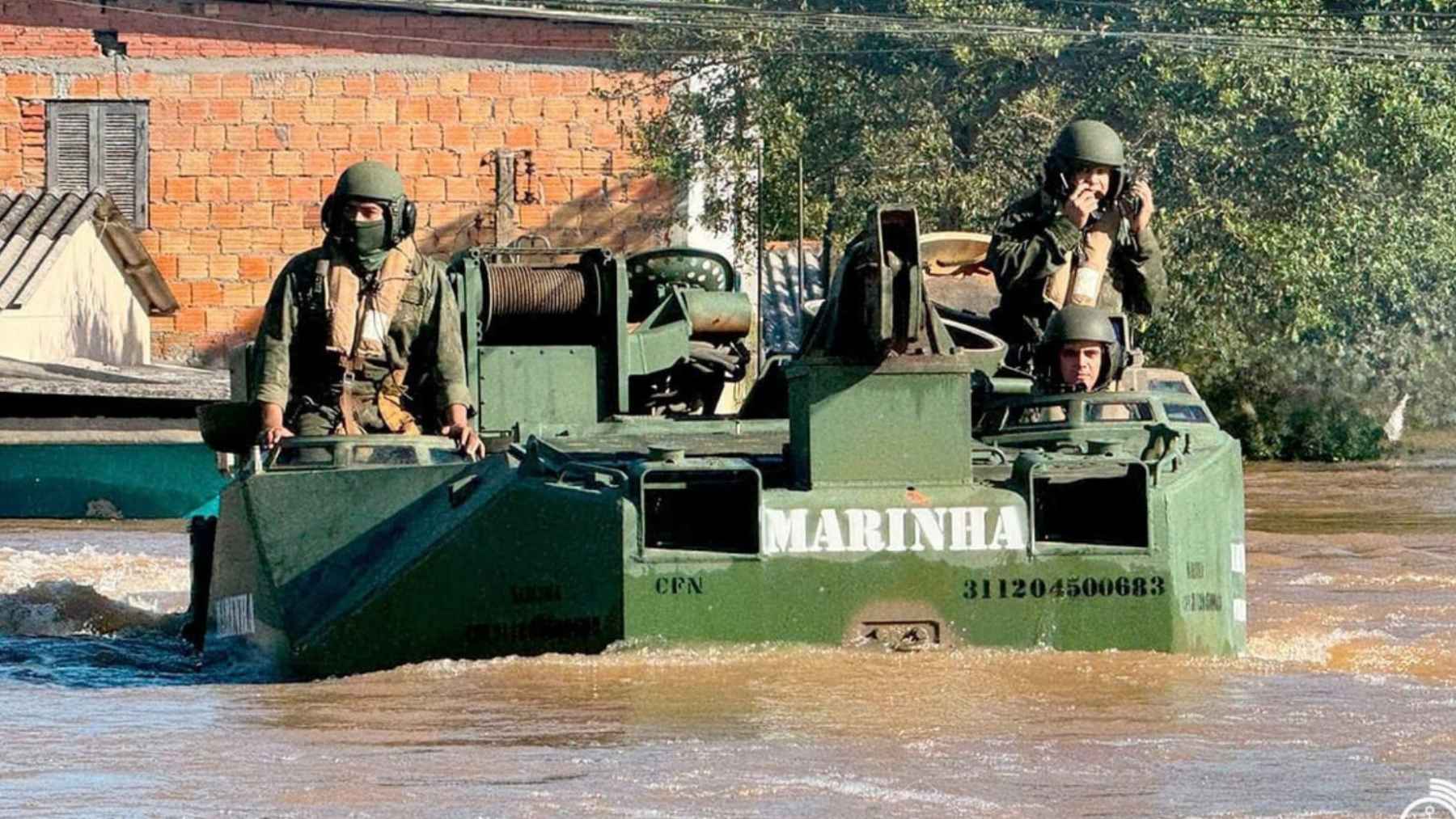
Why does that matter outside defense circles? The new FRIDA disaster response force, created with BNDES and Cemaden, includes vehicles, boats, and a field hospital, and it has already been used after heavy rains in northern Rio de Janeiro state.
The Navy says the same logistics used in combat often work in natural disasters too. When roads are blocked and communities are cut off, that matters. A lot.
The climate side is also getting institutional backing. In November 2025, Brazil’s science ministry, the Navy, Cemaden, and BNDES signed a protocol focused on prevention, monitoring, and response to extreme events, and BNDES said the effort could mobilize up to R$100 million for studies and actions tied to a national climate emergency plan.
The broader Marine overhaul also includes joint drills with France, Italy, the United Kingdom, Chile, and Portugal, while more than 400 women now serve in operational roles. Taken together, the overhaul points to a force designed for both defense and disaster response.
The official statement was published on Agência Marinha de Notícias.