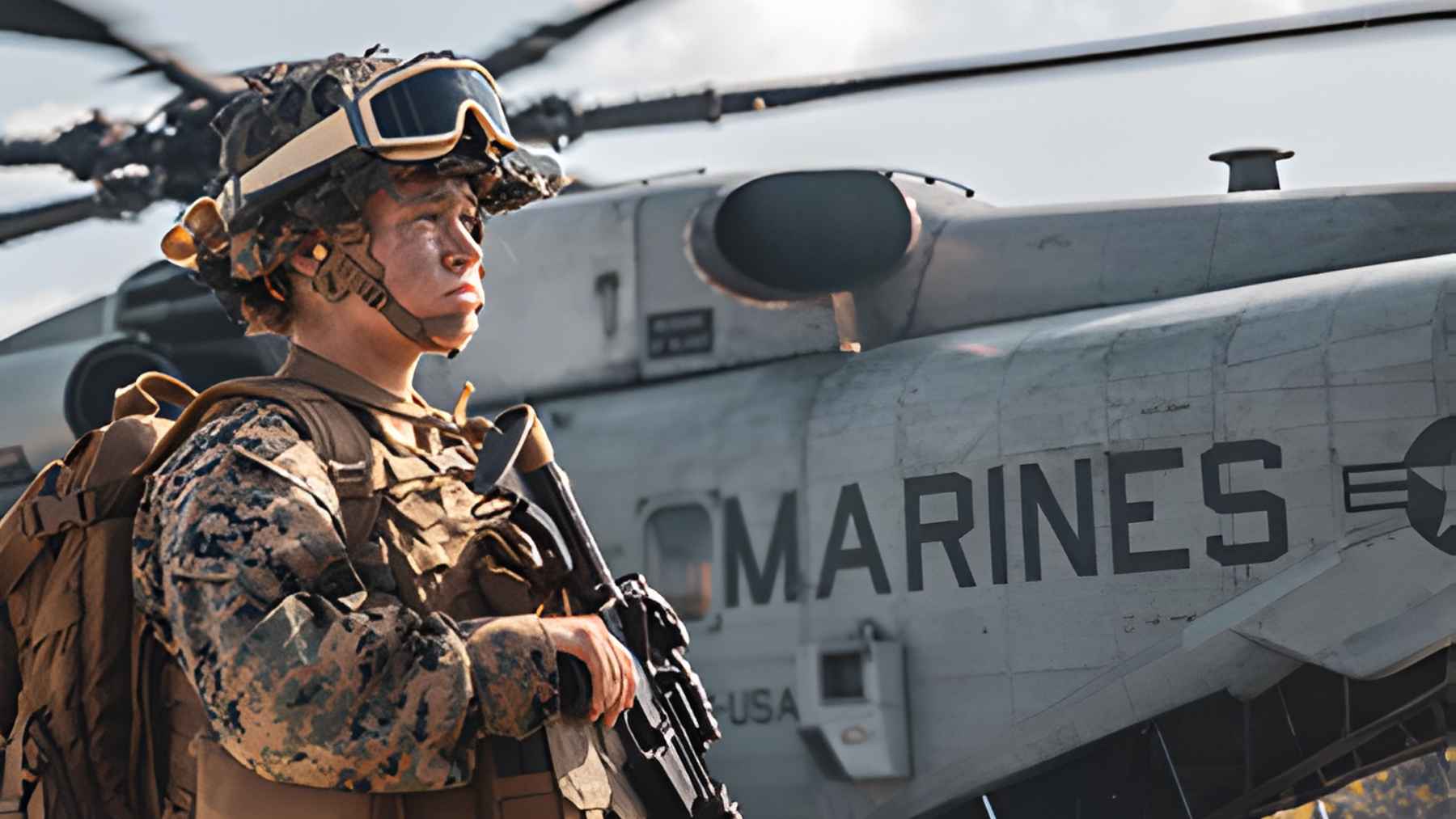
When a Marine does not report for duty and cannot be located, the Marine Corps now wants leaders to treat the first few hours as decision time, not waiting time. Under a new interim policy signed April 10, 2026, commanders are directed to notify law enforcement within three hours and bring in local chaplains as the search begins.
It is a formal shift toward speed and caution, with the policy telling commanders to presume a missing Marine “may be in potential danger” until facts say otherwise. In practical terms, that means quicker reporting, clearer milestones at 24 and 48 hours, and more explicit attention to mental health and safety risks in the earliest steps.
What the new Marine Corps message does
The interim guidance is published as MARADMIN 170/26 and was signed on April 10, 2026, with release authorized by Lt. Gen. William J. Bowers, the deputy commandant for Manpower and Reserve Affairs. The message says it provides a standardized response framework and “establishes response timeframes” while permanent service policy is developed.
One of the key lines is the presumption of danger, which tells commanders to assume unknown whereabouts can mean risk. It also defines “voluntary” and “involuntary” absence for the purpose of this framework, and stresses that the definitions are specific to this policy, not the Uniform Code of Military Justice.
Three hours to start the search
Phase I is the opening sprint, and the directive says it should begin within three hours of discovering the absence. Commanders are instructed to try multiple contact methods and check with places like local police, hospitals, clinics, and behavioral health facilities to see if the Marine sought help or was taken in for any reason.
The checklist also includes notifying local chaplains, reporting the duty status in the Unit Management Status Report module inside Marine Online, and notifying the installation Provost Marshal Office so law enforcement actions can begin.
If you have ever had that uneasy moment when calls go unanswered and a text sits unread, you know how fast concern can escalate.
A 24-hour inquiry becomes mandatory
Phase II is built around a formal preliminary inquiry and a quick risk assessment, and it is supposed to be completed no later than 24 hours after the Marine is discovered absent and still missing.
Commanders must appoint a preliminary inquiry officer to gather available facts and assess indicators that include safety threats, mental health risk, self-harm risk, recent stressors, and changes from normal behavior.
The policy also advises commanders to consult their staff judge advocate when questions come up about search authority, privacy, or possible criminal misconduct. That legal note matters because the response is meant to be urgent, but still disciplined and defensible if the situation becomes a criminal case.
At 48 hours, commanders must decide what the absence means
Phase III sets the 48-hour mark as the status determination milestone, but the message is careful with wording. It says commanders should presume the absence is involuntary unless a “preponderance of available evidence (more likely than not)” shows it is voluntary, and it also notes a determination can be made earlier if enough information exists.
If evidence supports a voluntary absence, the Marine may be processed as being in an Unauthorized Absence status under applicable rules and reporting requirements.
If credible evidence points to an involuntary absence, or if evidence is insufficient to support voluntary absence, the Marine is to be reported as Duty Status Whereabouts Unknown and processed through casualty reporting procedures.
The message adds a caution flag for self-harm risk, saying commanders should “strongly consider” Duty Status Whereabouts Unknown if the Marine is not located, even when other evidence might suggest a voluntary absence.
Mental health and safety are now part of the playbook
The directive explicitly ties the response to safety and wellbeing, saying actions will consider safety risk, mental health risk, self-harm risk, and personal circumstance factors.
It also warns that a wrong call can delay a law enforcement investigation in a missing persons case or create “undue hardship on dependents,” which is a rare moment of plain language in a military administrative message.
This does not remove discipline from the system, but it does put risk assessment at the front of the process rather than after paperwork. That framing is important because it treats the initial absence less like a rule break and more like a potentially urgent welfare event until facts prove otherwise.
GAO’s findings helped set the timetable
The timing is not happening in a vacuum. A February 2026 Government Accountability Office report (GAO-26-107505) found that the Army, Navy, and Air Force had issued guidance for locating absent service members, while the Marine Corps had not, despite a GAO recommendation in 2022.
GAO also flagged gaps that can slow or complicate searches, including unclear timelines, inconsistent treatment of mental health considerations, and safety risks that can arise during searches, especially if the person is in crisis or has access to a weapon.
The report made 12 recommendations and said the Department of Defense concurred, including a push for DOD-wide policy that treats unexplained absences as potential danger and assumes involuntary absence after a defined period unless information suggests otherwise.
The Army’s missing-soldier model is the backdrop
The Marine Corps guidance also arrives after the Army moved in a similar direction in late 2025.
An October 28, 2025, memo signed by Army Secretary Dan Driscoll required commanders to report a missing soldier to law enforcement within three hours, notify family within eight hours, and use an “absent-unknown” duty status early in the process, with a 48-hour window to decide voluntary versus involuntary absence.
That Army push followed years of criticism after high-profile cases, including the 2020 disappearance and killing of Spc. Vanessa Guillén at Fort Hood and the scrutiny that followed.
The Marine Corps policy mirrors the urgency in the first 48 hours, but it is written in Marine-specific terms, including Marine Online reporting and explicit chaplain notification in Phase I.
Systems, status codes, and why they matter
A big part of this policy is not only who gets called, but what gets recorded and where. The MARADMIN directs commanders to report duty status using the Unit Management Status Report module within Marine Online and to ensure accurate reporting in Enterprise Manpower and Personnel Systems, linking data accuracy to broader accountability requirements.
Why does that matter to anyone outside a headquarters shop? Because status codes shape what happens next, including whether a case moves into casualty reporting channels, how law enforcement engagement is triggered, and how quickly different offices can coordinate without stepping on each other.
GAO has also pointed out that inconsistent guidance and uneven data practices across services can weaken response efforts, so the data trail is not just bureaucracy, it is part of the safety net.
What to keep an eye on
The interim guidance is effective immediately and remains in force until it is superseded or canceled, meaning units are expected to execute now, not after a long implementation runway.
The bigger question is how quickly this becomes muscle memory across the force, since even the best timeline on paper still depends on training, resourcing, and judgment in the middle of a stressful situation.
Other services are also under pressure to tighten timelines and integrate mental health and safety realities more consistently, based on GAO’s recommendations and DOD’s concurrence.
The official statement was published on the United States Marine Corps.