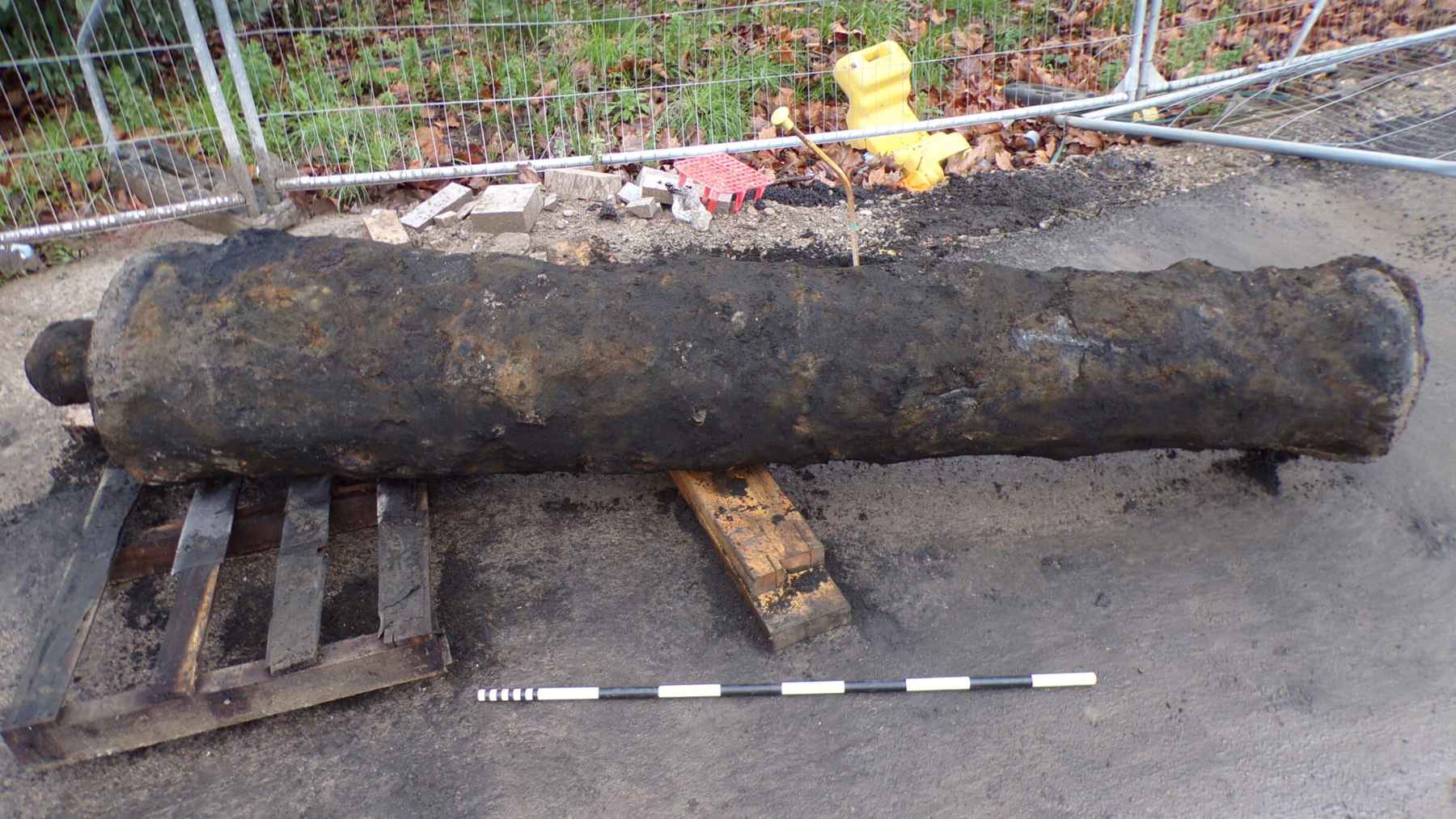
What turns up when a city digs to make itself greener? In Hull, the answer was a cast iron cannon likely dating to the 17th or 18th century. Workers from local contractor C.R. Reynolds found it on February 13 while excavating Queen’s Gardens for an attenuation tank, part of a wider redesign meant to improve accessibility, biodiversity, and water management in the former dock.
Archaeologists say the cannon is about 8.5 feet (2.6 meters) long and weighs more than 2,200 pounds.
Green work meets old steel
The striking thing here is not just the weapon. It is where it appeared. Queen’s Gardens sits on what was once the largest dock in the UK, and the multimillion-pound overhaul is not a simple facelift.
Hull City Council says the work, which began on June 1, 2023 and is expected to finish in spring 2026, includes sustainable drainage, new planting, rebuilt walls, wider paths, more shade, and better access. The plan also includes railings and waymarking bollards based on 3D scans of Maritime Museum artifacts.
A military relic in an environmental project
Early assessments suggest the cannon had already been taken out of service because its nozzle was deliberately capped. Archaeologists think it was probably reused as a mooring post before ending up in dock fill in the 1930s. That history matters.
A piece of military hardware likely spent its later years serving ships at the dock, then resurfaced during a project built around ecology and modern urban infrastructure. Old port cities are full of layers like that.
Why the environmental side matters
It would be easy to focus only on the cannon and miss the quieter story underneath. Hull says the Queen’s Gardens project follows a 3 to 1 tree replacement ratio. Official figures show 453 trees have been planted in total, with 130 in Queen’s Gardens and 323 in nearby city center locations.
The plan also includes native shrubs, nectar and pollen-rich planting for birds, bees, and insects, plus 13 urban tree pit systems designed to help new trees thrive without damaging surrounding walls. Not flashy. Still important. It is the kind of work people notice later when a park feels greener, more shaded, and easier to use.
The official statement was published on Hull CC News.