Car thieves are no longer just smashing windows. A growing share of modern vehicle theft is about exploiting the wireless systems behind keyless entry, which is why more drivers are wrapping their keys in aluminum foil.
It sounds like a social media “hack,” but the core idea is rooted in real physics. The bigger issue is knowing what this trick protects you from and what it does not, especially as the National Insurance Crime Bureau says hundreds of thousands of vehicles were still reported stolen nationwide in 2025.
How relay theft turns your driveway into a soft target
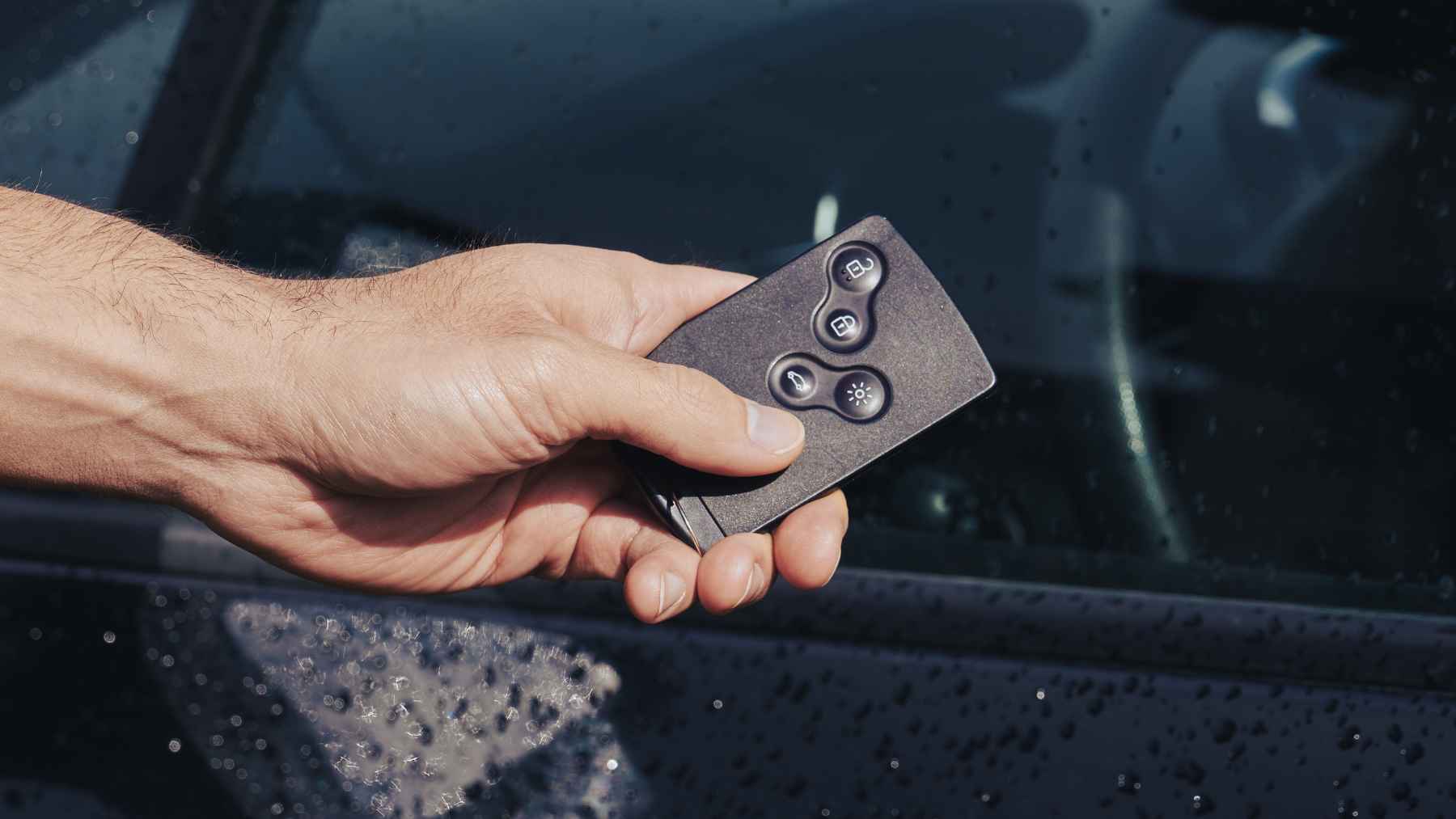
Keyless entry works because your car and key fob constantly “talk” over short-range radio signals. That convenience is also what criminals exploit in a technique known as a “relay attack,” where two devices extend the key’s signal without ever touching your keys.
One person stands near the vehicle while another stands near your home, often close to the front door. If the car is broadcasting within about 6.5 feet around the perimeter, the relay gear can stretch that communication up to roughly 33 to 49 feet into a house, enough to make the vehicle believe the key is nearby.
This is the same basic playbook behind other forms of everyday cybercrime where inexpensive tools scale up old crimes. The tech changes, but the goal stays simple — get in fast, leave faster.
Why aluminum foil blocks the signal
Wrapping a key fob in aluminum foil can work because it acts like a crude electromagnetic shield. In plain terms, it is trying to create a “Faraday cage,” which is a conductive enclosure that can block or reduce radio signals getting in or out.
Aluminum is conductive, so radio energy tends to travel along the outside instead of reaching the fob inside. If the foil fully covers the fob with no gaps, it can prevent the key from responding to the car or to a relay device.
That is also why many drivers buy commercial signal-blocking pouches, which are basically the same concept in a sturdier form. And it is why checking for leaks matters, because even small openings can turn “blocked” into “mostly blocked,” and thieves only need “mostly” in the right conditions.
Where the trick fails, and why that matters
Aluminum foil is not a magic force field. It is mainly relevant for cars with passive keyless entry that unlock when you touch the handle, not for every setup that uses a remote.
In fact, Warwickshire Police has warned that the risk profile depends on how your system works. If you have the kind of fob where you have to press a button to unlock your vehicle, that specific relay threat can be very different than true passive keyless entry.
Also, foil does nothing against old-fashioned theft methods, like stealing keys in a burglary, using a cloned key, or exploiting other weak points. The result is that drivers can feel protected while still leaving the car vulnerable in other ways, which is where a layered approach matters.
The layered defense that actually changes the math for thieves
If foil is the quick patch, layered security is the real strategy. Physical deterrents such as steering wheel locks and visible alarms still force thieves to spend more time, and time is often the one thing they do not want to spend.
Software and hardware changes can help too, but they vary by model. Some automakers are moving toward different wireless approaches and “sleep” features, and Thatcham Research notes that dealers may offer upgrades such as a motion-sensor-enabled fob that stops responding when it has been still for a while.
There is also the broader reality that theft is not just about cars anymore. In many cities, it is part of a wider pattern off raud and resale pipelines that reward speed and low risk. When that same logic shows up in organized theft, it is a reminder that criminals adapt quickly to whatever is easiest to monetize.
What drivers should do this week
If you want the simplest upgrade, move your keys farther from doors and exterior walls, then test whether your foil wrap actually blocks the car from unlocking. It takes seconds, and it is the kind of small habit that can save you from waking up to an empty driveway.
Next, check your vehicle settings and ask your dealer about updates, especially if your car supports disabling passive entry or upgrading the fob. It is not as fun as a quick DIY trick, but it is usually the difference between “less convenient” and “less stealable.”
And if you use a spare key, treat it like the main one. A spare left by the entryway can undo every other precaution, which is exactly the kind of everyday detail criminals count on.
The official statement was published on the National Insurance Crime Bureau.