Germany’s power grid is getting cleaner fast, but it is also getting jumpier. When wind and solar surge at the wrong hour, the system needs a place to park that electricity before it spills into price spikes and costly last-minute fixes.
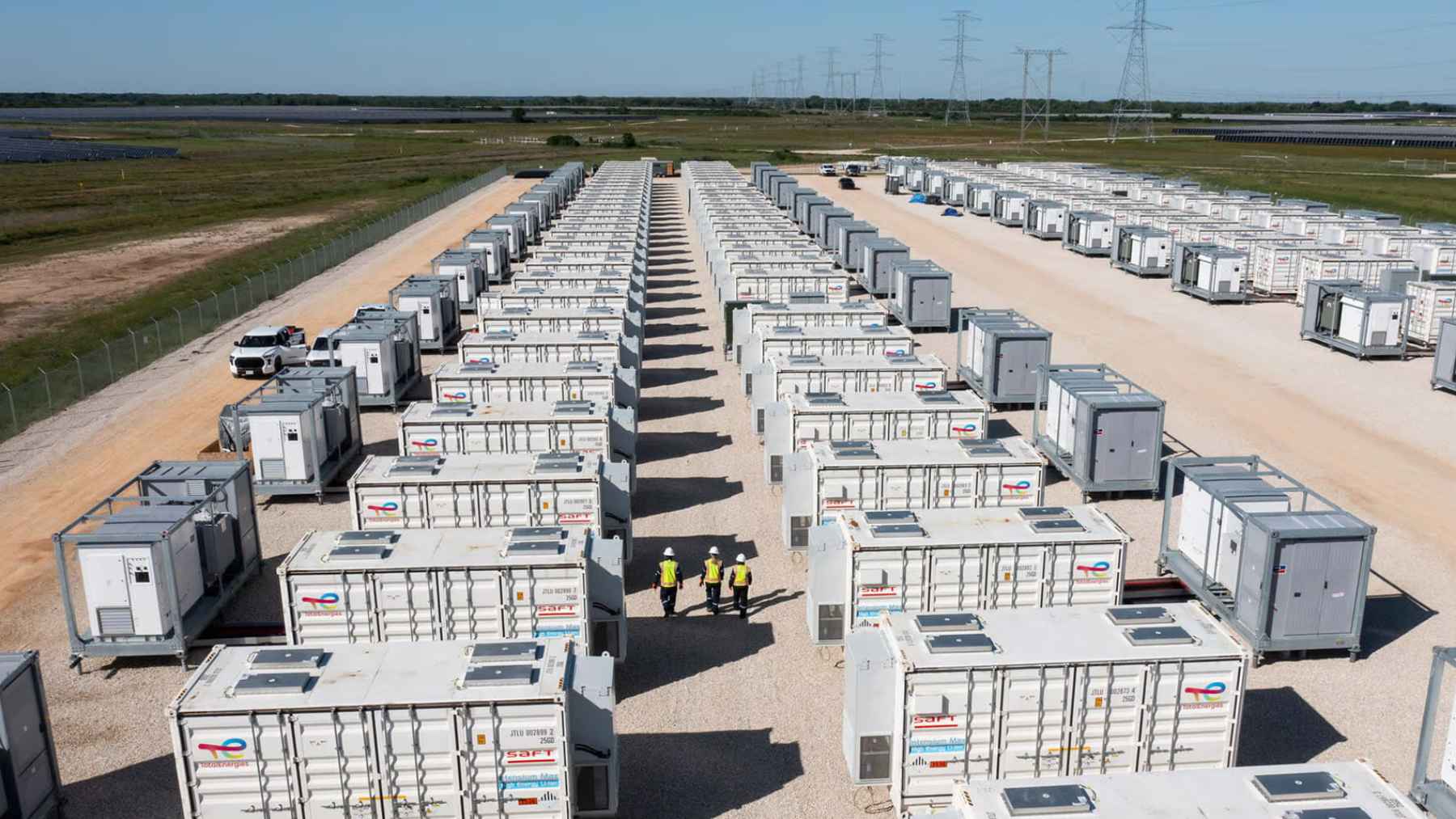
That is why TotalEnergies has agreed to sell Allianz Global Investors a 50% stake in 11 utility-scale battery storage projects now under construction across Germany. The portfolio totals 789 MW and 1,628 MWh, and the partners say the sites should be up and running by 2028.
The deal in plain terms
The transaction is structured as a partnership, not a full exit. TotalEnergies keeps the other half of the projects, and it also keeps the operator seat once the assets are commissioned.
TotalEnergies says the battery sites were developed by Kyon Energy, one of its subsidiaries, and most of the batteries will be supplied by Saft, another subsidiary focused on high-tech storage. The company also says the systems are meant to reduce grid congestion and add flexibility as renewables grow.
Moneywise, the two groups plan to invest about $541 million to finish the build, with 70% of that financed by debt. The energy number matters here, too, because 1,628 MWh paired with 789 MW implies a little over two hours of discharge at full power, which is designed for short, sharp swings like the evening cooking rush.
Why Germany is the magnet
TotalEnergies calls Germany “Europe’s largest power market,” and it is easy to see why battery developers are crowding in. A grid that is leaning harder on wind and solar needs shock absorbers, especially when weather flips faster than demand does.
The scale of the battery buildout is already visible in the data. Clean Energy Wire, citing Germany’s grid agency (BNetzA), said Germany added about 526,000 new battery systems in 2025 and about 7.3 GWh of added storage capacity, bringing the national total to about 25.5 GWh, while pv magazine estimated roughly 24 GWh of total stationary capacity by the end of 2025.
What is changing is the mix. Home batteries still represent most of Germany’s battery capacity, but the momentum has shifted toward larger industrial and grid-scale systems, and Clean Energy Wire reported that 460 projects above 1 MW were in planning with more than 10 GWh of combined storage capacity.
What Allianz is really buying
At the simplest level, big batteries do what the German regulator describes in plain language. They store electricity when there is an oversupply and feed it back when demand is high, which helps stabilize the market and make better use of renewable power.
But for an investor like Allianz, the technology is only half the story. AllianzGI says this is its first direct equity investment in a portfolio of utility-scale battery projects, and it frames the move as critical energy infrastructure for Germany.
In practical terms, that reads like a bet that batteries will earn durable revenues as the grid needs more flexibility year after year.
The catch is that Germany also has a bottleneck that can turn timelines into guesswork. In a November 2025 statement, BNetzA said grid operators received 9,710 connection requests for batteries at medium voltage and above in 2024, totaling about 400 GW of planned power and 661 GWh of planned energy.
Yet only 921 such batteries were in operation at the time, with about 2.3 GW of power and 3.2 GWh of capacity, a reminder that the queue includes many projects that may never be built.
TotalEnergies’ farm-down playbook
For TotalEnergies, the headline is less about batteries and more about capital discipline. In its statement, executive Stéphane Michel said the deal helps “optimize our capital allocation” in integrated power and improve profitability, which is the logic behind selling down mature projects while keeping a role in operations.
Reuters reported that TotalEnergies has been targeting 100 GW of gross installed renewable capacity by 2030, and that Germany has become a priority market inside that plan.
The same report also said the company has been buying battery developers and then selling 50% stakes once projects are underway, aiming to recycle capital without giving up growth.
The company is also trying to stitch the pieces together into a full electricity business. TotalEnergies says it is active in Germany across renewables, batteries, and trading and aggregation, and it pointed to a recent 200 MW power purchase agreement with Airbus as an example of its “clean firm power” strategy.
What to watch before 2028
The next two years will be about execution, not announcements. Can the projects secure grid connections on schedule, and will they be built fast enough to matter as Germany adds more renewables and consumers keep an eye on the electric bill.
The bigger question is how Germany rewards flexibility, especially when the grid is congested. BNetzA has already warned that grid connection commitments do not automatically mean every proposed project gets built, which is why the fine print around queues, timing, and follow-through matters as much as the megawatts.
The press release was published on TotalEnergies.com.