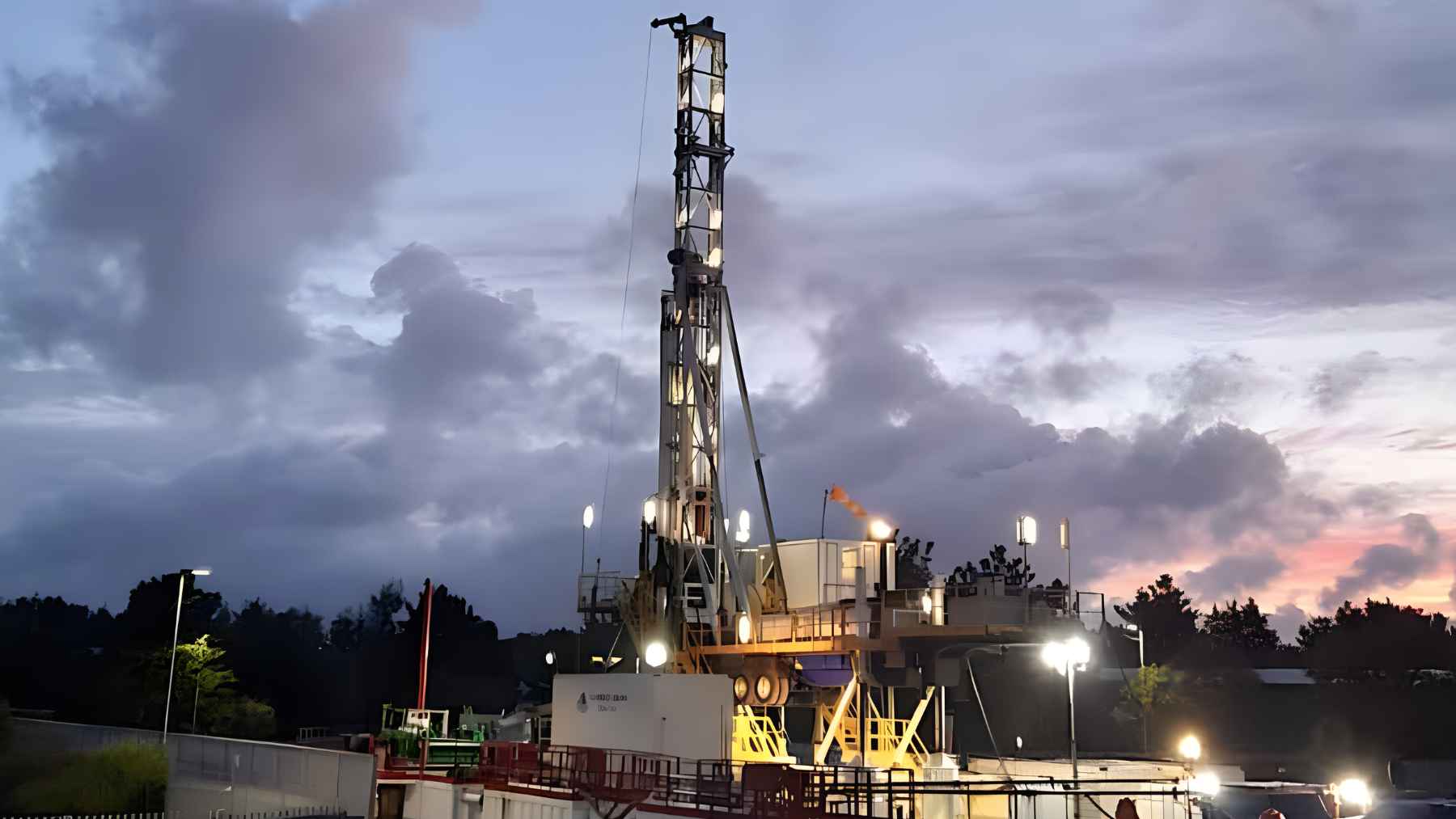
The United Kingdom has switched on its first commercial deep geothermal electricity plant near Redruth, Cornwall, after drilling more than 3.1 miles (roughly 16,400 feet) into hot granite. The facility is designed to deliver constant renewable electricity for about 10,000 homes while also producing lithium carbonate for electric vehicle batteries.
It is a simple idea with big implications. What if the same stream of hot water that helps steady the grid could also shrink reliance on imported battery materials? That is the bet behind the United Downs project, and it comes with both promise and plenty of engineering risk.
A new kind of “always on” renewable
The United Downs site is now exporting geothermal electricity to the U.K. grid, a first for the country at commercial scale. Geothermal Engineering Ltd (GEL) says the plant produces power around the clock, because the heat source is underground and does not depend on wind or sunshine.
In practical terms, GEL and its electricity buyer are talking about roughly 3 megawatts of continuous generation, enough for around 10,000 homes. Octopus Energy has signed a power purchase agreement for the output, which gives the project a predictable revenue stream from day one.
The second output is what makes this project stand out. The same geothermal fluid contains lithium, which is processed into “zero-carbon” lithium carbonate, a raw material for rechargeable batteries, before the water is reinjected underground in a closed loop.
Why steady power can matter more than flashy power
On February 25, 2026, more than half of the U.K.’s electricity was supplied by renewables, led mainly by wind and solar. The next day, geothermal started feeding into the grid for the first time, adding a source that is predictable in a way weather-driven generation is not.
That predictability is not just a technical detail. When output is steady, grid operators need fewer quick fixes, and that can help reduce reliance on power plants that ramp up fast and often burn natural gas during high-demand periods. The benefit is hard to see on a phone screen, but it can show up in system costs and, eventually, the electric bill.
Still, no one should confuse 3 megawatts with a national solution. The bigger point is that this is a template, and the British Geological Survey has pointed to large theoretical onshore geothermal potential, even if only a slice of it is practical to tap.
The engineering behind a 3.3-mile well
The project relies on a pair of deep, directional wells drilled into the Cornubian granite. Reporting on the project describes a production well to about 3.3 miles deep (around 17,300 feet) and an injection well to about 1.5 miles (around 7,850 feet), both intersecting the Porthtowan Fault Zone roughly half a mile from the site.
Down there, temperatures exceed 374°F, which GEL describes as the hottest recorded in the UK for this kind of development. In a typical design, the brine enters the power cycle hot and returns underground closer to 122°F after its heat has been used.
If it sounds like building a power plant in reverse, that is not far off. GEL’s CEO Ryan Law compared it to having “a huge nuclear power station underground” and simply tapping the heat. But unlike nuclear, drilling is the high-risk step, because one unexpected fracture or flow problem can change the economics fast.
Lithium as a byproduct, not an afterthought
After electricity is generated, the geothermal brine is processed for lithium and then reinjected, which keeps the operation closer to a circular system than a traditional mine. GEL says the brine carries more than 340 parts per million of lithium carbonate equivalent, and that concentration is a major reason the company believes the site can scale beyond a pilot phase.
The current production target is modest by global standards but meaningful for a first plant. GEL says the lithium facility starts at about 220,000 pounds of lithium carbonate per year, with an ambition to scale to roughly 39.7 million pounds per year over the next decade.
Those are big “if” numbers, but they explain why investors are paying attention. The Financial Times noted that China processes about 60% of global lithium and that Western countries are looking for ways to reduce supply chain exposure, even as falling lithium prices complicate new projects.
The business case is a two-revenue-stream story
Deep geothermal is expensive upfront, and the first project in a new market tends to carry extra costs, from permitting to specialized drilling. That is why the combination of electricity sales and lithium production matters, because it gives the project two shots at paying back the drilling bill.
Partnerships also help de-risk the technology stack. GEL says the power plant was developed with Exergy International, and the company has highlighted backing from private investors and support for lithium development through the U.K. Government’s Automotive Transformation Fund.
Cornwall’s mining history is part of the story, too. The Guardian reported that the project is built on a historic mining site and has created about 100 jobs so far, a reminder that the energy transition is also about local paychecks, not only national targets.
What could slow this down and what comes next
The first constraint is geology. Cornwall’s hot granite and fault structures make it an unusually good candidate, and replicating the model elsewhere depends on finding similar conditions or accepting higher drilling costs to reach comparable temperatures.
The second is public confidence. Even small induced seismic events can trigger backlash, and local concerns have already been part of the conversation around deep geothermal in Cornwall, according to the Guardian. That makes monitoring, transparency, and clear rules just as important as turbines and pumps.
For now, GEL says it has additional deep geothermal sites under development in Cornwall that could add more capacity by 2030, but the near-term test is simpler. Can this first plant run reliably, keep costs under control, and prove that “heat plus lithium” is more than a clever headline?
The press release was published on Geothermal Engineering Limited.