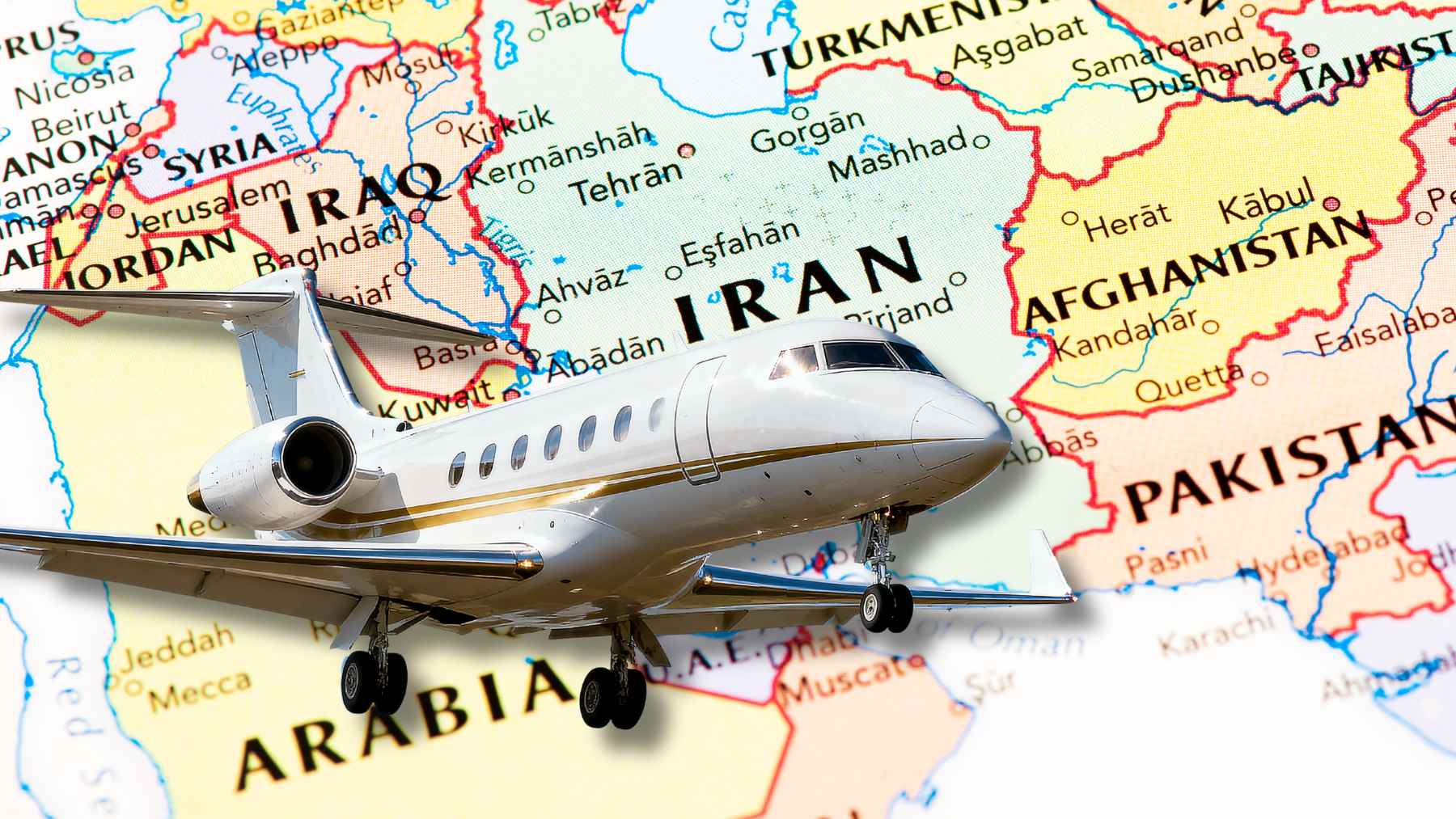
What happens when the departure board turns into a wall of delays and cancellations? In the Gulf, the answer now depends a lot on how much money you have.
Since the conflict involving the United States, Israel, and Iran erupted on February 28, commercial air travel across parts of the Middle East has been hit by airspace closures, reroutings, and security threats, leaving tens of thousands of people trying to find a way out. A much smaller group has found one, by paying for private jets.
That divide is becoming hard to miss. Charter companies say demand has surged from wealthy families, multinational firms moving senior executives, and group travelers who want to avoid the chaos at commercial terminals.
Istanbul has emerged as the main destination because it is close to the region and relatively practical as a first stop. At the same time, the U.S.
State Department has said it facilitated more than two dozen charter flights, evacuated thousands of Americans, and on March 11 contacted nearly 9,000 U.S. citizens in the United Arab Emirates to offer government charter options.
A six-figure ticket out
The numbers show how quickly this market has overheated. Private jet departures from Muscat, Dubai, and Riyadh reportedly jumped from around 10 to 15 flights on a normal day to 98 on one day last week. One five-hour charter from Muscat airport to Istanbul for 12 passengers and a dog cost about $145,000.
Before the conflict, that same trip was about $60,000. That is a 142 percent increase. Why so steep? Operators point to limited aircraft, higher insurance costs, and the fact that jets often return empty, which means clients are effectively paying for both legs.
A workaround for a few, not a solution for many
Still, private aviation can only do so much. Reuters reported that business jet prices from Dubai to Istanbul had roughly doubled, with heavier aircraft reaching about $200,000, while the wider aviation network was already facing its worst disruption since the pandemic.
Muscat airport also said on March 9 that it continued to receive and facilitate private jet traffic, a sign of how central Oman has become in this ad hoc escape map. But in practical terms, private jets move dozens of people, not the thousands still stuck refreshing airline apps and waiting for repatriation flights.
At the end of the day, private charters are not fixing the region’s travel crisis. They are exposing it. When war disrupts a major aviation hub, mobility becomes another luxury product, available fastest to the people who can most easily afford it.
The official statement was published on the U.S. Department of State.