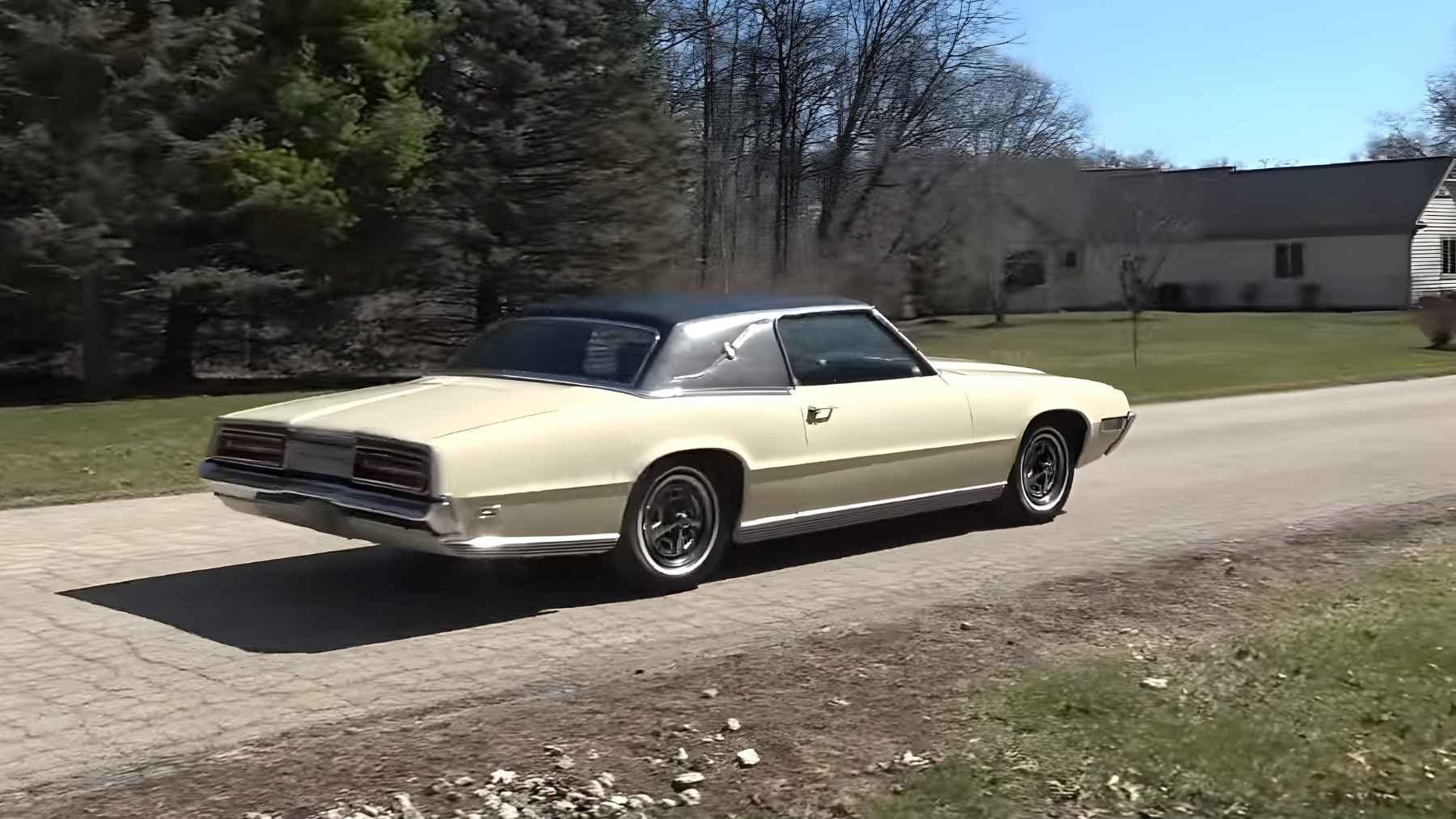
A Chicago-area Buick collector bought a low-mileage 1969 Ford Thunderbird Landau at Mecum’s Kissimmee sale, then barely drove it before putting it back into the market conversation. The car’s odometer read 14,805 miles at auction, and reporting around the deal says it was driven about three miles before the owner started asking $38,000.
It sounds like an easy flip. But in a collector market that has been cooling for the most part, a price jump on paper is not the same thing as a buyer with cash in hand. Would you pay $38,000 for a car someone just “tested” down the road and back?
A flip that looks simple on paper
The Thunderbird crossed the block at Kissimmee on January 10, 2026, as Lot K98, with Mecum listing the odometer reading at 14,805 miles. Classic.com , which tracks auction outcomes, lists the sale price at $27,500, while coverage of the purchase describes it as a $25,000 hammer price once buyer fees are separated out.
Then came the quick relaunch. The owner, identified as Dennis Doerge of Chicago, reportedly decided the Ford did not fit his Buick-heavy tastes and began shopping it at $38,000 after only minimal driving.
Why low miles still matter
Fourteen thousand miles on a 1969 car is the kind of number that makes collectors lean in. It hints at decades of weekends saved and weather avoided – the automotive version of finding an old gadget in the closet that still has the factory film on it.
Still, low miles is not a force field. Mecum’s lot page notes that the odometer figure “solely indicates” what is shown on the gauge, and long-term storage can bring its own headaches like dried seals and old rubber that does not care about mileage.
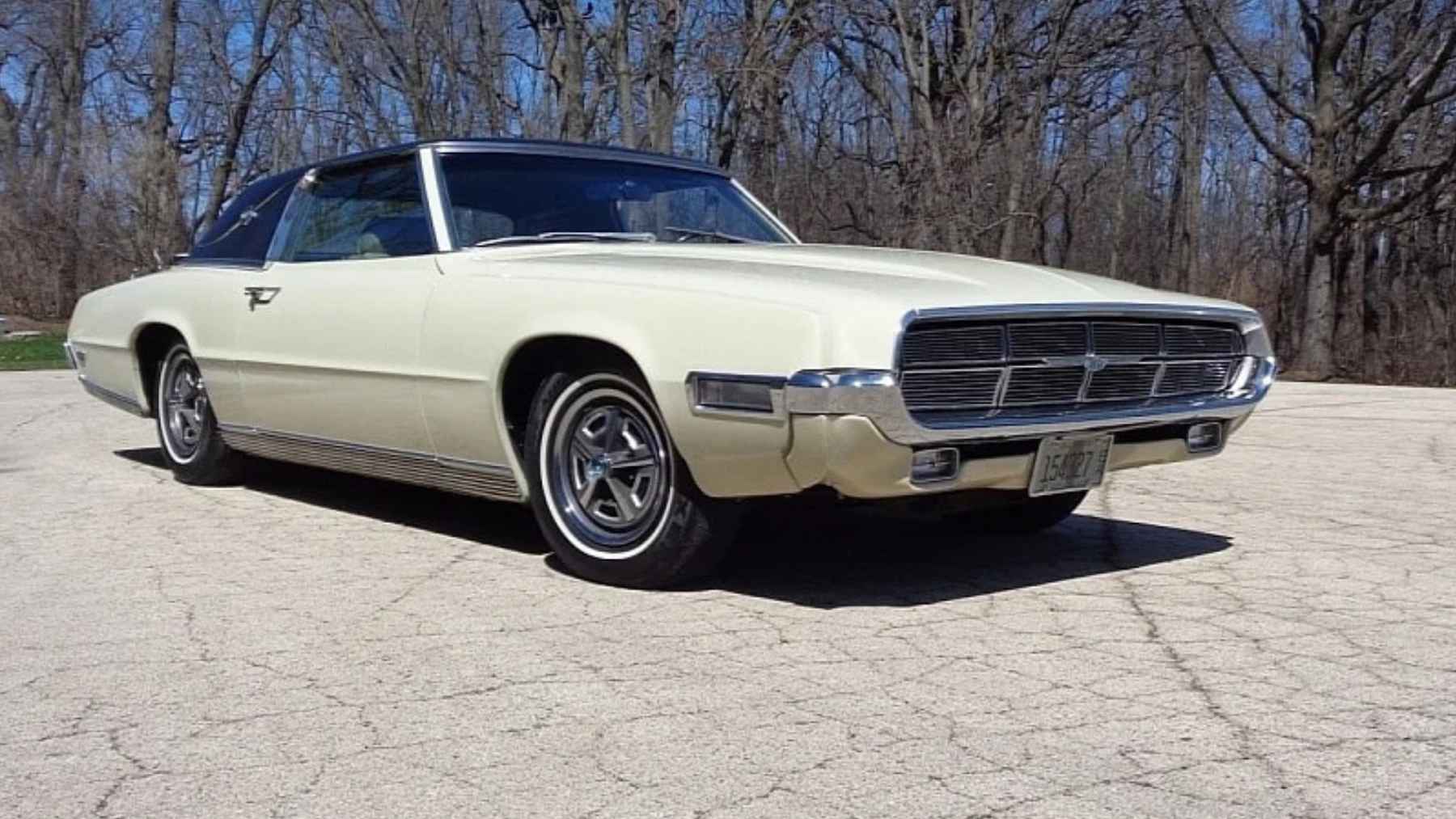
A low-mileage 1969 Ford Thunderbird Landau reappears on the market after a quick resale attempt at a significantly higher price.
A luxury cruiser with a big-block heartbeat
This fifth-generation Thunderbird was built for effortless highway comfort, not stoplight theatrics. For 1969, the Landau came with Ford’s 429-cubic-inch “Thunder Jet” V8 rated at 360 horsepower and 480 pound-feet of torque, paired with an automatic transmission.
In plain terms, it is the kind of car you could float through traffic in with the air conditioning on and one hand on the wheel. The example in question is also described with a 2.80 to 1 rear axle ratio, a setup that favors calm cruising over snappy launches.
How “Landau” became a luxury signal
The “Landau” badge did not start in Detroit. MotorTrend traces the word back to a high-end horse-drawn carriage named for Landau, Germany, known for a folding roof that balanced protection from rain with the ability to keep passengers visible during ceremonial rides.
By the mid-20th century, automakers turned that history into styling. Vinyl-covered roofs and decorative S-shaped “landau bars” became a quick visual shortcut for upscale taste, and Ford began using “Landau” as a Thunderbird model name in the early 1960s.
The numbers behind the 1969 Thunderbird’s appeal
The Thunderbird was not a niche car in 1969, even if the surviving “time capsule” examples feel rare today. Ford built 49,272 Thunderbirds that model year, and the two-door Landau was the best seller at 27,664 units, with about 15,695 four-door Landau sedans and 5,913 standard hardtops rounding out the mix.
Price tags backed up the “personal luxury” pitch. HowStuffWorks lists a 1969 two-door Landau at $4,964 before options, and reporting on this specific car highlights how factory air conditioning, a power sunroof, and other comfort upgrades could push the sticker higher quickly.
A cooler market makes quick profits harder
This is where the broader business context kicks in. A January 2026 market update citing Hagerty data described a Collector Car Market Rating reading of 58.28, its lowest level in nearly 15 years, and pointed to softer private sales plus small declines in guide values.
At the same time, the hobby sits on a huge base of real demand. Hagerty’s own industry snapshot says about 43 million vehicles in the United States fit its definition of a collector car, around 16% of the nation’s registered vehicles , with roughly $1 trillion in total insurable value.
Put those together and you get a market that feels selective. The best cars still find buyers fast, but plenty of “nice, not perfect” classics now have to compete with higher borrowing costs and more cautious shoppers, especially when the ask moves far above a recent auction price.
What buyers and sellers should watch next
For buyers, the lesson is unglamorous but useful. Verify documentation, inspect for storage-related issues, and remember that a YouTube walkaround can introduce a car to the world but cannot replace a cold start and a proper look underneath.
For sellers, the temptation is to price like it is still 2022, when almost anything nostalgic felt like it would rise. But recent market summaries have highlighted falling medians at auction and weakening momentum, so the gap between an asking price and a sold price matters more than ever. That is the real takeaway here.
The official auction listing was published on Mecum Auctions’s website, The lot record lists an odometer reading of 14,805 miles.