Lockheed Martin and the U.S. government say they have struck a new framework agreement to speed up deliveries of the Army’s Precision Strike Missile (PrSM), with the stated goal of quadrupling production capacity.
The announcement, made March 25, ties together new factory investments with an existing Army production contract worth up to $4.94 billion.
The timing is not subtle. PrSM’s combat debut was publicly acknowledged this month during Operation Epic Fury, and U.S. officials are also grappling with the pace at which precision weapons are being consumed in the Iran conflict.
Can U.S. missile factories scale fast enough when the demand curve suddenly turns into a wall?
A wartime footing deal with a clear target
In its release, the administration-described “Department of War” said the framework agreement is meant to “accelerate the production” of PrSM by pushing targeted industry investments into tooling, facility modernization, and critical testing equipment. The Department said the point is to cut lead times so the weapon can reach forces “faster and more efficiently.”
Lockheed’s version of the story is even more direct. The company said the framework agreement builds on last year’s Army production contract and that the combined actions will “quadruple” PrSM production capacity.
This is also being positioned as part of a wider procurement shake-up, not a one-off. The Department said the initiative fits into its broader “Acquisition Transformation Strategy” and work by a “Munitions Acceleration Council,” language that signals an attempt to industrialize urgency rather than treat it as a temporary spike.
Combat use brings urgency
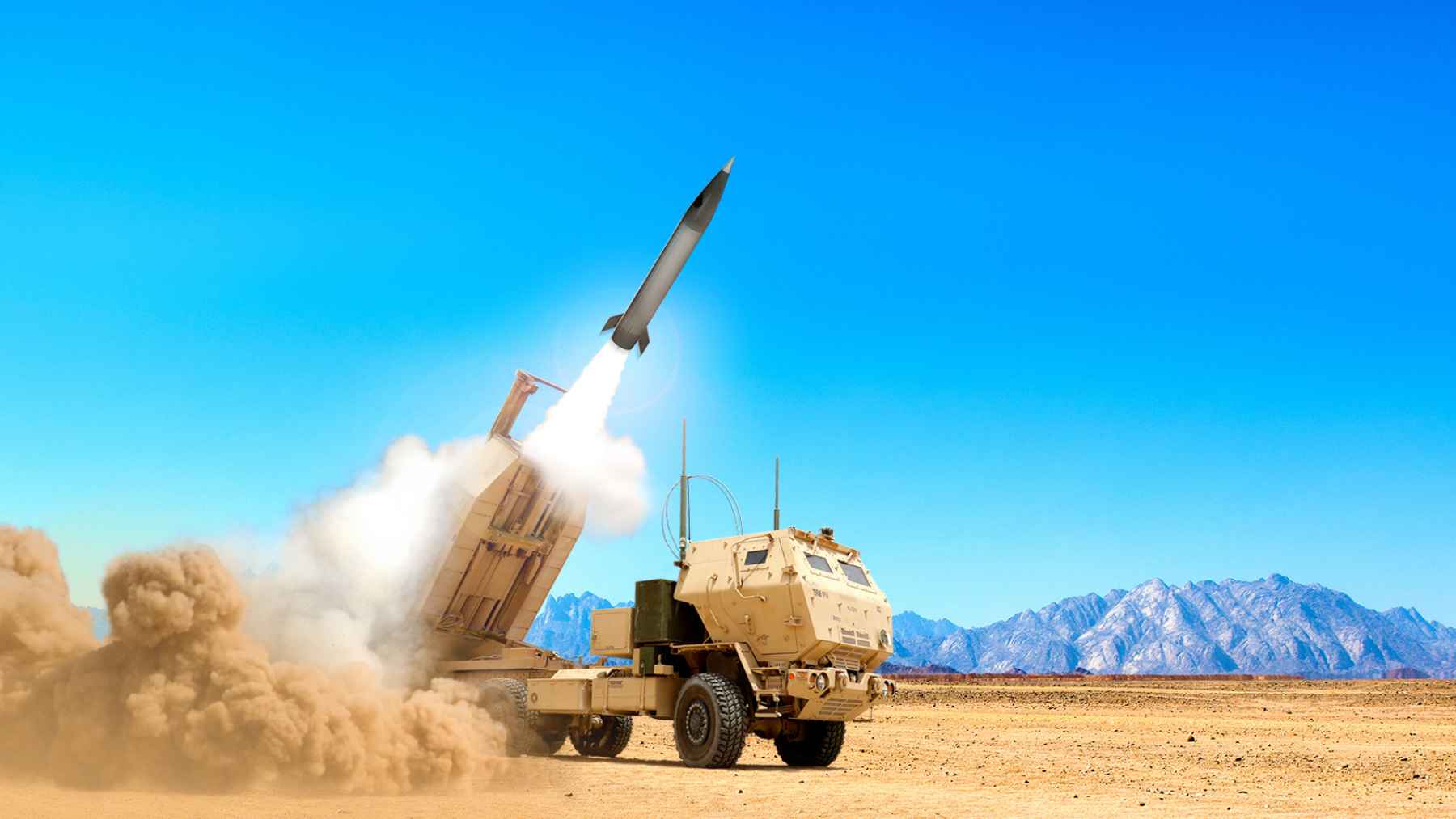
On March 4, U.S. Central Command publicly announced PrSM had been used in combat for the first time during Operation Epic Fury, and video showed launches from an Army M142 HIMARS launcher in desert terrain. Military Times reported that specific target details were not provided at the time of publication.
CENTCOM has described Epic Fury as a major campaign directed by the U.S. President, with strikes aimed at dismantling parts of Iran’s security apparatus and prioritizing locations that pose an “imminent threat.” In practical terms, that means expensive precision weapons leaving launchers quickly, and the supply line suddenly matters as much as the battlefield.
That same pressure shows up in stockpile worries beyond PrSM. Reuters reported that the United States has fired over 850 Tomahawk cruise missiles in four weeks of war with Iran, citing a Washington Post report and noting Reuters could not independently verify it.
Even with that caveat, it explains why “wartime footing” has moved from slogan to procurement plan.
What PrSM replaces and what it adds
PrSM is built to replace the Army Tactical Missile System (ATACMS), and the Army has framed it as a jump in long-range precision fires.
In July 2025, the Army said PrSM Increment 1 achieved Milestone C approval on July 2, 2025, moving into the Production and Deployment phase, with an intended mission set that includes striking anti-access and area denial capabilities at ranges greater than about 250 miles.
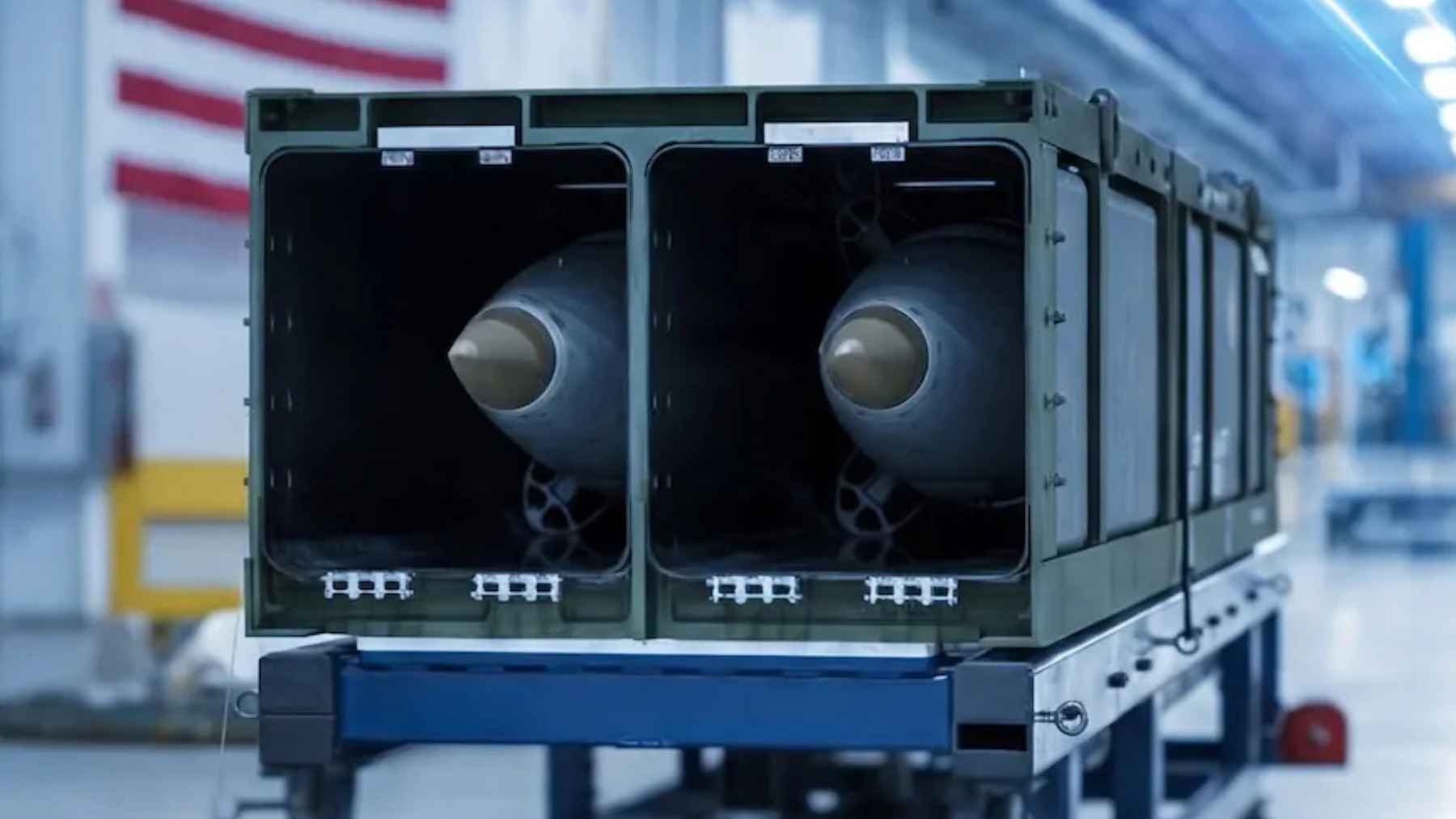
One of the biggest everyday differences is simple math at the launcher. The Army has said ATACMS typically puts one missile in a pod, while PrSM doubles the loadout to two missiles per pod, and both are fired from the same launcher family, including HIMARS and the tracked M270A2 MLRS.
If you have ever packed for a trip and realized one extra charger changes the whole day, you get the idea.
The program is also leaning hard into design-for-upgrades. Lockheed has described PrSM as using an open systems architecture and being built for modular growth, and the company points to digital engineering tools and software-driven development as a way to improve producibility and quality as production ramps.
The factory details behind the headline number
Lockheed says it now has more than 115,000 square feet of dedicated U.S. production space for PrSM, with more than 400 employees currently supporting the program. Those are concrete inputs, and they matter because “quadruple production” is not just an assembly-line problem – it is also a workforce, supplier, and test-capacity problem.
The company also tied this ramp-up to a broader capital push. Lockheed said it has invested more than $7 billion since President Donald Trump’s first term to expand capacity for priority systems, including about $2 billion dedicated to accelerating munitions production, and it pointed to other expansion efforts like PAC-3 MSE and THAAD interceptor components.
Jobs are part of the message too. Lockheed said the effort is driving expansion across manufacturing, engineering, and skilled trades, though those employment claims are the company’s own framing rather than an audited hiring tally. Either way, the takeaway is that the industrial base is being treated as a strategic asset, not background scenery.
Congress holds the key to the seven-year plan
Both the government and Lockheed highlighted the same next step, and it is not guaranteed. The framework agreement “establishes the potential” for a multi-year contract for up to seven years, but only if Congress authorizes multi-year contracting authority in the future.
Why does that detail matter so much? Multi-year deals can give contractors and sub-tier suppliers the confidence to buy tooling, hire, and lock in production schedules, instead of lurching from one short contract action to the next. But it also commits future budgets, which is why lawmakers typically treat this authority as a high-control lever.
There is also a business pressure point sitting behind the announcements. Reuters reported that the Trump administration has increased pressure on defense companies to prioritize production over shareholder payouts, alongside an executive order directing officials to identify contractors viewed as underperforming on government work.
That is a different kind of “performance metric,” and it is showing up in procurement language.
What to watch as the Arsenal of Freedom ramps up
The headline promise is speed, but the bottlenecks tend to hide in the less glamorous places. The Department of War specifically pointed to investments in tooling, facility upgrades, and testing equipment as the way to “slash production lead times,” which reads like a lesson learned from recent supply chain friction across multiple munitions lines.
The real-world test will be whether delivery rates rise fast enough to match operational burn and stockpile goals, especially if the Iran conflict keeps demanding large volumes of precision weapons. Announcements are easy to print, but missiles take parts, people, test bays, and calendar time.
At the end of the day, this is a bet that the defense industrial base can accelerate without losing quality or predictability.
The official statement was published on War.gov.