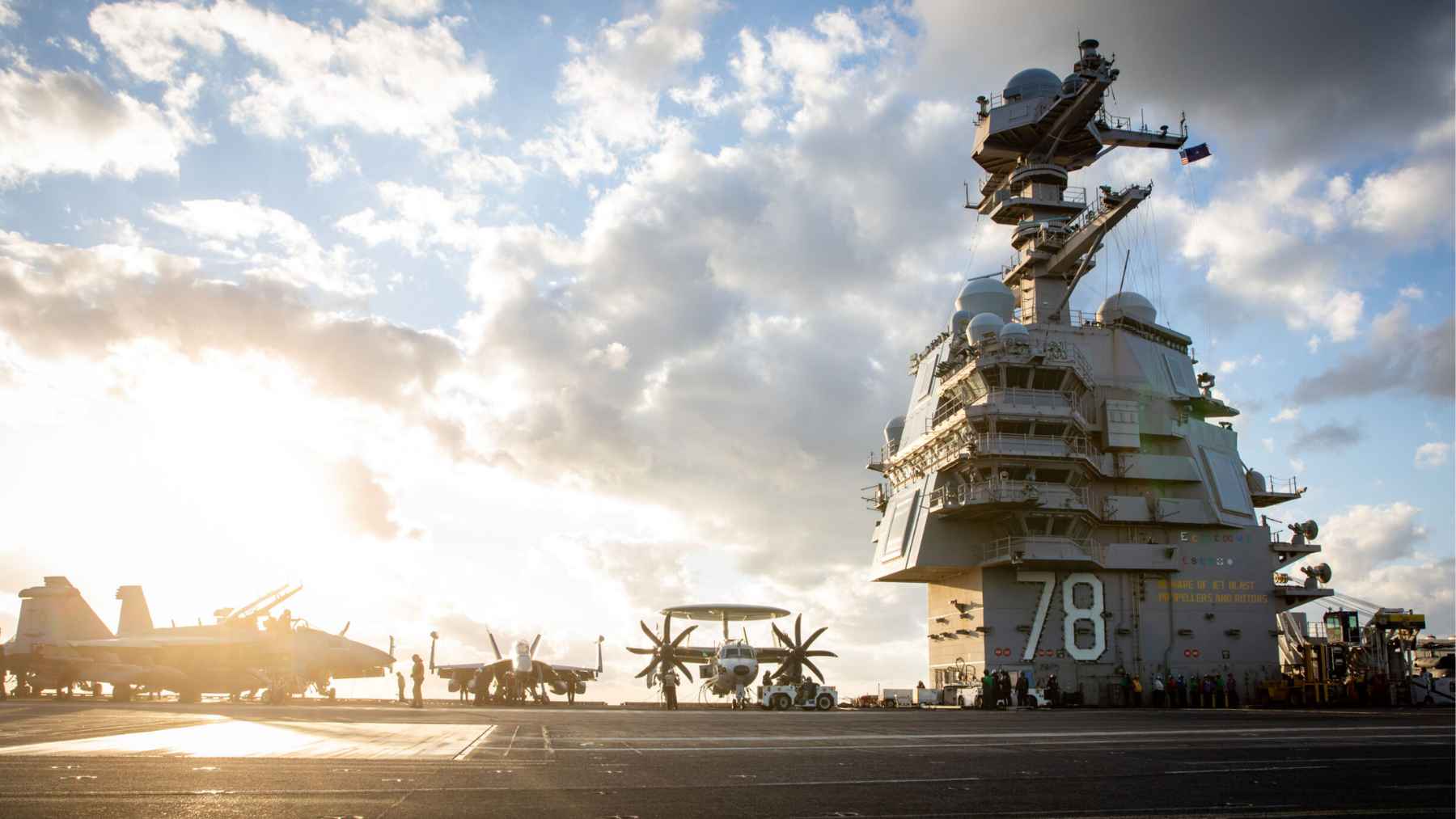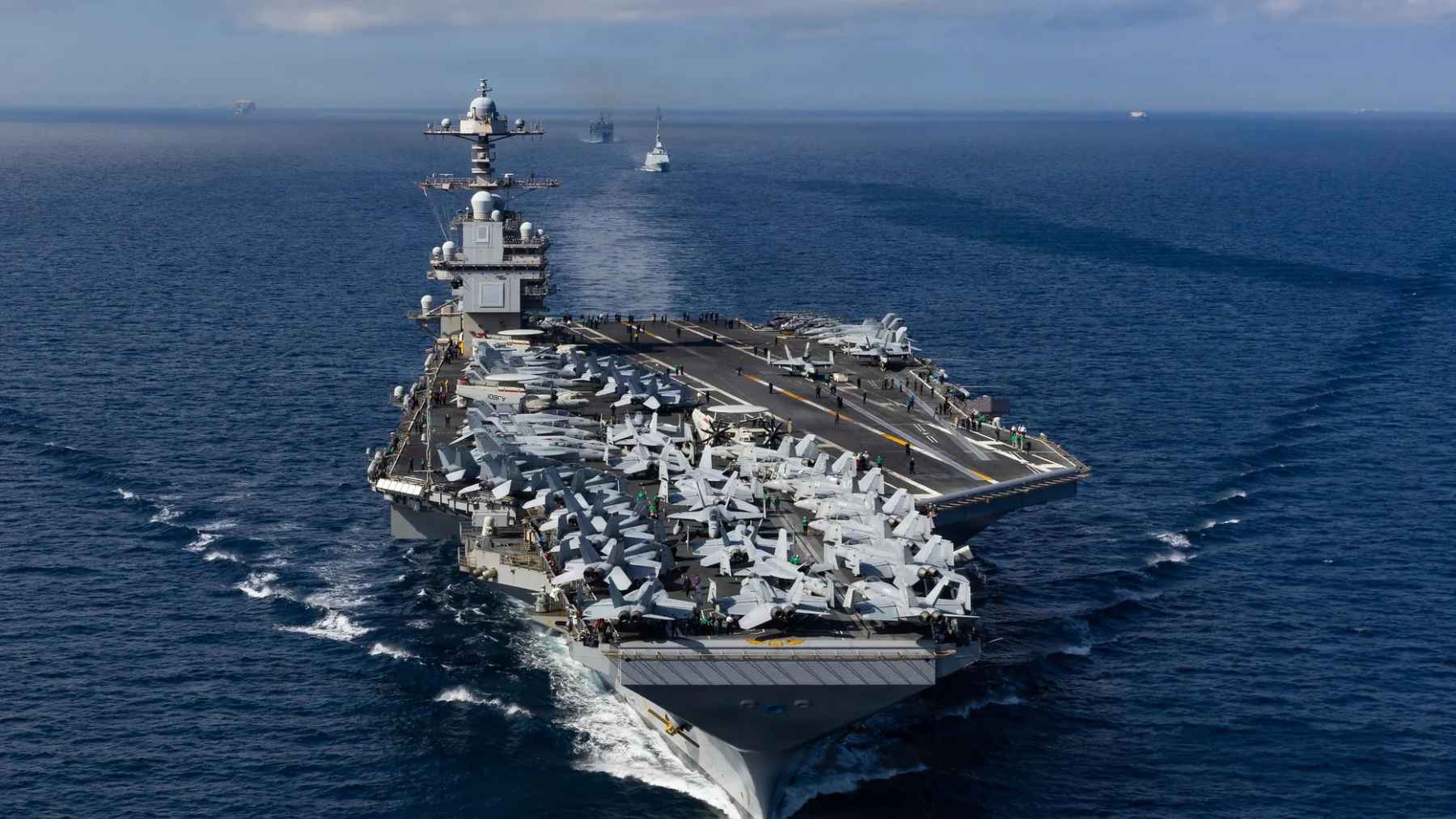
The USS Gerald R. Ford was confirmed in mid-February crossing the Atlantic toward the Strait of Gibraltar. By Feb. 20 it had entered the Mediterranean, and official U.S. military imagery later showed the carrier operating in the eastern Mediterranean on March 2 before transiting the Suez Canal on March 5.
In plain terms, the ship’s move from the Caribbean to the Middle East is no longer just a forecast. It happened, and it has stretched a deployment that began on June 24, 2025.
A busier sea than it looks
What does a carrier deployment have to do with ecology? Quite a lot, once the route runs through Gibraltar and into the Mediterranean. The International Maritime Organization says the Mediterranean became an Emission Control Area on May 1, 2025, cutting the sulfur limit for ships’ fuel in the region to 0.1 percent.
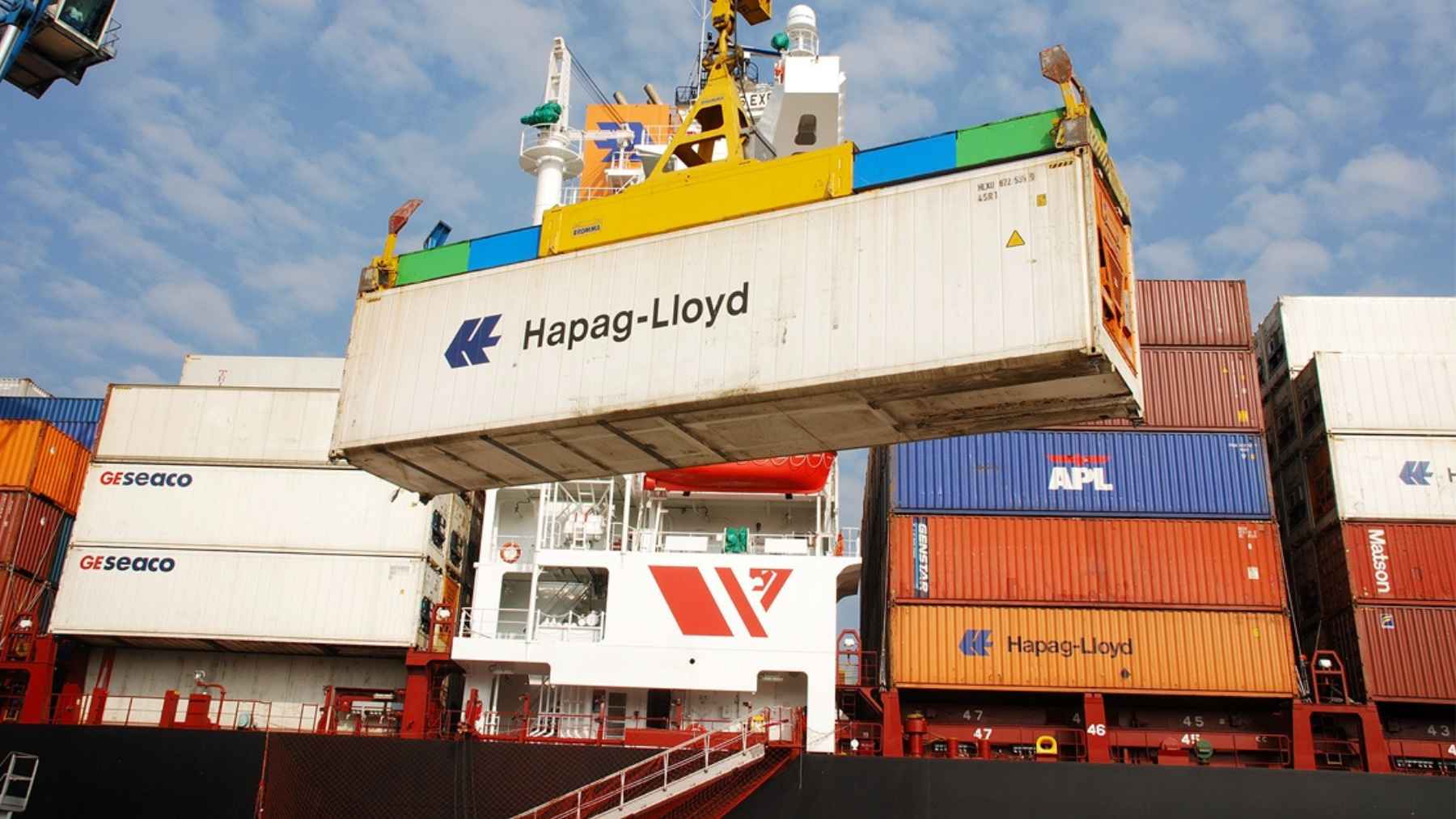
It is also one of the world’s biggest commercial arteries, carrying 20 percent of seaborne trade while 24 percent of the global fleet navigates those waters. That means defense traffic and business traffic are moving through the same increasingly regulated corridor.
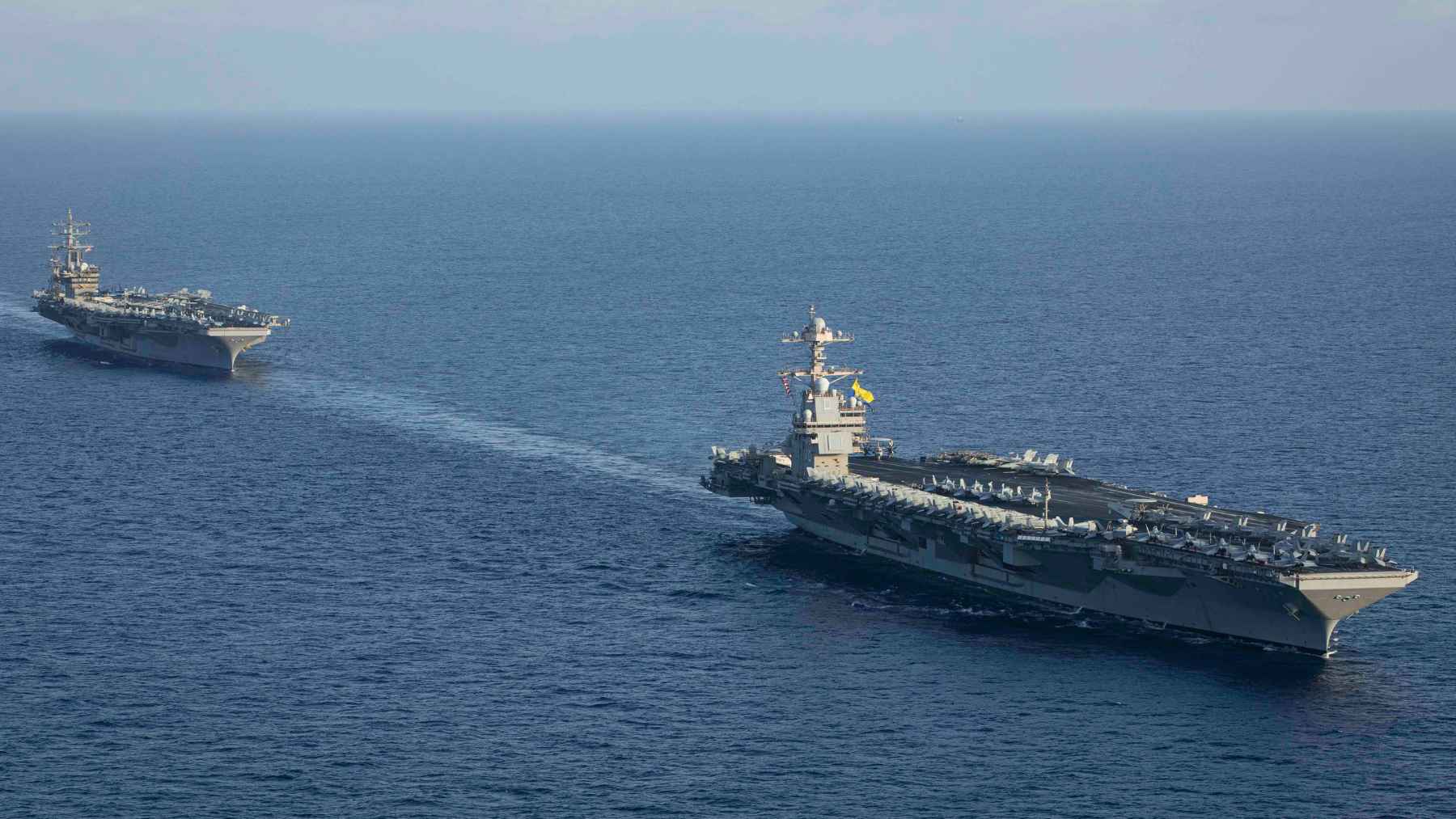
The USS Gerald R. Ford sails near the Strait of Gibraltar as its long deployment continues toward the Mediterranean.
Noise, wildlife and the trade route problem
For the most part, the public sees the military headline first. The environmental one sits just underneath it. The European Maritime Safety Agency and the European Environment Agency say underwater radiated noise is especially high in the Strait of Gibraltar.
The IMO has also highlighted important Mediterranean habitat for endangered fin whales, sperm whales, bottlenose dolphins and Risso’s dolphins. So when a carrier group heads east, it is entering waters already under pressure from commerce, marine noise and collision risk. Same sea, different pressures.
Advanced tech in an older reality
Ford brings a strong tech story of its own. The carrier is nuclear-powered, and the Navy says its EMALS launch system and advanced arresting gear are helping raise sortie generation compared with older Nimitz-class carriers. But longer deployments still depend on large-scale daily support.
Navy officials say more than 4,000 personnel are embarked, the ship can produce more than 400,000 gallons of drinking water a day, and more than four million meals have been served since departure. For readers, that is the real picture.
High-end military technology is now operating inside the same maritime space where air quality, biodiversity and trade resilience all matter at once.
The bigger takeaway is hard to miss. A carrier crossing Gibraltar is a defense story, but it is also a business and environment story because the Mediterranean is where deterrence, cargo flows and ecological stress now meet.
The official press release was published on Navy.mil.