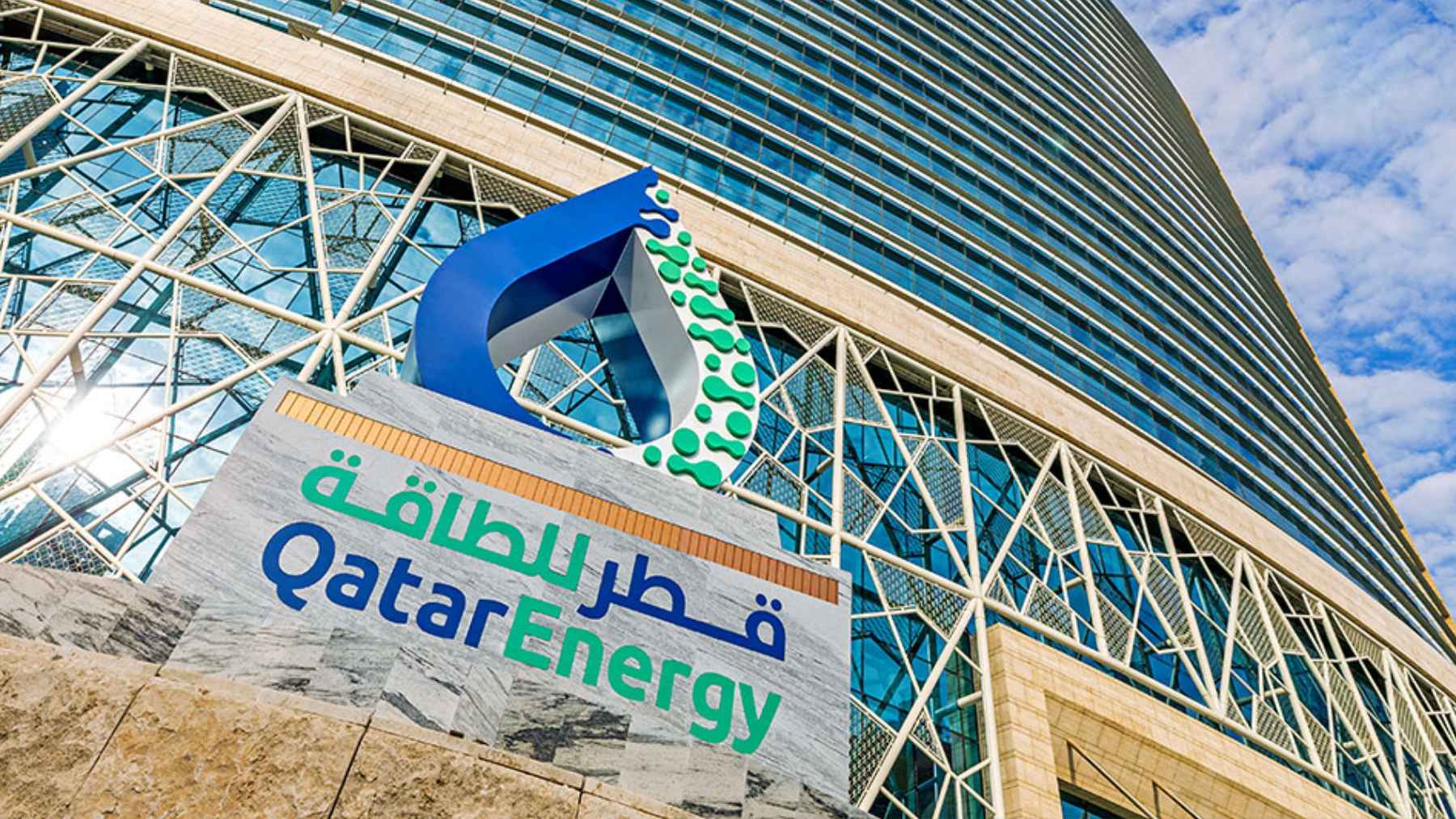
When missiles hit an LNG hub, the blast radius is not limited to the Gulf. QatarEnergy says strikes on Ras Laffan Industrial City caused damage that could take up to five years to repair and cost about $20 billion a year in lost revenue – the kind of shock that can show up later in power prices and in your electric bill.
The company estimates the outage removed 12.8 million metric tons a year of LNG capacity (about 14.1 million US short tons), roughly 17% of Qatar’s exports.
Now the disruption is moving from the plant floor to the legal fine print. QatarEnergy says it has determined it needs to declare “force majeure” on some long-term LNG contracts, with counterparties in China, South Korea, Italy, and Belgium, according to Reuters.
In the background, the Strait of Hormuz remains a choke point, and the U.S. Energy Information Administration estimates about 20% of global LNG trade transited it in 2024.
Force majeure
Force majeure is a clause that can excuse non-delivery when events are outside a supplier’s control. Once it is invoked, buyers have to assume contracted cargoes may not arrive, and they may need to compete for replacement volumes at short notice.
Qatar’s energy minister Saad Sherida al-Kaabi said repairs would take three to five years and that Qatar would be “compelled to declare force majeure” for up to five years on some long-term LNG contracts. So where does that missing gas come from, and who pays the premium when everyone starts shopping at once?
Ras Laffan’s single point of failure
Ras Laffan is about 50 miles north of Doha, and it is the core of Qatar’s LNG processing and export system, with major international players on site, including Shell.
Engineering News-Record describes an interconnected setup of 14 onshore LNG trains, including six mega-trains that each handle about 7.8 million metric tons a year (about 8.6 million US short tons), with gas cooled to roughly minus 260 degrees Fahrenheit for transport.
QatarEnergy says the March strikes damaged LNG Trains 4 and 6, which it runs in joint ventures with ExxonMobil, and they also hit Shell’s Pearl gas-to-liquids plant. One of Pearl’s two trains is expected to be offline for at least a year, while Trains 4 and 6 together account for the 12.8 million metric tons a year of lost LNG output.
Cargo competition
The map matters as much as the contracts. EIA estimates that about 83% of LNG moving through the Strait of Hormuz in 2024 went to Asian markets, with China, India, and South Korea the biggest destinations, which helps explain why buyers in Asia and Europe can end up bidding on the same spot cargoes.
European gas prices have been volatile, but the Dutch TTF benchmark has traded around €54.5 per megawatt-hour in late March, or about $62.8 per megawatt-hour at the European Central Bank’s euro reference rate.
In Japan, Reuters reported the government is temporarily relaxing rules to boost coal-fired generation from April as LNG import risks rise – a reminder that energy policy can change fast when supplies look fragile.
Helium and byproducts
QatarEnergy’s production update also estimates lost associated output that includes 18.6 million barrels of condensate, about 1.281 million metric tons of LPG (about 1.41 million US short tons), about 0.594 million metric tons of naphtha (about 0.655 million US short tons), about 0.18 million metric tons of sulfur (about 0.198 million US short tons), and about 309.54 million cubic feet of helium per year.
That is where the tech link shows up. The U.S. Geological Survey says helium is used in medical imaging such as MRIs and in semiconductor manufacturing, and Reuters has reported executives warning that the conflict-driven helium squeeze is already hitting tech supply chains, with Qatar accounting for close to a third of global production.
Portfolio reshuffling
Not everyone is responding the same way. Reuters reported Shell has declared force majeure on cargoes it buys from QatarEnergy and sells onward, while TotalEnergies says it will honor contracts and not invoke force majeure with its customers, leaning on a diversified portfolio to reroute supply.
The United States can add incremental LNG, but it cannot flip a switch overnight. Reuters reported Cheniere’s Train 5 at its Corpus Christi expansion in Texas is now operating at full capacity as the company works to bring more trains online, and it has signaled it may send more cargoes to Asia as demand spikes.
What to watch next
The immediate questions are practical. How quickly can QatarEnergy restore partial output, and how long will Trains 4 and 6 stay down while repairs and safety checks move forward?
Then comes the strategic question. Qatar’s North Field expansion was expected to start producing LNG in the second half of 2026 and lift capacity from 77 million metric tons a year to 126 million metric tons a year by 2027 (about 84.9 million to 138.9 million US short tons), according to Reuters and QatarEnergy LNG, but this crisis is a reminder that building capacity is one thing and protecting it is another.
The official statement was published on QatarEnergy.