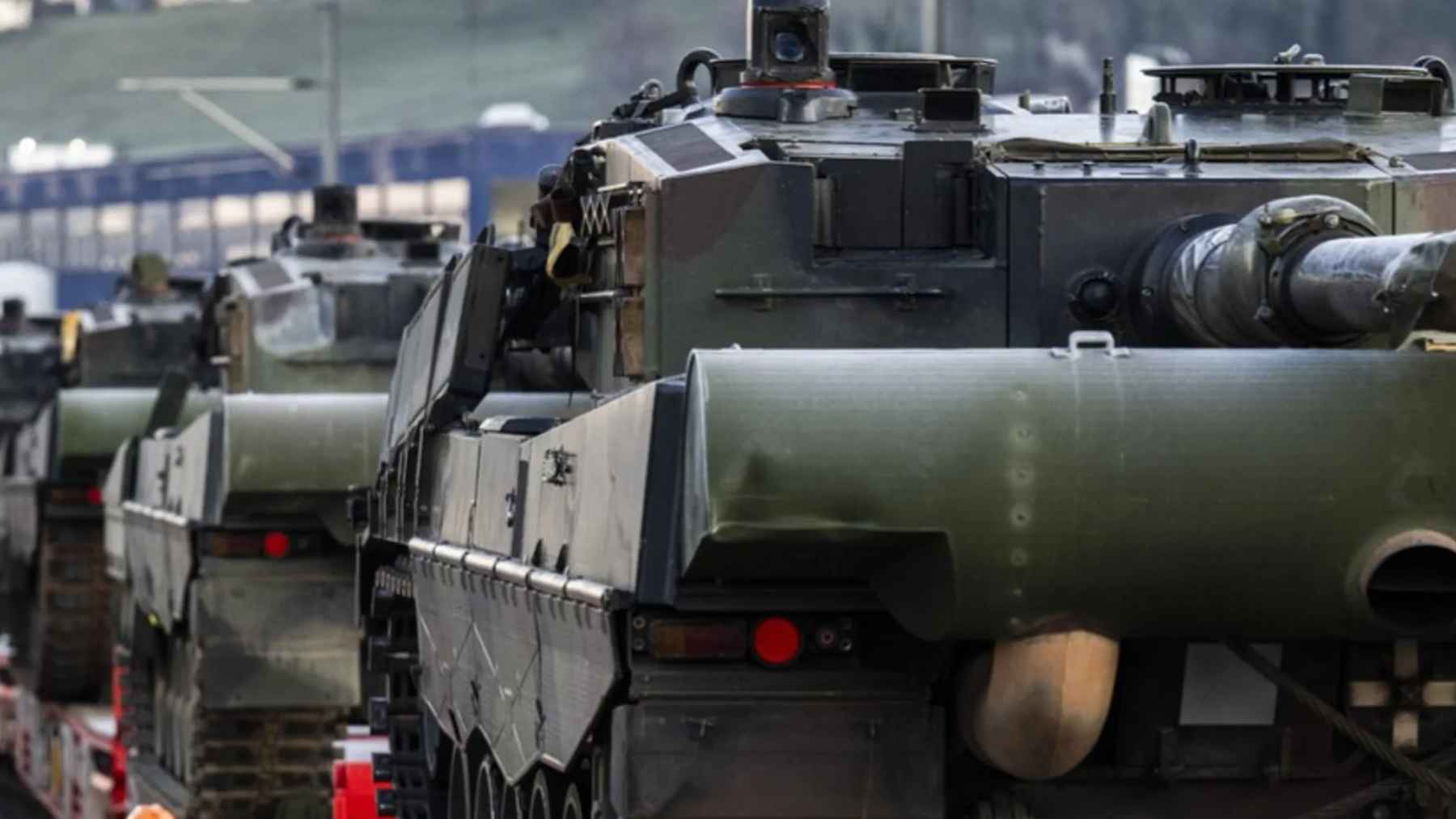
Switzerland’s federal government wants parliament to approve an Armed Forces package worth about 3.4 billion Swiss francs (about $3.8 billion), with the biggest bets placed on ground-based air defense, counter-drone protection, and new cyber and electronic warfare capabilities.
The dispatch groups roughly 2.4 billion francs for armaments procurement, 394 million francs tied to additional F-35A fighter jet costs, and 562 million francs for defense property projects.
Defense Minister Martin Pfister put it bluntly: Switzerland is “not sufficiently protected against the most likely forms of threat.” But what does neutrality mean when danger strikes from afar, or arrives as a hack freezing a payment terminal or power grid?
Why air defense is suddenly the main event
Swiss officials argue that Russia’s war against Ukraine has redrawn Europe’s threat map, and that even a neutral state has to plan for long-range strikes and “hybrid” pressure. The government’s own language focuses on “attacks from a distance” and “hybrid conflicts,” which includes cyberattacks, disinformation, and sabotage.
There is also a geometry problem. Switzerland has warned that long-range weapons like cruise missiles and ballistic missiles can be detected late if you only rely on sensors inside your borders. That is why Bern is pursuing expanded agreements to share “air situation data” with partners to gain more warning time.
What the 2026 shopping list really buys
The center of gravity is layered air defense. The plan includes 1 billion francs for additional IRIS-T SLM fire units and guided missiles, and 800 million francs to replace older short-range systems that include the Stinger and a 35 mm anti-aircraft gun.
IRIS-T SLM is not just a missile; it is a network. In a prior procurement release, armasuisse said the system can reach distances of up to 40 kilometers and altitudes up to 20 kilometers (roughly 12 miles), and is meant to operate as part of an integrated air defense setup alongside fighters and longer-range systems.
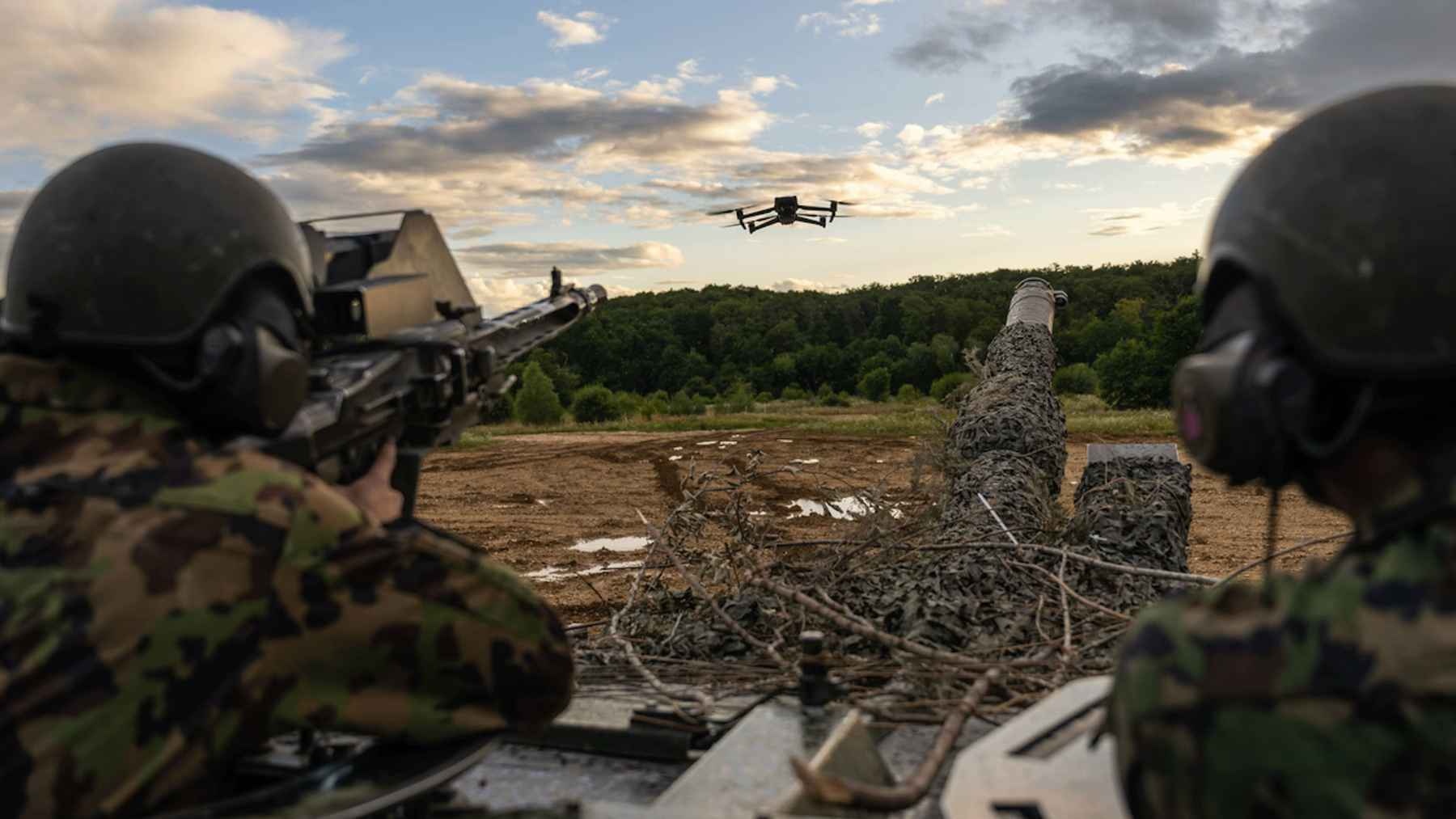
Then come the tools shaped by the drone age. Switzerland is earmarking about 70 million francs to protect military formations, civilians, and critical infrastructure from “mini-drones,” and another 150 million francs to replace the aging TAFLIR tactical aviation radar with a semi-mobile medium-range radar.
It is also putting 30 million francs into “space-based capabilities,” 100 million into wider use of civil data networks, and 240 million into electronic warfare and related capabilities in the cyber and electromagnetic domains.
F-35 math and the cost of modern airpower
Switzerland is also asking for a 394-million-franc supplementary credit linked to the F-35A program, with officials saying that should allow the country to purchase about 30 aircraft. Earlier plans targeted 36 jets, but the government has pointed to cost increases and a desire to stay within the financial framework voters approved in 2020.
Procurement timelines are another headache. Switzerland has acknowledged delays of roughly four to five years in delivery of Patriot air defense systems from the United States, after U.S. reprioritization to support Ukraine. In response, the government has said it is evaluating whether to add another ground-based system, preferably made in Europe.
Neutrality in 2026 means export controls too
On March 20, the Federal Council also said it would not authorize new war materiel exports to the United States for the duration of the international armed conflict involving Iran, citing neutrality rules and the War Materiel Act.
The government said no new licenses have been issued since the conflict escalated on February 28, and that existing licenses will be reviewed by an interdepartmental expert group that will also look at dual-use and other sensitive exports.
Neutrality still has a diplomatic side, too. Switzerland has long represented U.S. interests in Iran, and Reuters reported that Bern said the U.S.-Iran diplomatic channel it maintains remains open despite the ongoing air war. That role makes credibility matter, and it helps explain why Swiss officials are trying to harden defenses at home while keeping distance abroad.
The business ripple effects and what happens next
Defense budgets are not only about weapons; they are also about industrial capacity. Swiss defense authorities say the 2026 armaments program could lead to about 1 billion francs in orders for Swiss companies and roughly 990 million francs in offset business, with each figure estimated at around 40% of the commitment credits.
But the same official material also notes two constraints that can slow everything down, a tight global arms market and Switzerland’s limited domestic defense industry. Bern says it still aims to raise army spending to 1% of GDP by 2032, which suggests the air defense pivot is not a one-off line item.
The press release was published by the Swiss Federal Department of Defence, Civil Protection and Sport (DDPS).