A 2025 underwater archaeology campaign in Kyrgyzstan has added fresh evidence that a major medieval settlement once stood beneath Lake Issyk-Kul.
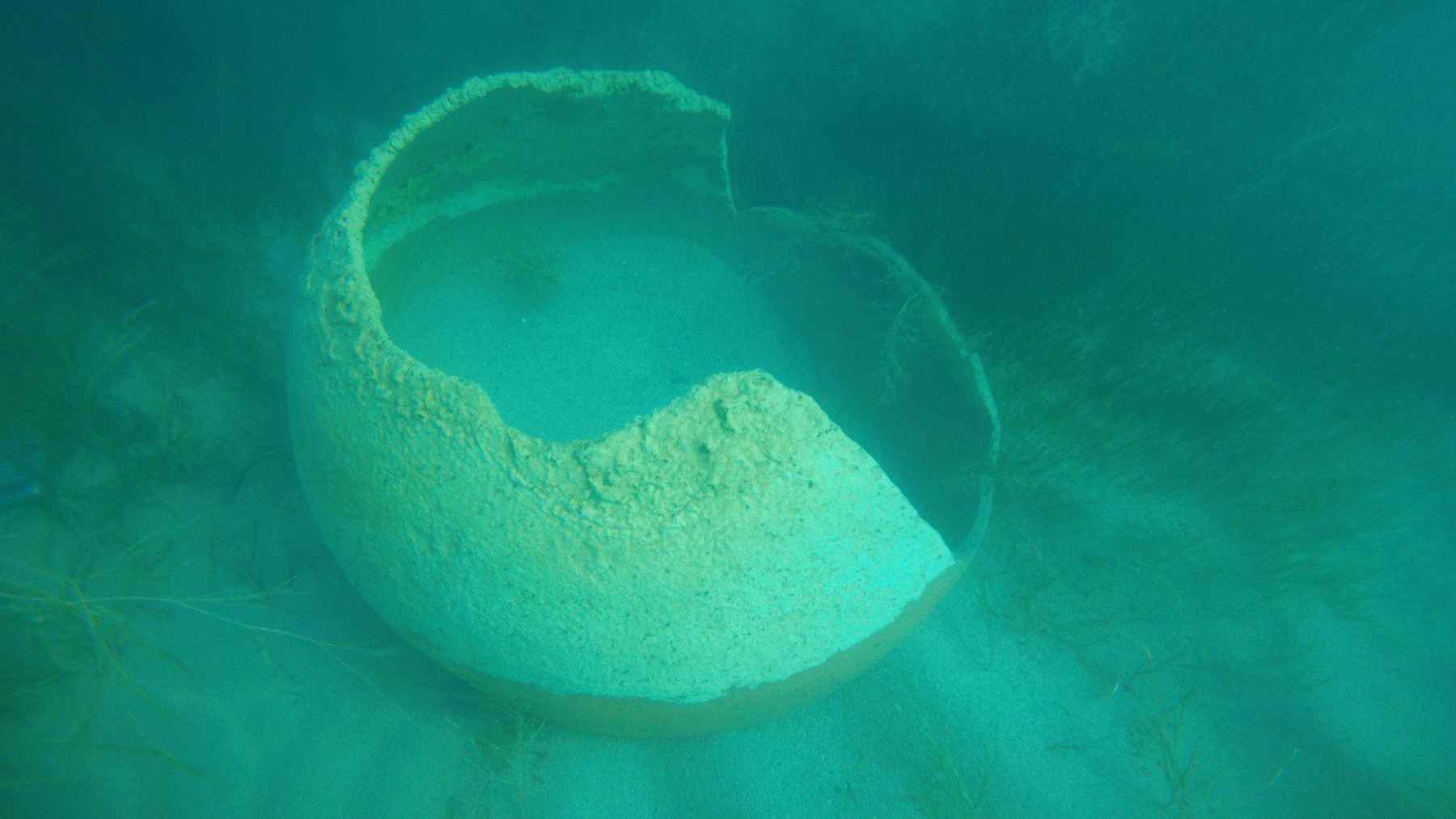
Working in the northwestern waters near Toru-Aygyr, researchers used robotic underwater systems to map brick structures, burial areas, and preserved building remains from a settlement that existed at least from the 10th to 13th centuries and went under in the 15th century.
In practical terms, this is not just another lakebed survey. It is a clearer picture of how an important Silk Road community lived, expanded, and then disappeared.
Underwater drones and mapping tools reveal the site
What makes this story stand out is the technology. During the first phase of the expedition, archaeologists tested a Trionix-6M underwater drone linked to an RWLT hydroacoustic positioning system and geolocation buoys.
According to the Institute of Archaeology of the Russian Academy of Sciences, that setup allowed real-time tracking with no blind spots and up to four hours of daily work.
The team surveyed about 20,000 square meters of the lake floor and mapped a medieval brick structure containing a millstone, along with submerged tree bases that may help date changes in the site and shoreline.
Brick structures and an Islamic necropolis emerge at Toru-Aygyr
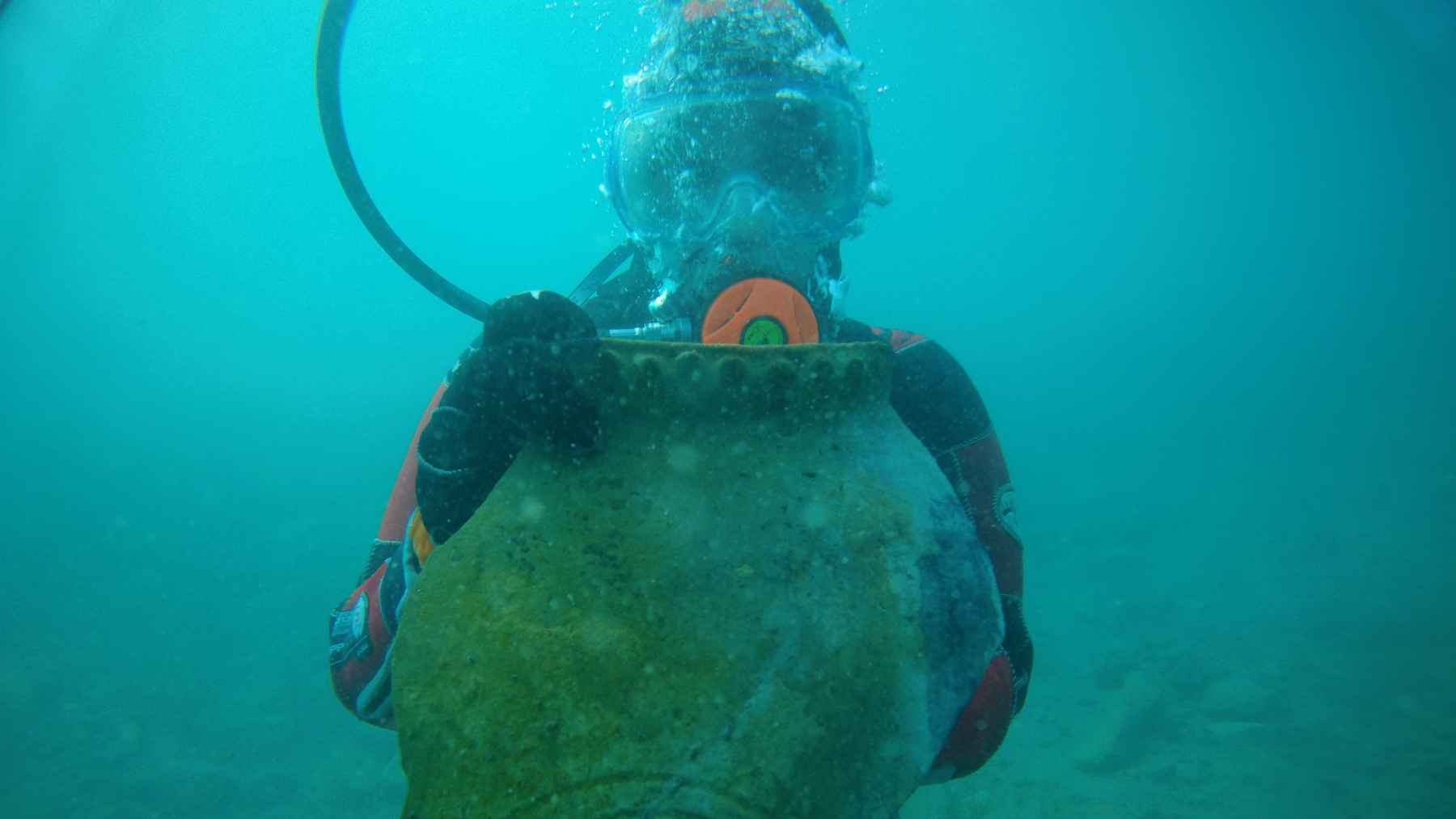
Then came the finds that make the past feel very close. At one of four investigated zones in Toru-Aygyr, archaeologists expanded the photogrammetric model of a brick-built area and recovered a distinctive architectural element that may point to an important public building with decorative features.
Another zone revealed a Muslim necropolis from the 13th and 14th centuries spread across roughly 300 by 200 meters.
Some graves had already been eroded down to skeleton level, and the bodies were positioned according to Islamic burial practice, with faces turned toward the qibla. Two burials, one male and one female, were removed for anthropological study before the lake could damage them further.
Digital archaeology is turning the lakebed into an archive
There is also a bigger lesson here. Archaeology is often imagined as trenches, dust, and brushes. But this project shows how it is becoming a digital preservation race too.
Researchers also built orthophoto maps, photogrammetric models, and a geographic information system that could support future conservation work and what may become the first full digital copy of this archaeological monument. That matters because lake erosion does not wait. Neither does time.
For now, the 2025 season strengthens Toru-Aygyr’s status as one of Central Asia’s most important submerged archaeological complexes and suggests that each new survey could reveal another piece of a lost medieval world once tied to trade, religion, and everyday life along the Silk Road.
The official statement was published on Russian Geographical Society.