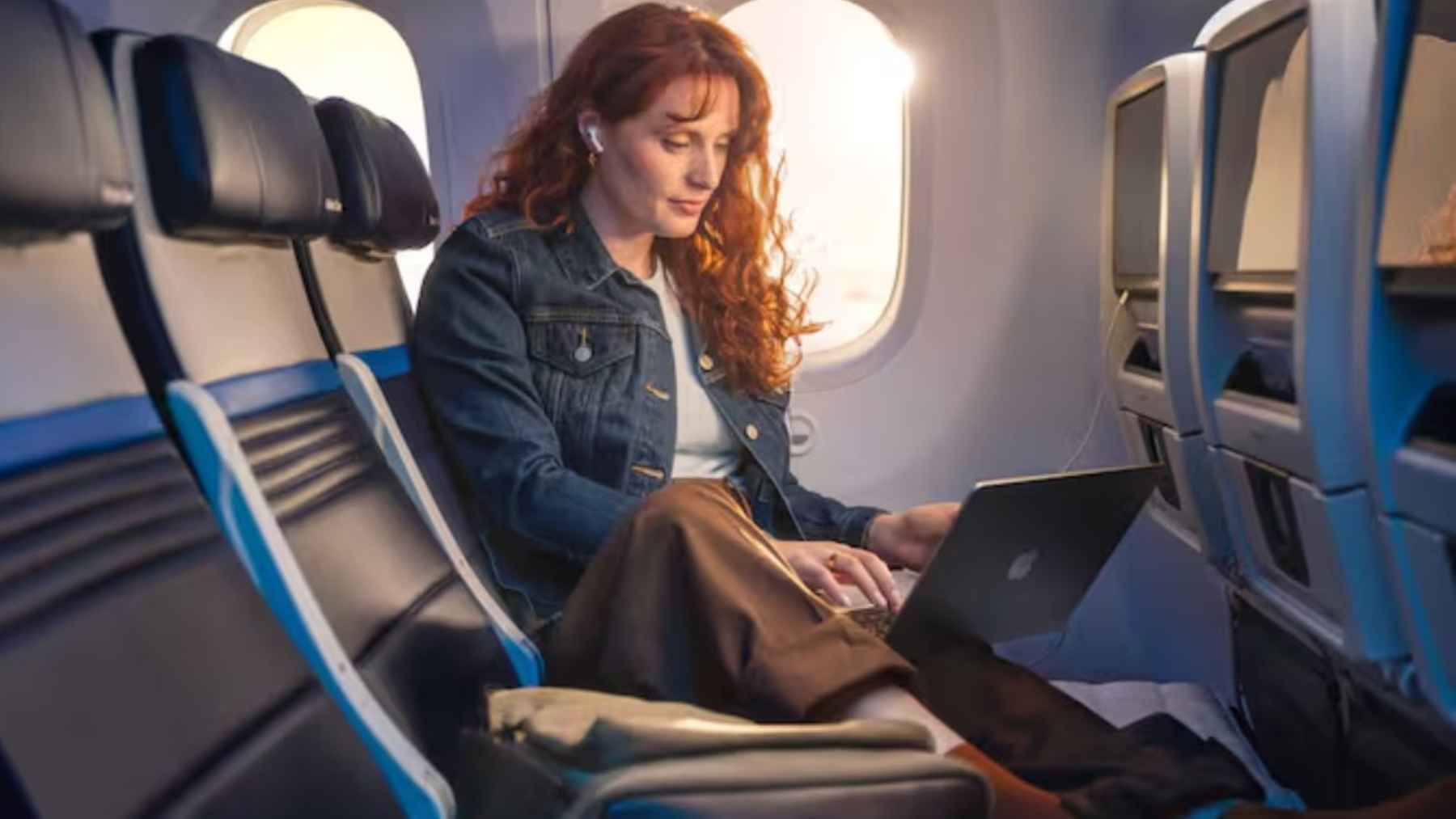
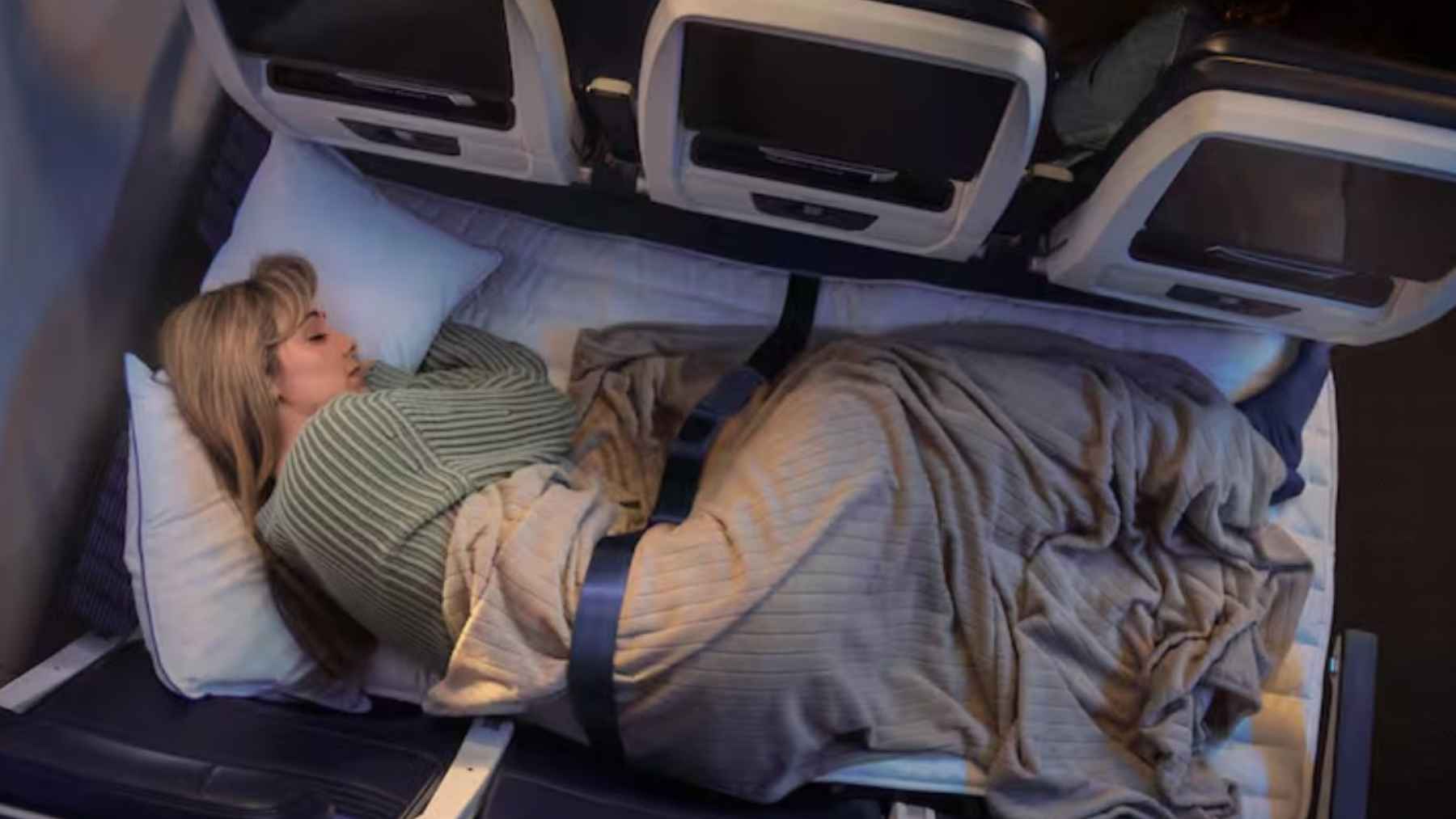
United Airlines wants to sell you a different outcome, without sending you all the way to business class. The carrier has announced “United Relax Row,” a dedicated set of three economy seats that can be turned into a lie-flat, mattress-like space after takeoff, with a planned launch in 2027 and a rollout to more than 200 Boeing 787 and 777 widebody aircraft by 2030.
At first glance, it sounds like a traveler-friendly innovation for families, couples, and solo passengers who want to sleep without paying four digits for a premium cabin. But the bigger story is business. This is another step in a long-running shift where airlines squeeze more revenue out of the same cabin by selling comfort, space, and flexibility as add-ons.
A couch in coach
United’s pitch is simple: buy an entire three-seat “Relax Row” in economy and you can stretch out like you would on a couch at home, only at 35,000 feet. The company says the product is aimed at parents flying with small kids, solo travelers, and couples who want more room while staying in an economy fare bucket.
The important detail is that United is not adding seats or building bunks. It is monetizing empty space that usually goes unsold, especially on long international routes where load factors can swing by season. If pricing is right, the airline earns more from that row than it would by selling the seats separately, and it does it without the cost of a full premium-cabin retrofit.
Why 2027 matters
United says Relax Row will debut in 2027, and that delay is part of the signal. Widebody interiors are planned years in advance, and this product will likely be tied to new aircraft deliveries, cabin refresh cycles, and regulatory certification for bedding and seatbelt use in different configurations.
By 2030, the airline expects the option to appear on more than 200 widebody jets, including Boeing 787 and 777 aircraft. That scale matters because it suggests United thinks demand for “better economy” is durable, not just a post-pandemic travel splurge.
Airlines love add-ons
If you have ever paid for a checked bag, extra legroom, early boarding, or a seat assignment, you already understand the logic. Industry groups and consultants track a steady rise in airline revenue that comes from add-ons, and IATA projected $144 billion in ancillary revenue globally for 2025.
Some estimates go even higher. IdeaWorks and CarTrawler put global ancillary revenue at about $148.4 billion in 2024, and the top airlines can make a meaningful share of total revenue from fees, fare bundles, and loyalty programs that sit outside base ticket prices.
Competition is already here
United is not inventing the “economy bed” – it is Americanizing it. Air New Zealand has sold its Skycouch for years, which is essentially a row you can buy for space, not status. Lufthansa has tested its Sleeper’s Row concept on long-haul flights, and Japan’s ANA has offered COUCHii seating on its Airbus A380 service to Honolulu.
The difference is what happens when a big U.S. airline makes it mainstream. Once travelers get used to the idea that economy can have a semi-private lie-flat option, it puts pressure on competitors to respond with their own upgrades, whether that is more premium economy seats, more extra-legroom rows, or new monetized zones inside the cabin.
What travelers should watch
Right now, United has not published pricing or route details in its booking system, and that is where the real consumer impact will land. If the surcharge is modest, Relax Row could become a family favorite on overnight flights. If it is priced too close to premium economy, many passengers will just keep scrolling.
Still, this is not business class in disguise. You will be lying down in the economy cabin, with economy service, and the final comfort will depend on practical details that United has not disclosed yet, like usable length, how the seat belt works when reclined, and how the space feels when turbulence keeps you strapped in.
The Houston-to-Buenos Aires test case
One route to watch is United’s Houston-to-Buenos Aires service, currently operated with a Boeing 787. That flight is listed at about 9 hours and 50 minutes, which is slightly under the 10-to-11 hour threshold where similar products have been marketed most aggressively by other carriers.
That raises a practical question: Will United keep Relax Row limited to the longest flights, where sleeping is the selling point, or will it also use it on “almost long-haul” routes where comfort still matters, especially when you land and go straight into a workday?
The press release was published on PR Newswire.