NASA’s Artemis II mission lifted off on April 1, 2026, sending four astronauts on a roughly 10-day trip around the Moon and back, the first crewed lunar flyby in more than 50 years.
This week, NASA also began releasing official flyby imagery from the mission, turning deep space back into a day-to-day conversation for people who usually only think about the Moon when it looks huge on the drive home.
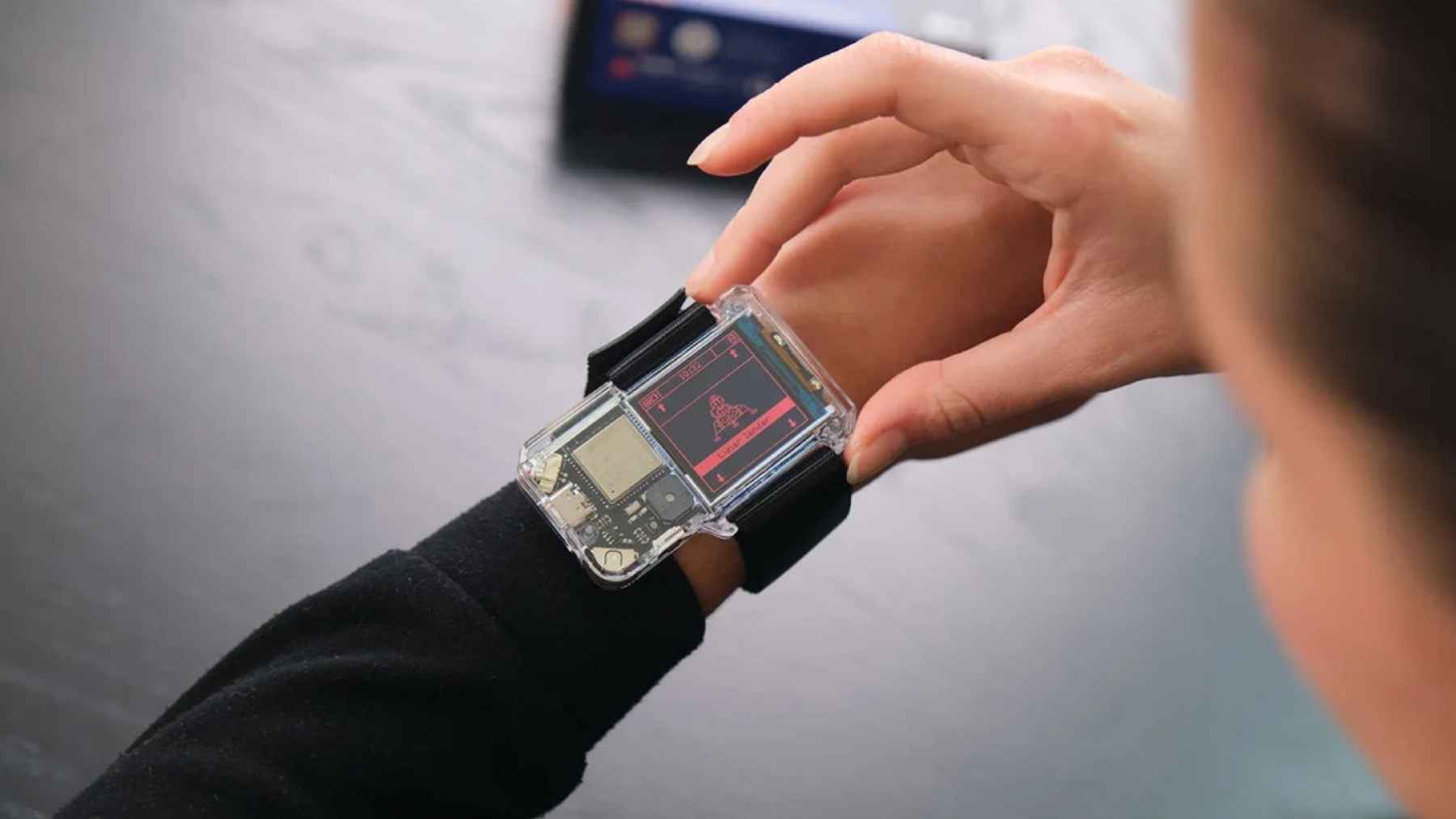
Right in the middle of that attention spike, education hardware maker CircuitMess is pushing a very specific idea into the market. Its NASA Artemis Watch 2.0 is a ready-to-use smartwatch that is also meant to be programmed, not just worn, with support for block-based coding, Arduino, and even Python.
A lunar mission that feels close again
Artemis II is not a Moon landing, but it is still a major systems test with real people on board. NASA says the mission is designed to prove out crewed life support and other key capabilities on a flight around the Moon and back, using the Space Launch System and Orion spacecraft.
And yes, it is already producing headline moments. NASA said the crew was set to reach about 252,756 miles from Earth, eclipsing the Apollo 13 record for farthest human spaceflight, and to pass within about 4,067 miles of the lunar surface during the flyby.
NASA’s own photo release underscores why the public is paying attention. The agency said the crew captured thousands of images during a seven-hour flyby of the lunar far side, including views of a solar eclipse and visible meteoroid impact flashes on the Moon’s darkened surface.
A smartwatch that does not hide the wiring
Most kid-focused smartwatches are built around a familiar promise. They track steps, show notifications, and keep the software locked down so nobody can break anything, which is great for peace of mind but not so great for curiosity.
CircuitMess is leaning into the opposite pitch. On its product page, the company frames the Artemis Watch 2.0 as fully programmable and positions the sensors and connectivity as things you are supposed to experiment with, not ignore.
CircuitMess lists a built-in accelerometer, gyroscope, compass, and temperature sensor, plus Bluetooth for phone pairing, along with the ability to code custom watch faces, animations, games, and simple apps that run on the watch.
It also says the watch is fully assembled and generally recommended for ages 9 and up, which is a quiet but important detail for parents who do not want another half-built gadget on the kitchen table.
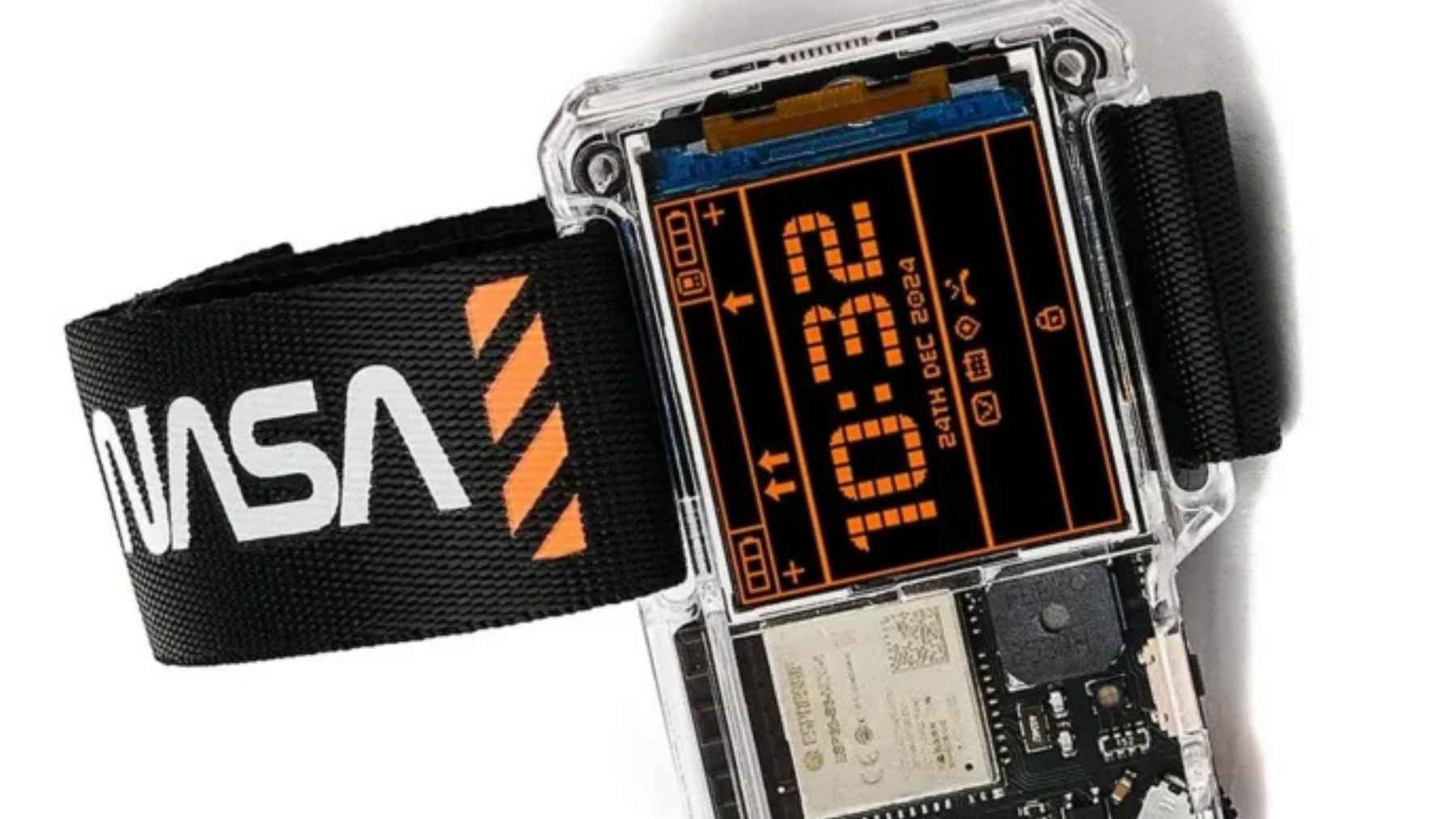
A galaxy-inspired design highlights the customizable interface of the Artemis Watch 2.0, blending coding, STEM learning, and space aesthetics.
From blocks to Python without hitting a wall
The educational progression is the real story here. CircuitMess says beginners can start in its CircuitBlocks environment, while more experienced users can use Arduino and Python, which is a rare combination in a category that usually tops out at colorful presets.
For advanced tinkerers, there is another layer that is easy to miss in the marketing blur. CircuitMess maintains an Artemis watch firmware repository on GitHub, and its README walks through building and flashing firmware using Espressif’s ESP IDF toolchain, including notes about the production build using IDF version 5.1.
That is not “toy coding,” for the most part. It is closer to the workflow you would see in real embedded development, with patches, build steps, and flashing tools, which can be empowering for a teen who is ready for a challenge and intimidating for anyone who just wanted a watch face with a Moon graphic.
Pricing that looks like a strategy, not a souvenir
CircuitMess lists the NASA Artemis Watch 2.0 at $129, and at the time of the listing we reviewed it also shows a discounted price of $99. The same page also repeats a company claim of “over 100,000 STEM kits sold,” which helps explain why it is comfortable pricing this like a learning device rather than a disposable toy.
The bundles make the business logic even clearer. A NASA Collector’s Bundle is listed at $149 and includes the watch plus four official straps, essentially turning a single device into a small collectible lineup.
Then there is the bigger upsell. CircuitMess lists a Mars Exploration Bundle at $399, showing a comparison price of $517 and a stated 23% discount, and it packages the watch with a NASA-themed Perseverance rover kit, add-ons, and tools. In practical terms, that is CircuitMess betting that once a family buys into “space as a hobby,” they will want an ecosystem, not a one-off.
What to keep in mind before you buy one
The first question is simple. Is the goal a fun wearable, or is it a doorway into coding, debugging, and learning how sensors and Bluetooth actually behave in the real world, glitches and all?
Compatibility and day to day usability also matter more than the space branding. CircuitMess highlights Bluetooth pairing and activity tracking, but shoppers should still confirm the exact phone and app requirements they are comfortable with, especially if the watch is meant to be used outside the house.
Finally, there is the practical hardware reality that marketing pages rarely emphasize. A third-party spec reconstruction from CNX Software describes an ESP32-S3-based design and estimates a 600 mAh battery with about 2 to 3 hours of runtime on a charge, which is the kind of detail that can shape whether this becomes a daily wearable or a weekend project device.
The press release was published on NASA.