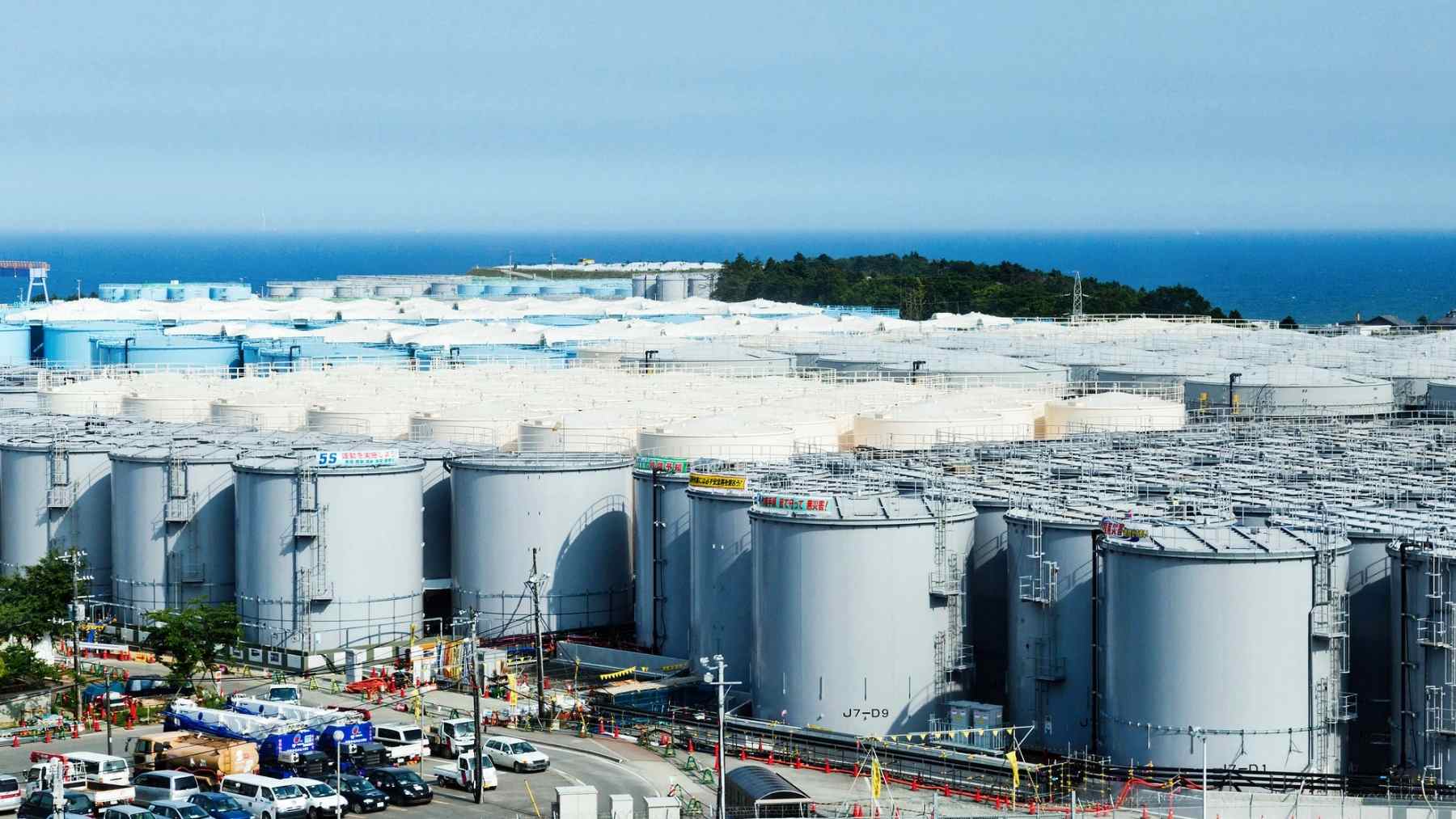
In a place many people assumed was completely dead, scientists have found a thriving community of microbes under the damaged reactors at the Fukushima Daiichi Nuclear Power Station in Japan. The bacteria are living in highly radioactive water inside the torus room, where seawater rushed in after the 2011 earthquake and tsunami, with cesium levels of roughly one billion becquerels per liter, a measure of intense radioactivity.
What the researchers found
You might expect only extreme radiation proof superbugs to survive there. Instead, a new study led by researchers at Keio University finds mostly ordinary bacteria that, when tested in the lab, tolerate gamma rays about as well as typical environmental strains.
The team analyzed water from two spots in the torus room of reactor unit two, labeled TW1 and TW2. Genetic sequencing of full length 16S rRNA showed that the dominant genera were Limnobacter and Brevirhabdus along with other microbes usually linked to marine settings. It is, to a large extent, the first detailed on site look at microbial life inside Fukushima’s reactor buildings because earlier surveys focused mainly on nearby soil and seawater.
How bacteria can survive there
These bacteria are chemolithotrophs, which means they get energy by oxidizing inorganic compounds such as sulfur and manganese instead of feeding on the usual organic scraps. In practical terms, they can live off metals and mineral rich surfaces inside the plant rather than needing typical food sources.
So how are they coping with the radiation. By the researchers’ own tests, a close relative of the Limnobacter strain found in the plant did not show special genetic tricks for radiation resistance. For the most part, that points to the physical environment itself, including thick biofilms on metal and pockets of sludge, as a kind of shield that lets fairly standard microbes hang on in water that would normally be considered lethal.
Why this matters for cleanup
For cleanup crews and regulators, the most worrying detail is not that life has returned, it is which life has returned. Roughly seventy percent of the bacterial genera identified in the torus water are associated with metal corrosion, and biofilms are clearly visible coating steel surfaces inside the room.
In everyday terms, think of the rust that slowly eats away at a home water pipe. Inside a damaged nuclear plant, similar microbially influenced corrosion can weaken key structures, clog filters, cloud the water and make robotic inspections harder, all in an environment where human workers already rely on heavy shielding and remote tools.
Scientists learned after the Three Mile Island accident in the United States that microbes can complicate decommissioning projects that already stretch over decades. The Fukushima findings suggest that engineers now need to factor bacterial corrosion into long term plans for sealing, dismantling and monitoring the site, not just the physics of radiation and concrete.
A reminder about resilience
At the same time, the study highlights just how resilient life can be, adapting to a dark radioactive pool by tapping the chemical energy locked in metals and seawater salts. It is a reminder that even in environments we imagine as sterile industrial ruins, biology quietly finds a footing and becomes another variable that planners cannot ignore.
The study was published on Applied and Environmental Microbiology.