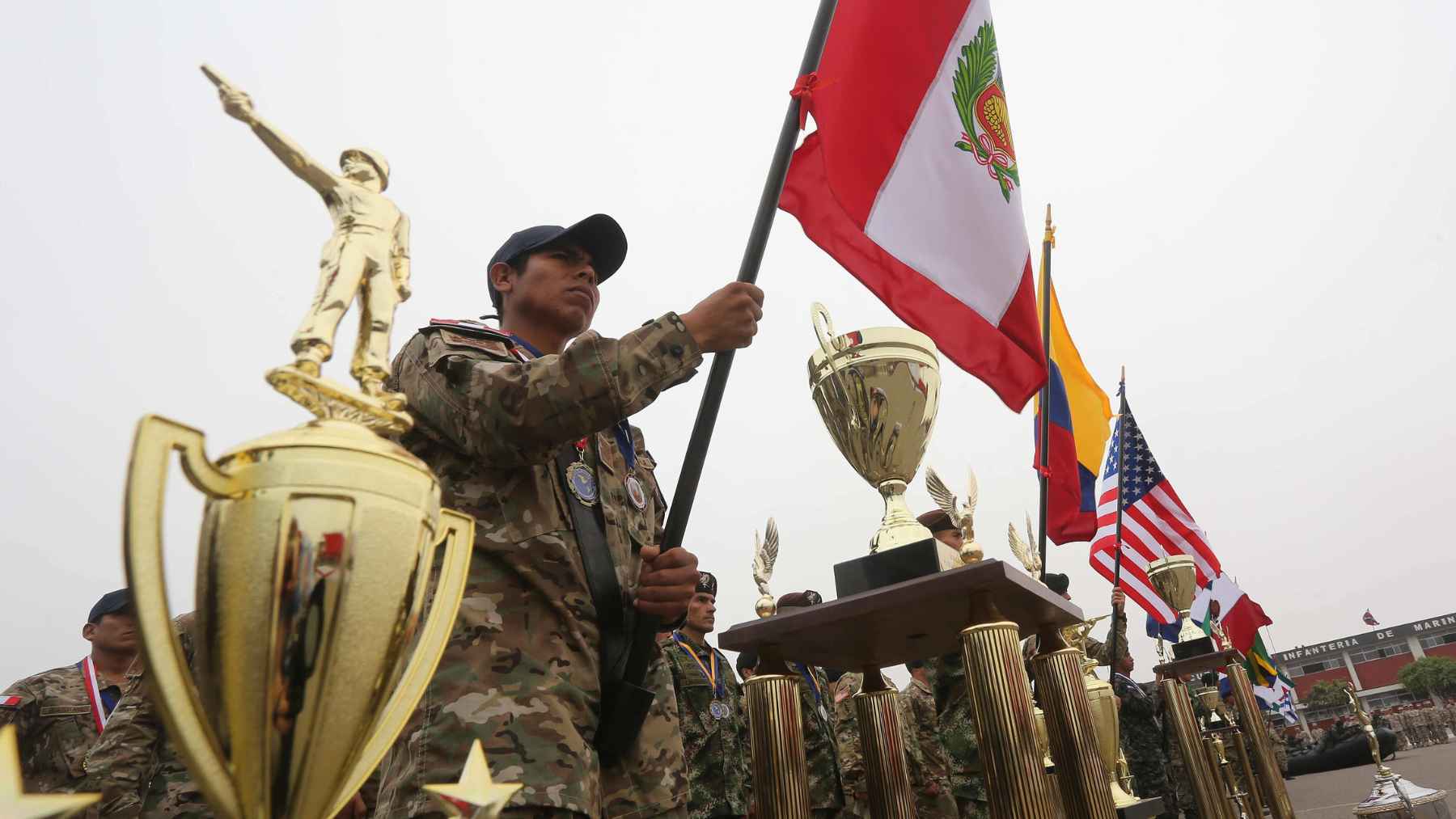
Is Latin America truly militarizing, or is it simply reaching for harder tools as crime spirals? For the most part, the second explanation fits better. But the shift is real.
Across the region, governments are leaning more heavily on soldiers, military gear, intelligence sharing, and cross-border security partnerships to confront gangs and drug trafficking networks that now operate with the firepower and logistics of armed groups.
Washington backs arms sales and security coordination
Washington is helping push that change. On February 6, the White House announced an “America First Arms Transfer Strategy” designed to speed and prioritize foreign arms sales that serve U.S. interests and strengthen the defense industrial base.
In practical terms, that means friendly governments in Latin America could find it easier to buy U.S. equipment just as organized crime becomes more violent and more sophisticated. That is not a minor policy tweak. It changes the mood of the region’s security debate.
Guatemala, Ecuador, and Haiti show the stakes
Guatemala offers one of the clearest examples. After Washington lifted a military embargo that had been in place for decades, Guatemalan officials said they would move ahead with purchases of arms, aircraft, and other equipment, with Defense Minister Henry Sáenz pointing to a roughly $50 million budget for 2026 acquisitions.
Meanwhile, Ecuador has openly deepened joint action with the United States against drug trafficking, including military operations and a stronger FBI presence.
For governments facing extortion, prison violence, and cartel routes that run through ports and border zones, the appeal is obvious. When daily life is shaped by fear, people want results. Fast.
But there is another side to this story, and it is a serious one. In Haiti, Human Rights Watch said drone strikes carried out by security forces and private contractors killed at least 1,243 people between March 2025 and January 2026, including 43 adults and 17 children who were not believed to be part of criminal groups.
Those figures suggest what can happen when governments adopt military methods in dense urban neighborhoods where civilians are never far away.
Experts may debate whether this amounts to full militarization, yet the direction of travel is hard to miss. The region is not entering a conventional arms race. It is entering a harsher security era.
The report was published by Human Rights Watch.