Ever taken a look at a cluttered garage and wondered how it got that bad? For Kirk McKinney, the turning point was a bike ride to the local dump, where he spotted a pair of speakers that still worked and realized other people’s throwaways could be valuable.
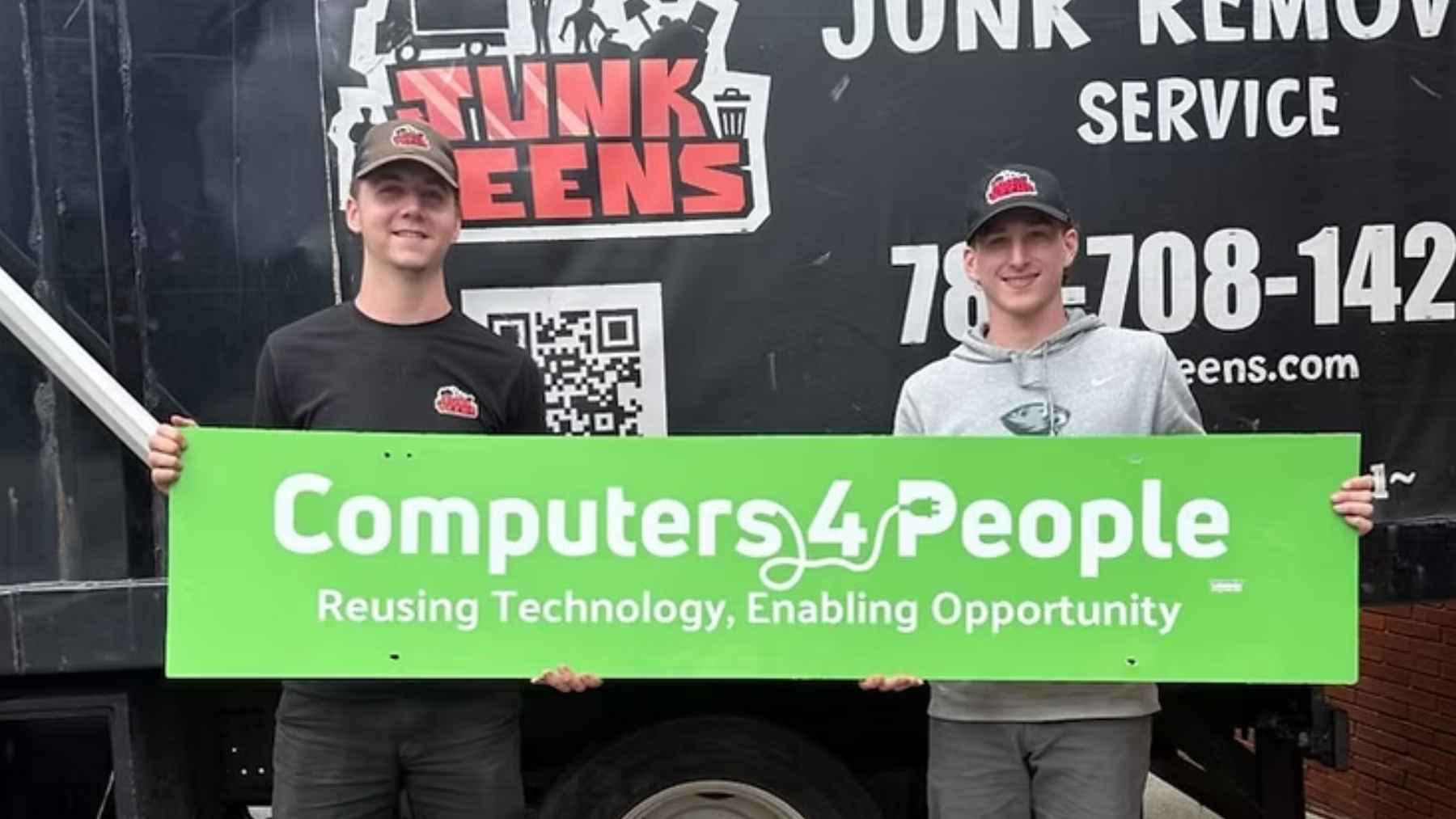
That spark became Junk Teens, a Norwood, Massachusetts junk-removal and resale business Kirk launched with his younger brother Jacob in February 2021.
The brothers, now 22 and 20, say the company brought in $3.04 million in revenue in 2025, based on documents reviewed by CNBC Make It, and their story shows how an offline service can grow with an online playbook.
A pickup truck, a dump, and a pandemic idea
After that first find, Kirk says he got “hooked,” returning so often that his bedroom started to look like “a mini hoarder’s house.” He flipped abandoned items on Facebook Marketplace, and time at the dump introduced him to locals willing to pay teenagers to haul away unwanted stuff.
He quit a supermarket job and pulled in Jacob, who was a high school freshman at the time. With $4,000 of their own money, they bought a used 2006 Ford F-150, and the brothers took on cleanouts alongside other side gigs like landscaping and moving.
At first, Jacob says they “did not really know” they wanted to build a junk business. But customers got more interested when they learned the brothers were “reusing” items, and the work became the part they enjoyed most and the part that consistently paid best.
Kirk says “money is nice, but that is not the main goal,” and he frames it as a way to “build a future for our friends” doing work they like.
The numbers behind a surprisingly scalable service
In 2025, Junk Teens completed more than 5,500 jobs, mostly residential and commercial cleanouts, according to the brothers.
The company typically charges $300 to $600 per job depending on size and the type of removal, which lines up with an implied average around $550 per job when you compare it with their reported annual revenue. That is a lot of hauling.
The growth curve has been steep. They say revenue topped $1.2 million in 2024, then jumped to $3.04 million in 2025, and the company now operates from two locations in eastern Massachusetts serving Boston and Cape Cod.
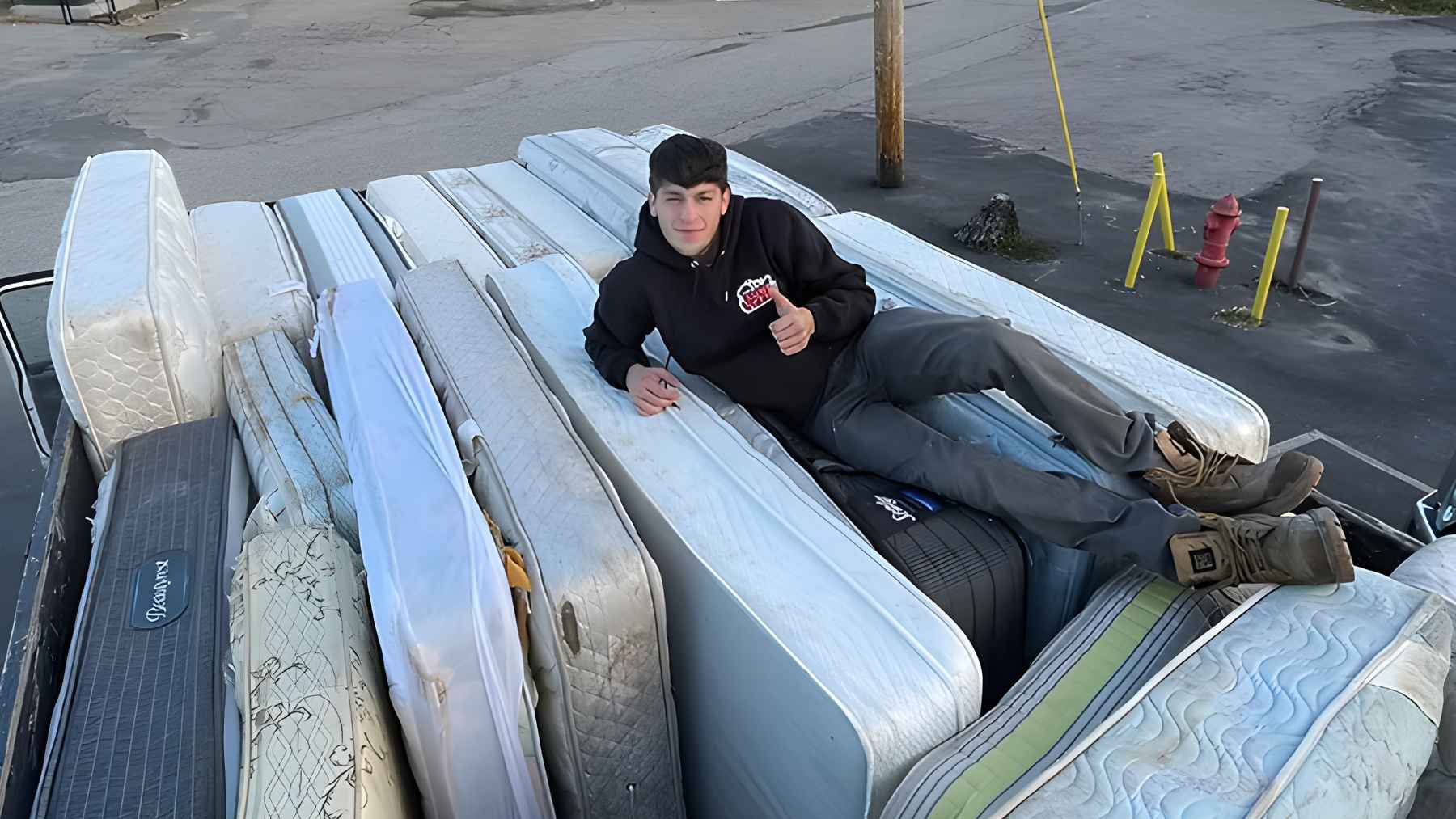
Big volume requires equipment, storage, and tighter logistics, even if the core work is still lifting and hauling. After earning nearly six figures in profit in their first year, the brothers say they bought their first dump truck, and the business now runs five dump trucks with plans to add two more by the end of 2026.
They also rented a warehouse in March 2023 for $1,450 a month after, as Kirk put it, “our parents did not like it at all” when the driveway became a storage yard.
Social media as the new word of mouth
Most local service businesses still win on trust, and trust usually travels through neighbors. So how do you stand out when half the trucks in town promise fast pickup and fair pricing? Junk Teens leaned into that referral loop, but they also treated social media like a customer acquisition channel, not just a highlight reel.
The brothers say they have more than 400,000 followers across Instagram and TikTok, plus a growing YouTube audience where they post instructional videos. In those clips, they show how they negotiate prices and explain the best ways to dispose of, resell, or donate different kinds of items.
That matters because the pitch is not only “we will take it away.” It is also “we will reuse what we can,” and that can make a difference for customers who want the cleanout done without feeling like they are sending everything straight to a landfill.
Hiring teens while the founders stay in school
The schedule gymnastics started early, when both founders were still in high school. Jacob says they sometimes worked only one or two jobs a week, then brought in friends as demand grew and free time shrank, including giving up hobbies like video games.
The dump schedule was another constraint because local facilities kept school hours. Jacob says he negotiated a midday free block to make it work, and Kirk recalls days when they parked a dump truck at school and had to apologize to teachers when they ran late.
Today, Junk Teens employs 10 full-time workers and another 10 to 15 part-time workers, and they say all of them are students or taking a gap year. Both founders study entrepreneurship at Babson College, and they say each earned a low- to mid-six-figure salary in 2025, using part of it to help pay tuition, with the rest covered by their parents.
Jacob also says they have focused on administrative and strategic work, and they have not been out in the field in nearly two years, even as the business opened a second location in the Cape Cod area.
Scaling up while national competitors circle the market
The business is growing while both founders are still in college, and Kirk calls that “really difficult, especially when you have a business,” saying he considered dropping out three times.
He says a family business upbringing helped – their parents run a local tree-trimming company, and the brothers filled in the gaps by searching YouTube for “how to start a junk removal business.” There is not much slack.
Now comes the toughest comparison: scale. Junk Teens is competing in a market that includes national brands like Waste Management, Inc., the report describes as a $90 billion company, plus 1-800-GOT-JUNK, which lists six franchises in Massachusetts and more than 140 across the United States, and College Hunks Hauling Junk, which has more than 200 franchises nationwide.
Can a local brand keep its edge when the big players show up?
The brothers say their plan is to cover the rest of Massachusetts before expanding to other parts of the East Coast, and they are open to franchising, bringing in outside investors, or one day selling the business.
For now, Kirk says he has a strong feeling that “after college, things are going to take off more than ever,” and the next phase will show whether that confidence can survive the unglamorous work of scaling systems and competing on service, not novelty.