A self-built structure in São Bento do Sul, in Brazil’s southern state of Santa Catarina, is drawing attention for a simple reason. It swaps conventional brick for long agricultural sacks filled with compacted earth, adds a green roof, and pairs the building with an underground food bunker meant for long-term storage.
The sacks may grab the headline, but the bigger story is the mix of local soil, insulation, and low-tech construction.
According to local outlet ND Mais, resident Sandro Gilberto Jankoski built the structure using the superadobe method. He said the roll-like tubes, made from material similar to potato and onion sacks, can reach roughly 400 meters.
On his property, he used sections of about 15 meters, filled them with soil from the site, and compacted them into walls about 25 centimeters thick before tamping. He also said barbed wire was placed between layers to reduce slippage and improve stability.
How the superadobe method works
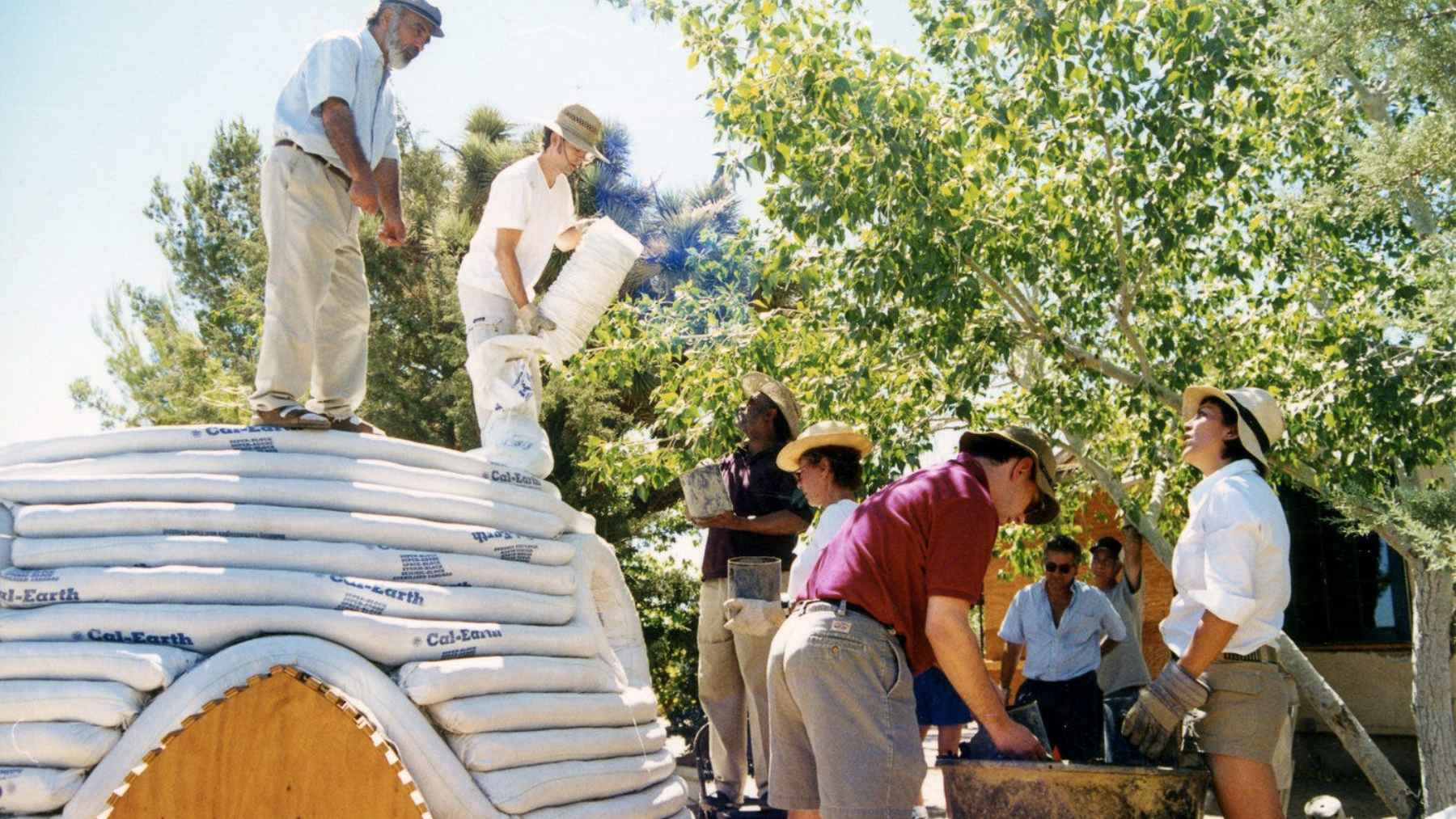
That description matches the system taught by CalEarth, the group that developed and promotes superadobe. CalEarth says the method relies on long or short earth-filled bags with barbed wire between layers, using basic tools and on-site material wherever possible.
In practical terms, that means a builder can reduce dependence on standard masonry and lean more heavily on what is already underfoot. Not flashy. But potentially very effective.
Why earth walls and a green roof help with insulation
Jankoski told ND Mais that the project took about a year and was built mostly by him alone. He also said the earth-heavy walls help smooth out indoor temperature swings, keeping the interior cooler when it is hot outside and warmer when temperatures drop.
Part of the structure sits inside a slope, with drainage, reinforced waterproofing, and a green roof planted with vegetation to improve insulation and manage moisture. Anyone who has walked into an overheated building on a summer afternoon can understand the appeal.
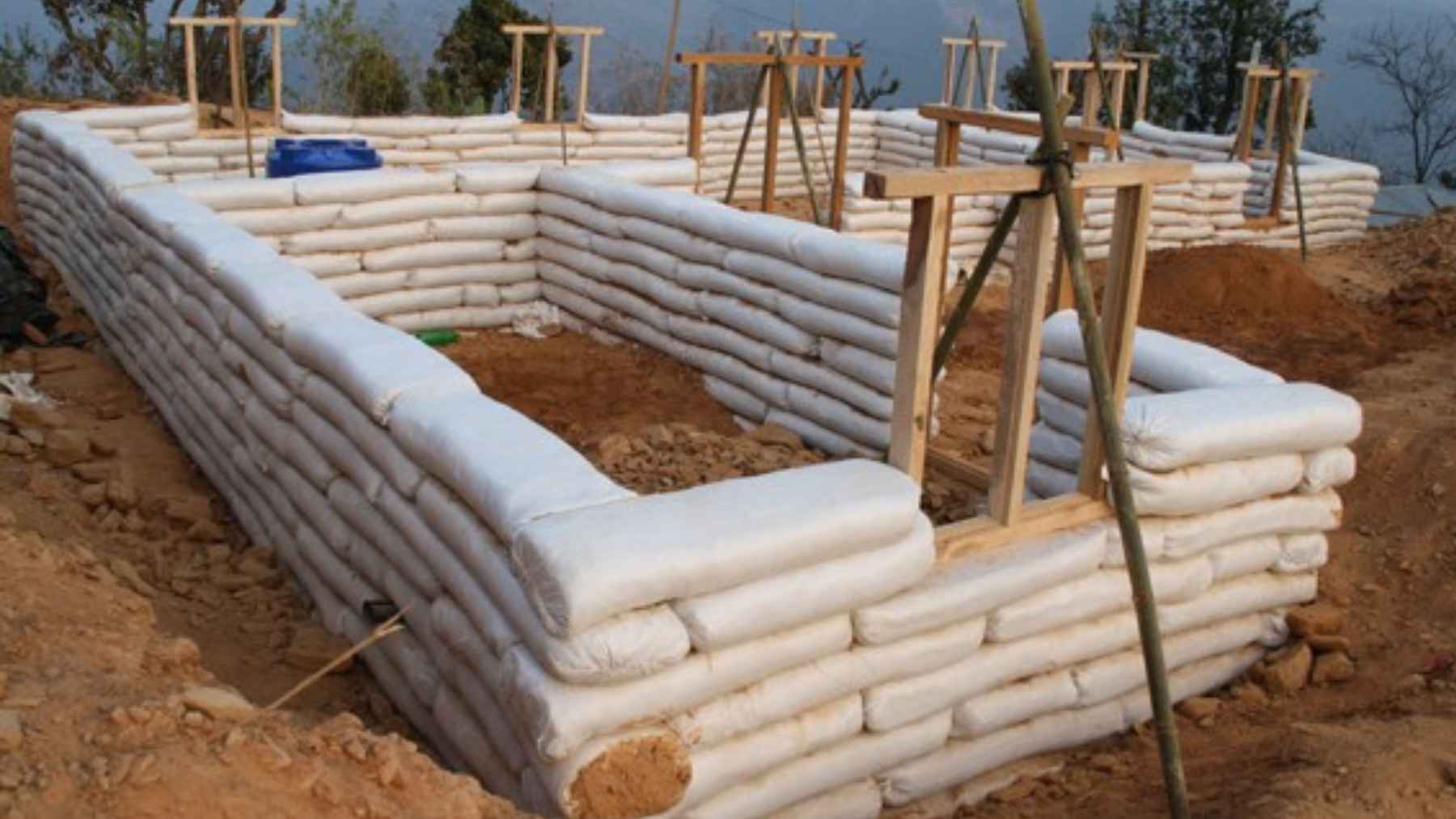
Walls made from stacked soil filled sacks show the superadobe construction method used as an alternative to brick building.
Underground bunker, food storage, and storm shelter use
The property also includes a buried container used as a bunker for food and seed storage. Jankoski said the cool, dark environment has preserved supplies for years and claimed he recently finished rice stored since 2011. He added that the space could also serve as shelter during extreme weather, including tornadoes.
That gives the project a sharper edge. It is not only about unusual architecture, but also about preparedness. That said, the long-term food storage claim comes from the owner’s account in the report, not from a published preservation study.
Why the project stands out as a self-sufficiency experiment
There is one more wrinkle. The structure is not being used as a residence, according to ND Mais. Jankoski said it currently hosts ayahuasca-related spiritual gatherings. Even so, the takeaway is fairly clear.
What looks at first like an eccentric sack-and-soil experiment is, for the most part, a practical attempt to combine insulation, storage, and a measure of independence with simple materials and a lot of labor.