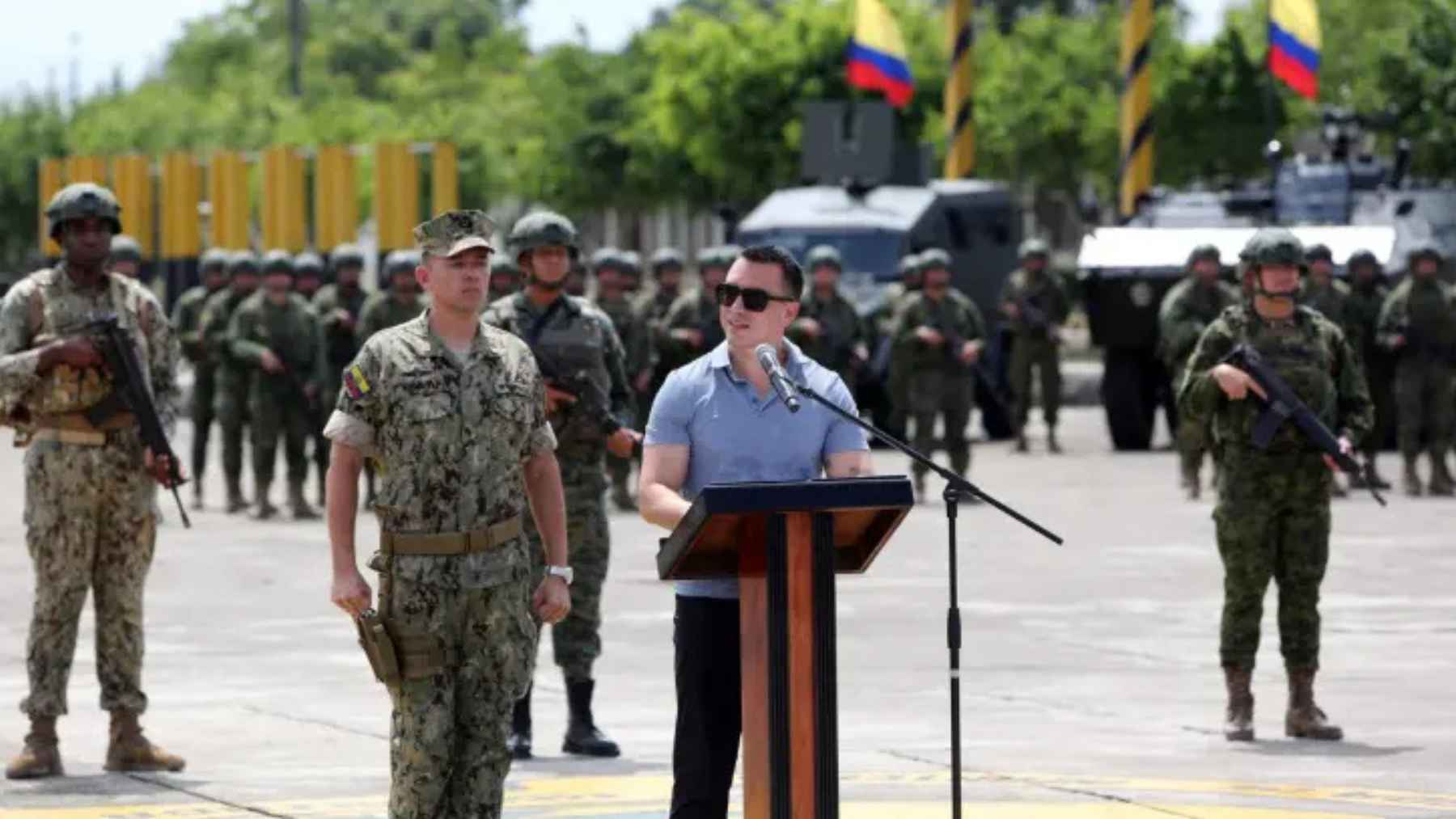
Ecuador has pushed more than 30,000 military personnel into a new stage of its anti-crime campaign as a nightly curfew took effect on March 15 in Guayas, Los Ríos, El Oro, and Santo Domingo.
The restriction runs from 11 p.m. to 5 a.m. through March 30, and officials say it is meant to support larger operations against organized crime.
A curfew built for movement
Why does that matter? Because this is not only about keeping people indoors. It is also about giving troops, police units, and surveillance teams a cleaner operating window when streets go quiet and traffic thins out.
Reuters reported the four provinces were chosen because they are key drug trafficking corridors, while AP said roughly 75,000 military and police personnel were deployed for the broader crackdown.
The military footprint is especially visible in Guayas. In Durán, authorities raised the local force to 700 soldiers for highway patrols and operations in the canton’s most troubled areas.
Nationally, the Defense Ministry said more than 30,000 troops are involved in control and security missions, and about 8,000 of them are operating across Guayas, El Oro, and Los Ríos. Ground patrols during the 15-day curfew are also being backed by helicopters and unmanned aircraft.
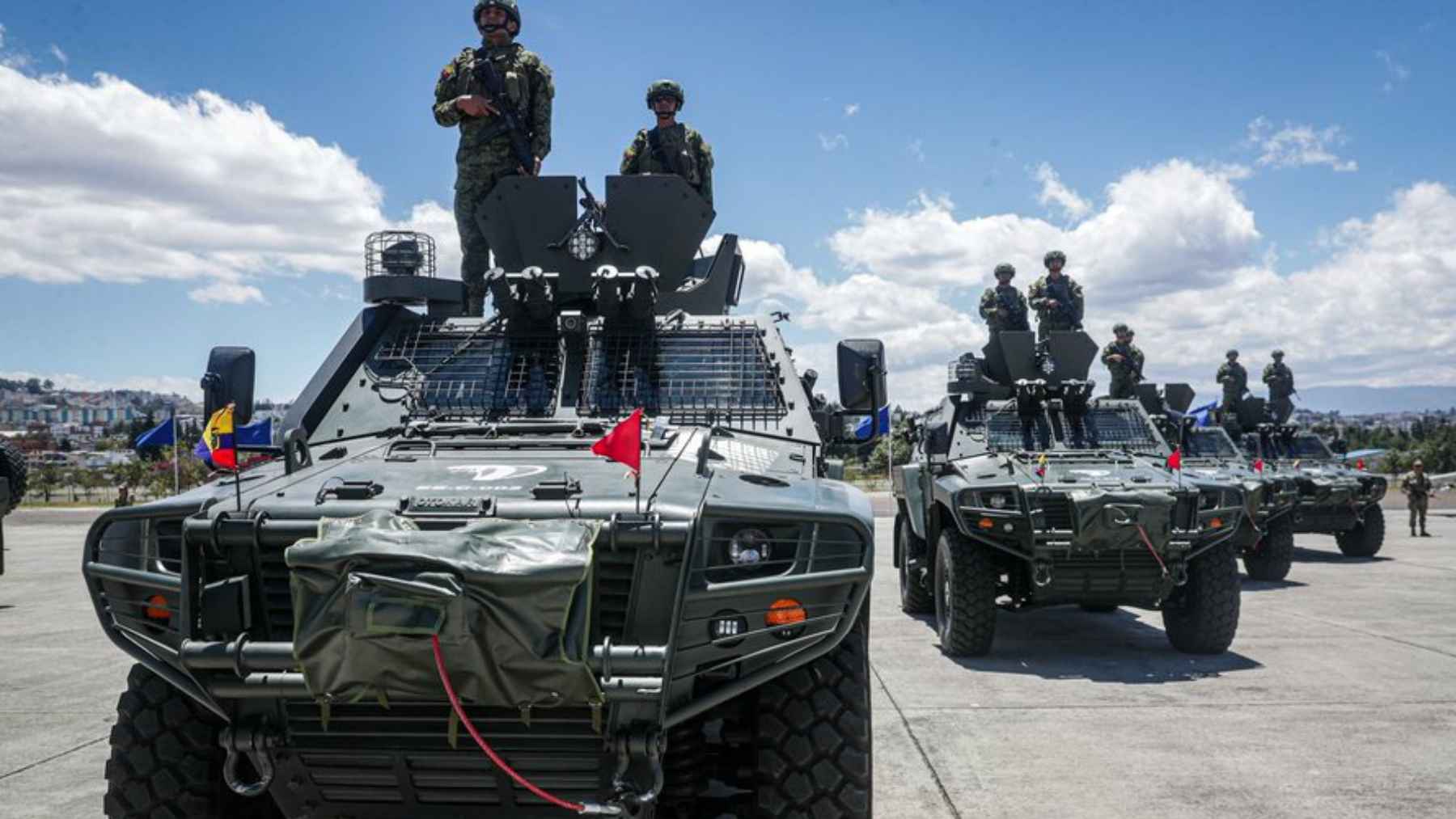
Hardened Response: The Ecuadorian Army reinforces its presence in conflict zones with 20 newly delivered Otokar Cobra II armored vehicles.
The bigger signal
In practical terms, this looks like Ecuador turning the curfew into a logistics tool. Not just a restriction. A corridor for movement. That fits a wider military shift now underway.
Reuters and AP said the curfew comes alongside operations supported by the United States, and Ecuador’s Defense Ministry has already described a March 6 joint mission in Sucumbíos that used fixed-wing aircraft, helicopters, boats, drones, and specialized troops to destroy a trafficking camp.
Early results suggest the government wants to show quick pressure. AP reported 253 arrests for curfew violations after the first night, and the Defense Ministry later said forces in Guayas destroyed three criminal targets and captured a high-value member of Los Tiguerones.
At the end of the day, the strategy is clear enough. Empty the roads, move faster, and hit harder. The real question is whether that military tempo can bring down violence for more than a few nights.
The official statement was published on the website of the Ministerio de Defensa Nacional del Ecuador.