What happens when a car is locked away for nearly four decades and the key finally turns again? In Lincolnshire, the answer is more than a simple barn find. It is a story about family memory, British engineering, and a model that once stood for Citroën’s boldest ideas.
Thrust 2 and the family car contrast
The car at the center of it is a 1983 Citroën BX 16RS, reportedly bought new by a Royal Air Force jet engineer who later helped work on Thrust 2, the British jet-powered vehicle driven by Richard Noble to a then world land speed record of 633.468 mph in October 1983.
After about five years of use, the BX was parked in a barn and never returned to the road. It stayed there until the owner’s family recently asked for help bringing it back into daylight.
That contrast is what makes the story stick. Here was a man connected to one of Britain’s most famous speed machines, yet his own daily car was a modest hatchback with a 1.6 liter engine, around 92 horsepower, and a top speed far removed from the desert drama of Black Rock. And still, that is often how real life works.
The headline-grabbing machine breaks records. The family car carries groceries, children, and the small routines that people remember years later.
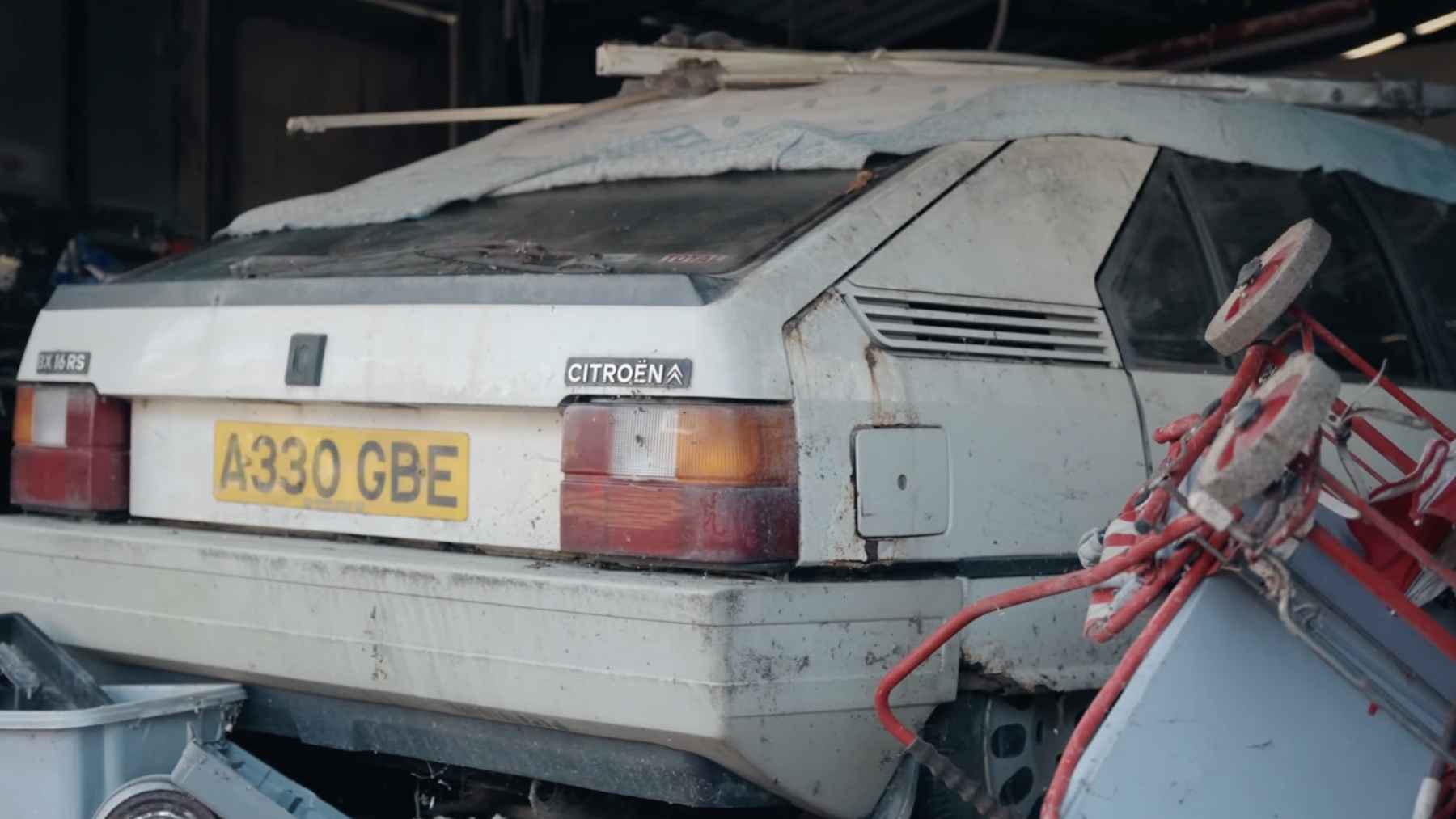
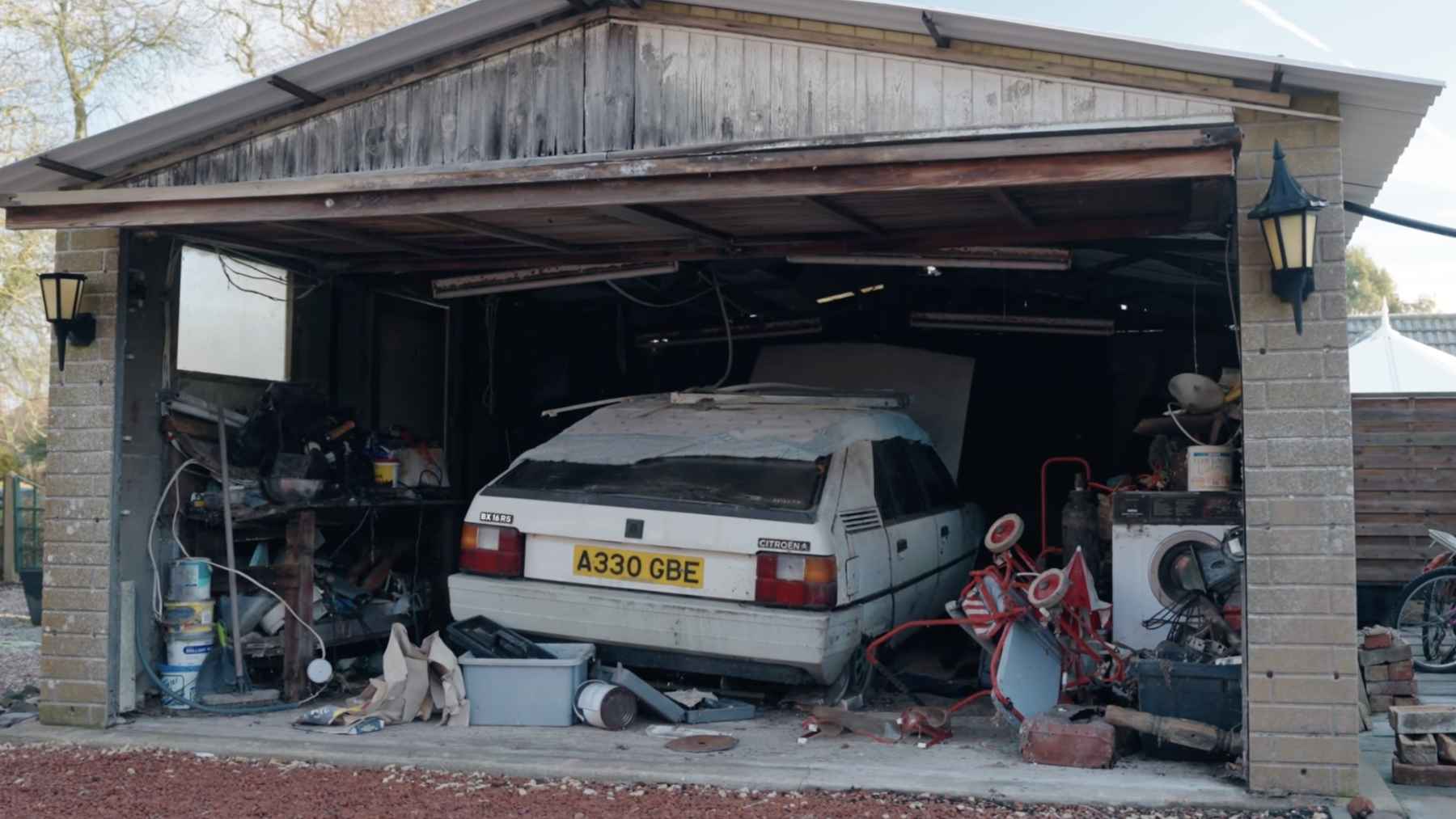
A 1983 Citroën BX sits inside a crowded barn where it remained stored for almost 38 years before being rediscovered.
Why the Citroën BX still matters
The BX itself deserves more respect than it usually gets. Citroën introduced the model in 1982, during a period when the company was trying to modernize under PSA ownership. The car stood out for its sharp styling and hydropneumatic suspension, a setup designed to keep ride height steady and deliver comfort.
For some passengers, though, that floating feel could be a little too much. Anyone who has ever felt queasy in the back seat of an old car knows the feeling.
When everyday technology becomes heritage
In practical terms, this rescue is also a reminder of how quickly everyday technology becomes heritage. The BX was not a supercar, and that is precisely the point.
It represented a moment when European automakers were experimenting with design, comfort, and identity in ways that still feel distinctive now. Citroën says the BX “causes a stir” in its own brand history. Decades later, even a dusty, mouse-ridden example in a leaking barn can still do that.
The bigger question now is whether this particular car gets a second life. The first revival attempt did not get the engine running, but the interest around the car suggests its story is not over yet. Sometimes preservation is not about perfection. It is about pulling something back into the light before it disappears.
The official record note was published on Guinness World Records.